
Last Updated on 04/30/26 by Rose Palmer
Where to stay in El Calafate
The town of El Calafate is the gateway to Argentina’s Patagonia Region. With plenty of hotels, restaurants, and shops, it’s where most travelers to the region choose to stay.
I wanted something a little more rural and authentic, and instead picked an estancia, or ranch, outside of town. El Galpon de Glacier had a lovely location with views overlooking Lake Argentino.
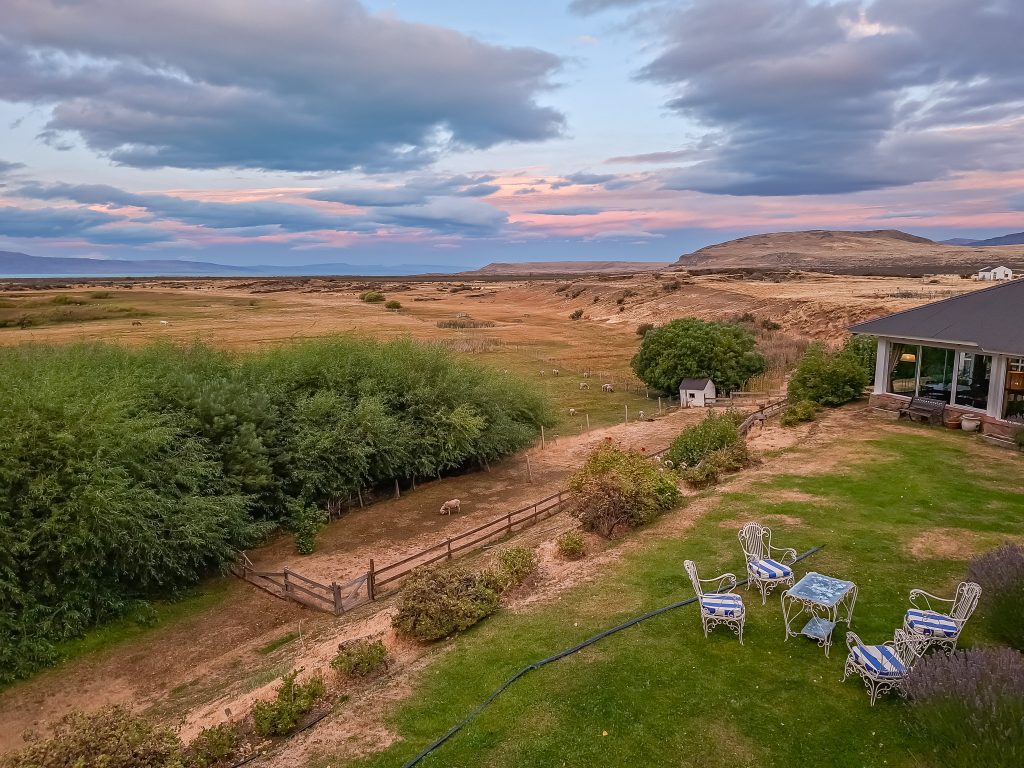

Our room was basic but clean and comfortable. The common area offered large wrap-around windows with views over the ranch and the lake. A wood-burning fireplace made this a very pleasant spot to relax and to enjoy our meals.
The hotel grounds were landscaped with large, fragrant lavender and rose bushes. After each day’s excursion, I sat in the sunny lounge with a pot of tea and watched the many busy, buzzing bees gather pollen from the lavender.

An ample breakfast was included each morning, and the restaurant offered an à la carte lunch and dinner menu. We ate dinner here every night and liked everything we tried, including a very good bottle of Argentinian Malbec.
The hotel set us up with drivers from and to the airport, as well as to and from each day’s excursion into Los Glacieres National Park.
Our two days in Los Glacieres National Park
Discovering the Perito Moreno Glacier
After a leisurely morning, our driver picked us up at 11. It was about a 45-minute drive from the estancia to the first glacier overlook area. We made a quick stop at the park entrance, where I purchased tickets for two-day access into the park (with a credit card). I could also have pre-purchased the tickets on the Argentina National Park website.
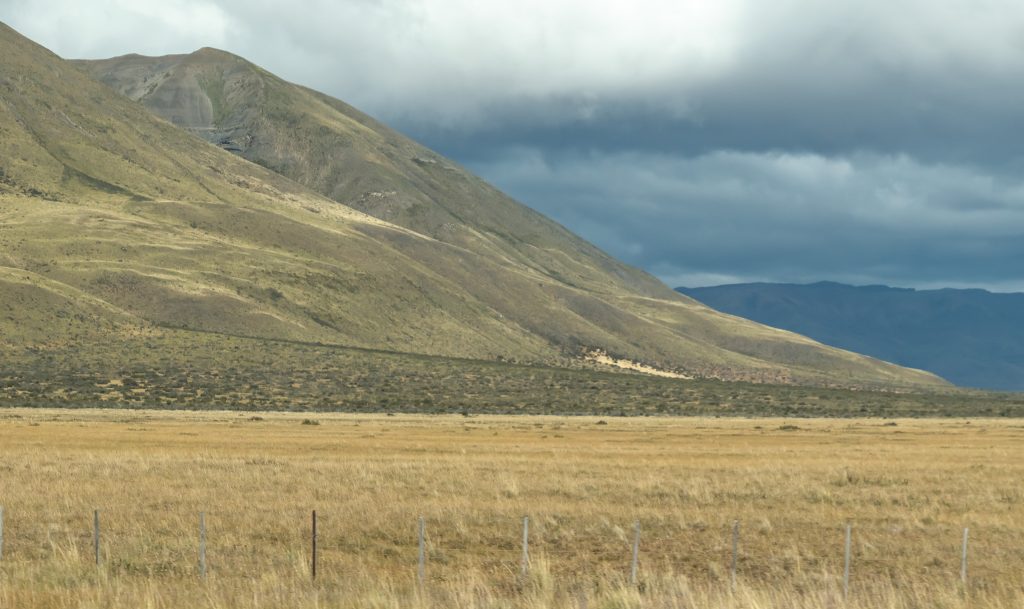
Most of the scenery along the way was very dry and barren, with hillsides covered in yellow grass and silvery sagebrush. As we approached the national park, more and more trees appeared until it became a verdant forest at the glacier’s doorstep.
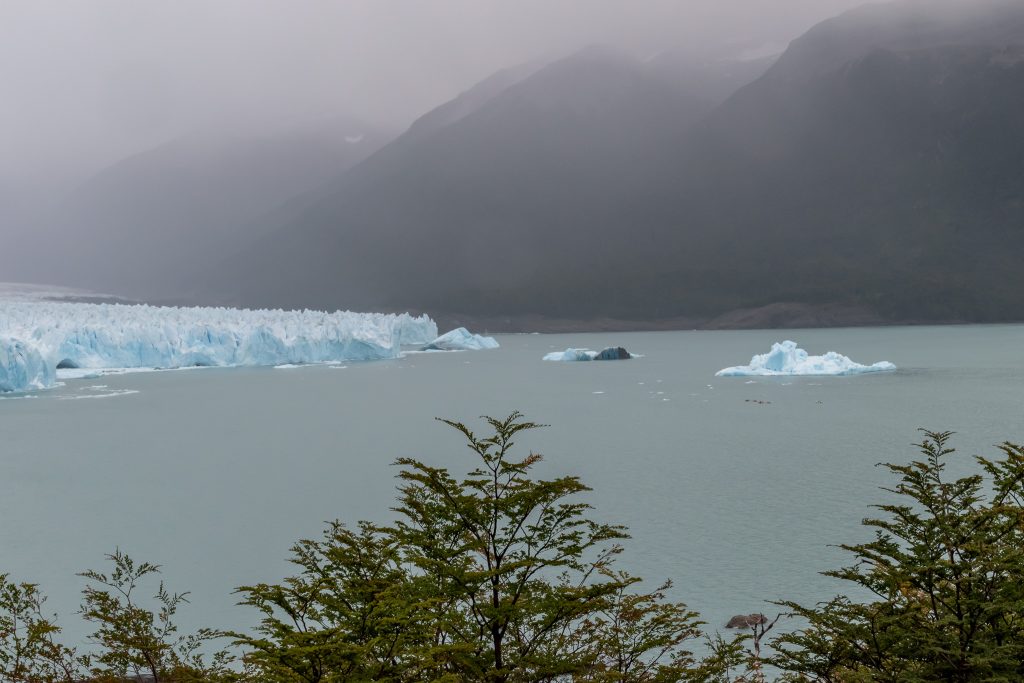
We had a hint of what was to come when we started seeing large icebergs floating in the lake. When our driver stopped at the viewpoint for our first look at the Perito Moreno Glacier, I was already impressed.
A little further on, we reached the end of the road and the beginning of the boardwalk trails that led to many overlooks over the Perito Moreno glacier. The Perito Moreno Park had three different trail systems offering viewpoints of the glacier: a yellow trail, a red trail, and a blue trail.
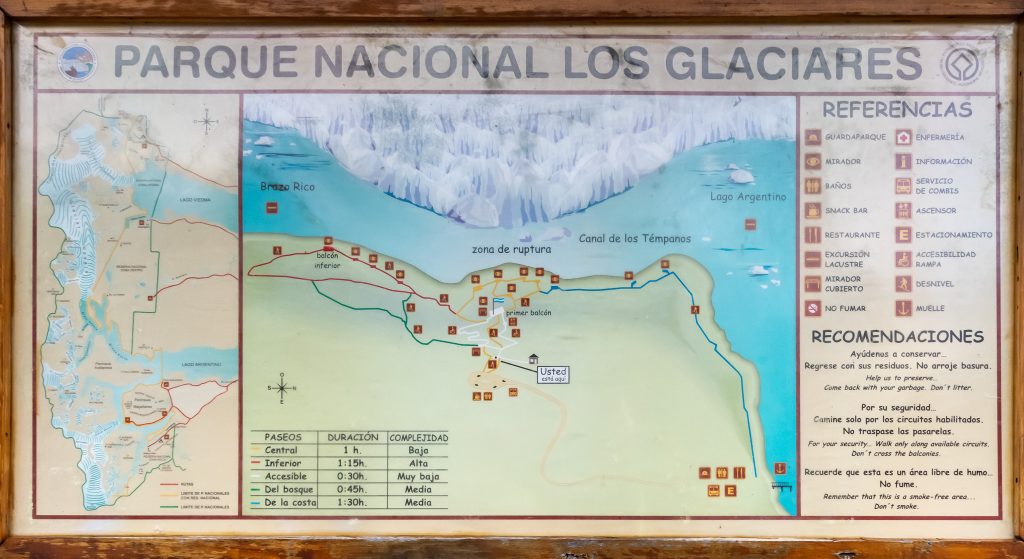
The central yellow trail led to balconies looking over the center of this vast glacier. Metal boardwalks and stairs led to the different viewpoints. I was pleased to see that there was also an accessible path with an elevator for mobility-challenged visitors.

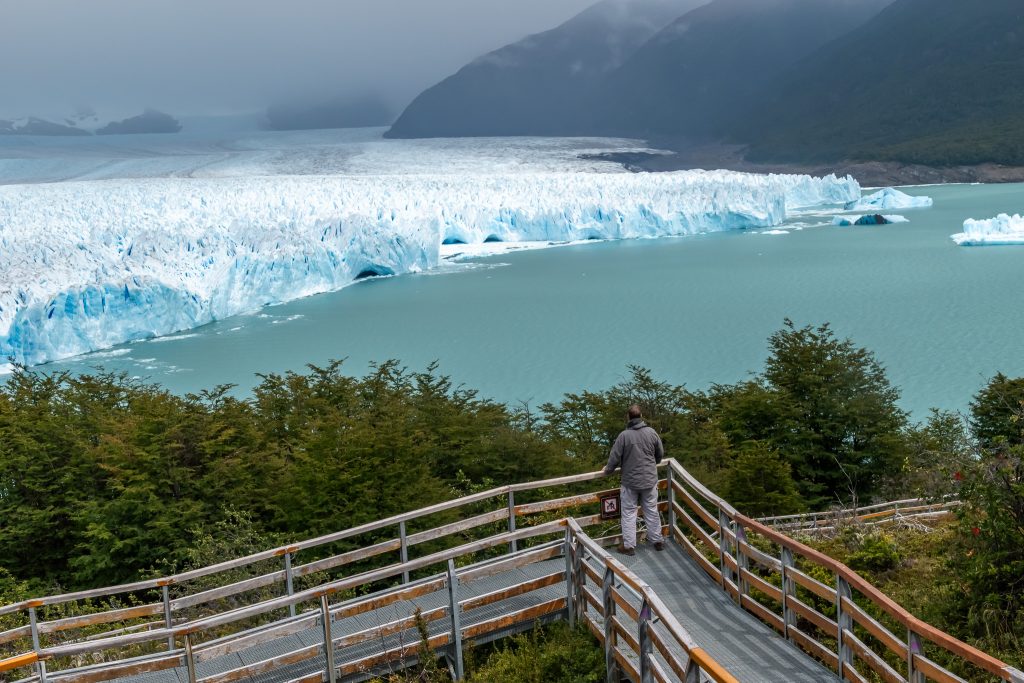
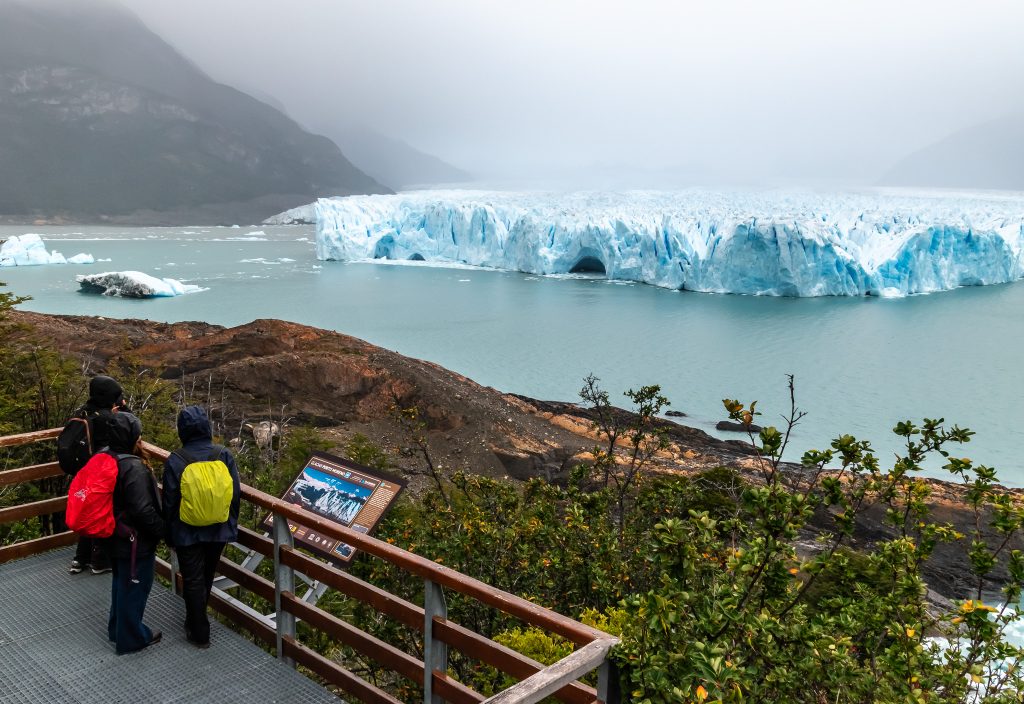
To the left of the yellow trail was the red trail, with lots of steps leading downhill for closer views of the glacier and the huge icebergs in the water.
Even though there were a lot of stairs going down (which meant just as many steps going back up), my knees didn’t find it too difficult. We hung out in this area for quite a while, watching the glacier calve. We heard many deep booms as the glacier broke within the ice caves, but saw only a few break off at the glacier’s face.

The blue trail, which led to the right of the yellow trail, followed the coastline. We chose not to hike down this boardwalk since it mostly led away from glacier views.
We had three hours to explore the boardwalk, take photos, and watch the glacier calving before our driver picked us up again. The day was overcast with periods of light rain, but the views of the Perito Moreno glacier were still amazing.
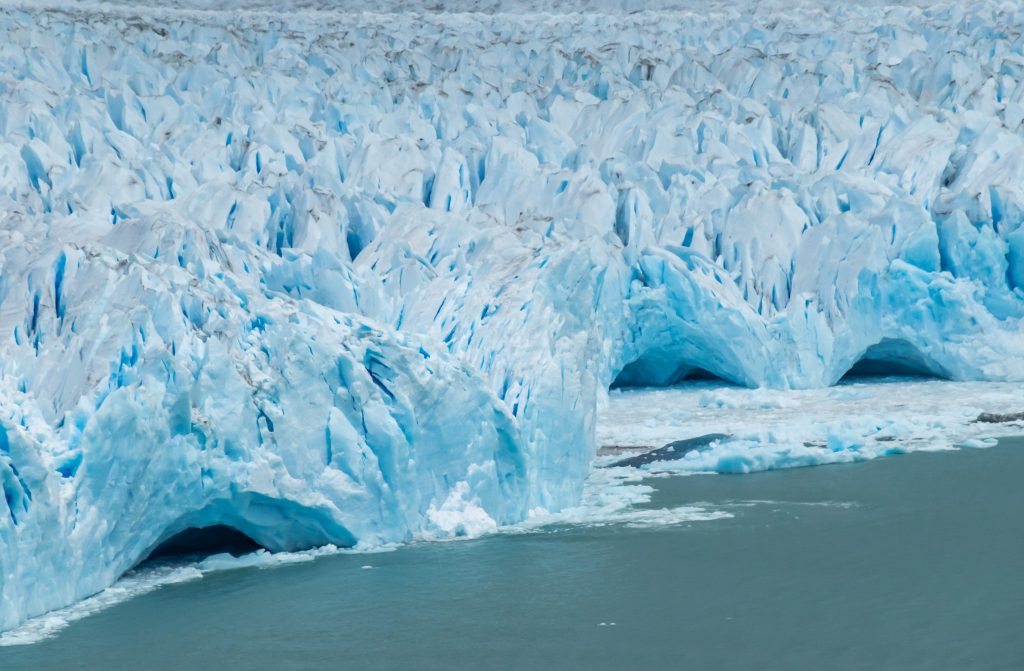
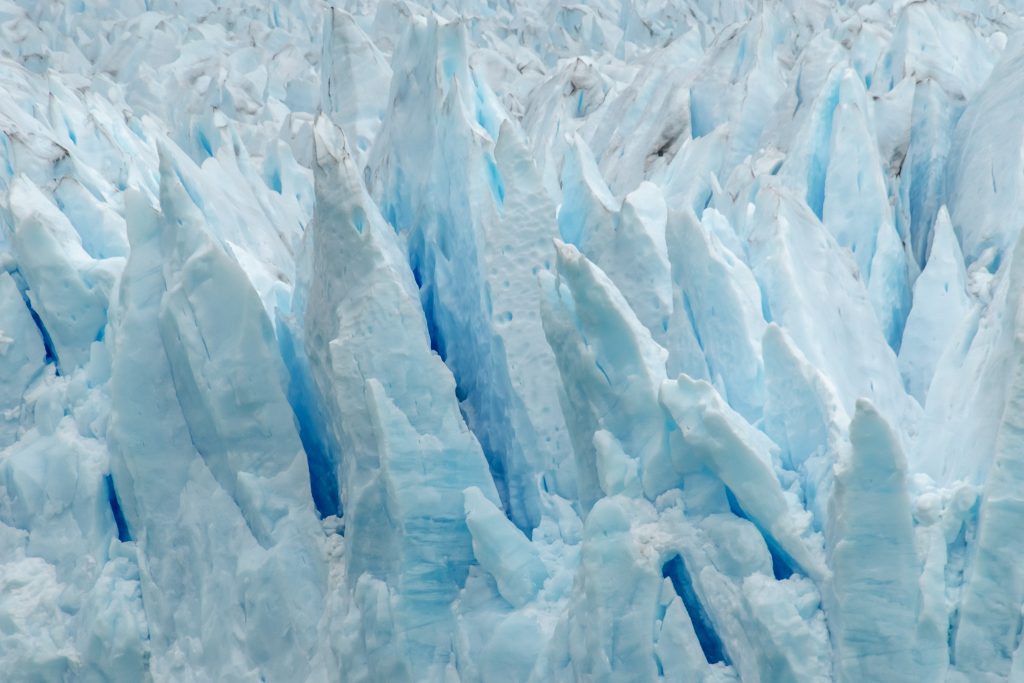
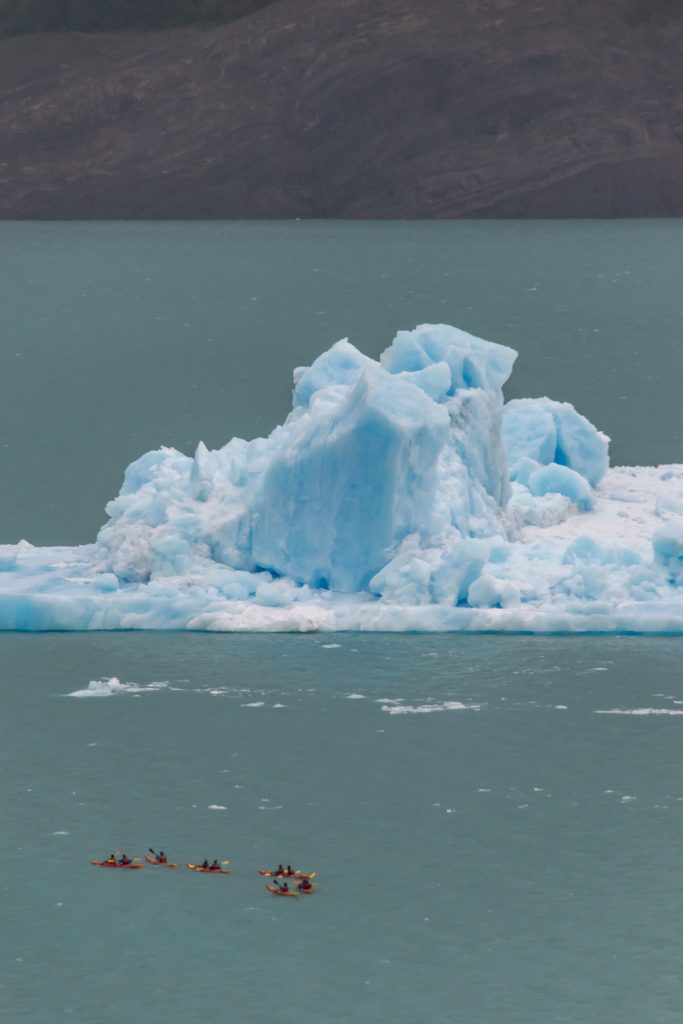
Despite the rain, a group of kayakers paddled out near the glacier. It was only with this perspective that the size of the glacier and its icebergs was finally possible.
Boat tour to see more glaciers
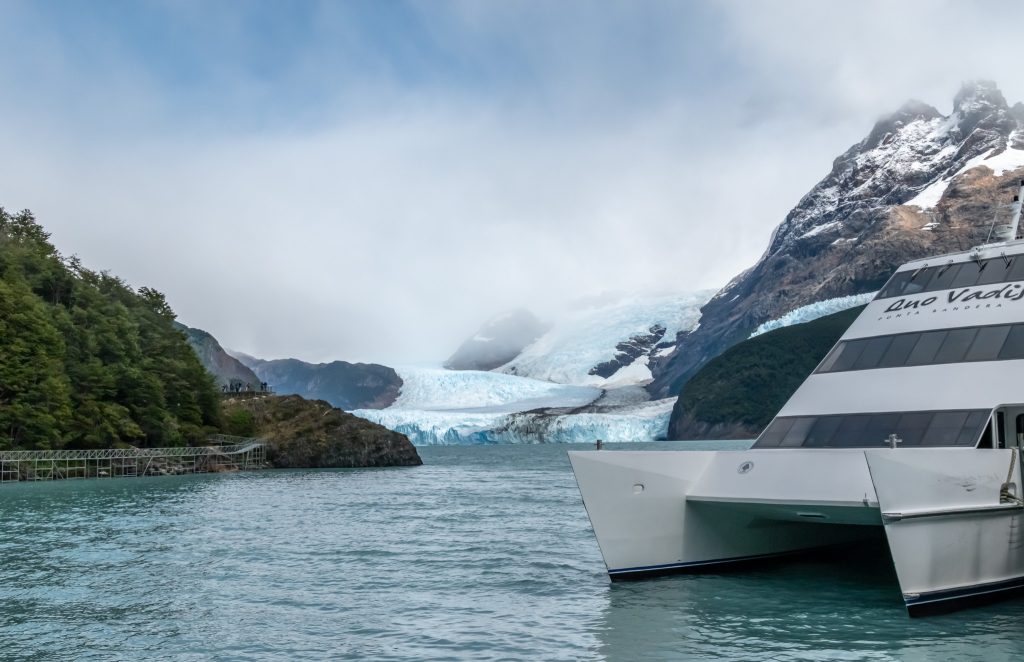
Our second morning started early as our driver took us to Puerto Bandera to catch one of the boat tours on Lago Argentino. There seemed to be three companies that offered the same basic cruise itinerary. I chose the one by Solo Pataginia because it included a lunch stop within view of the Spegazzini glacier.
The catamaran seated about 200 guests, and the tour was full, which made the cabin very crowded and cramped. The upper sun deck filled up quickly once we got going, as did the deck at the bow. We found a quiet spot outside at the back of the first level, which was somewhat protected from the wind.
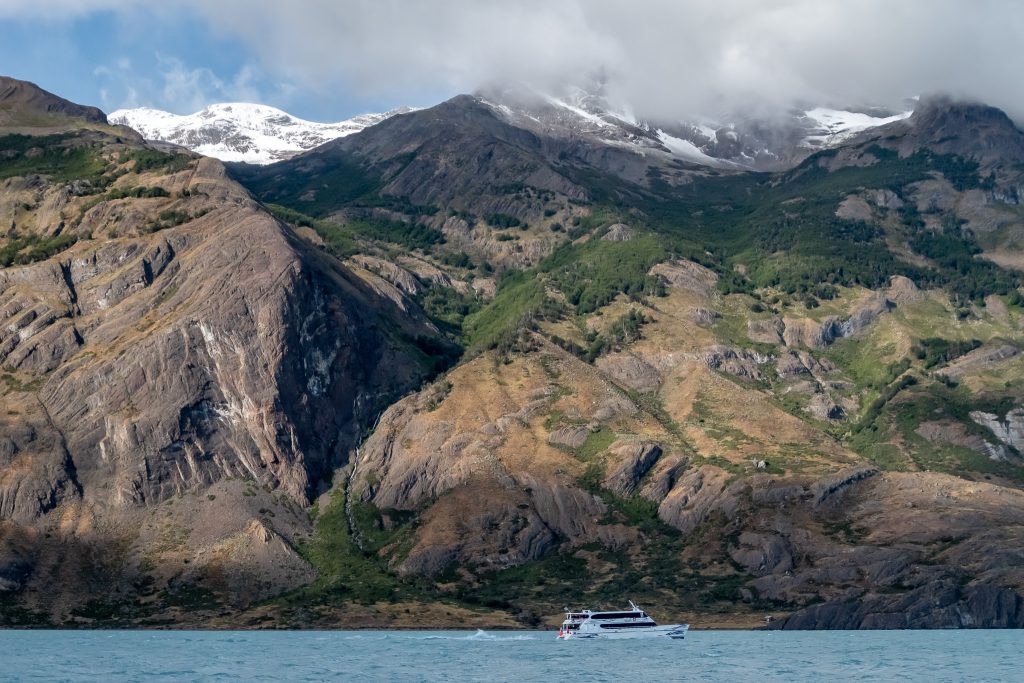
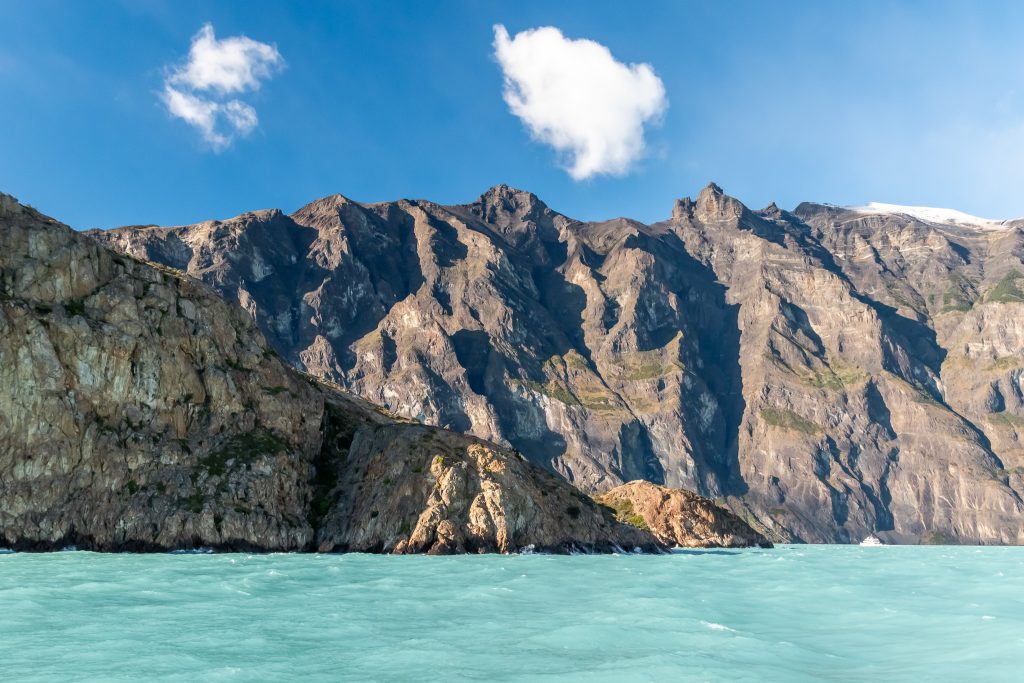
It was a perfect day with blue skies and fluffy white clouds. I booked this cruise with Get Your Guide just a few days beforehand, once I had a dependable weather forecast for our two days in this area.
As we sailed into the fjord toward our first stop at Upsala Glacier, we passed snow-covered peaks and distant hanging glaciers. I had to remind myself that this milky opalescent blue water was a very large, fresh water, glacier-fed lake. Even though the scenery looked much like the fjords I had cruised on in Alaska and Norway, this was a landlocked body of water on the eastern side of the continental divide.


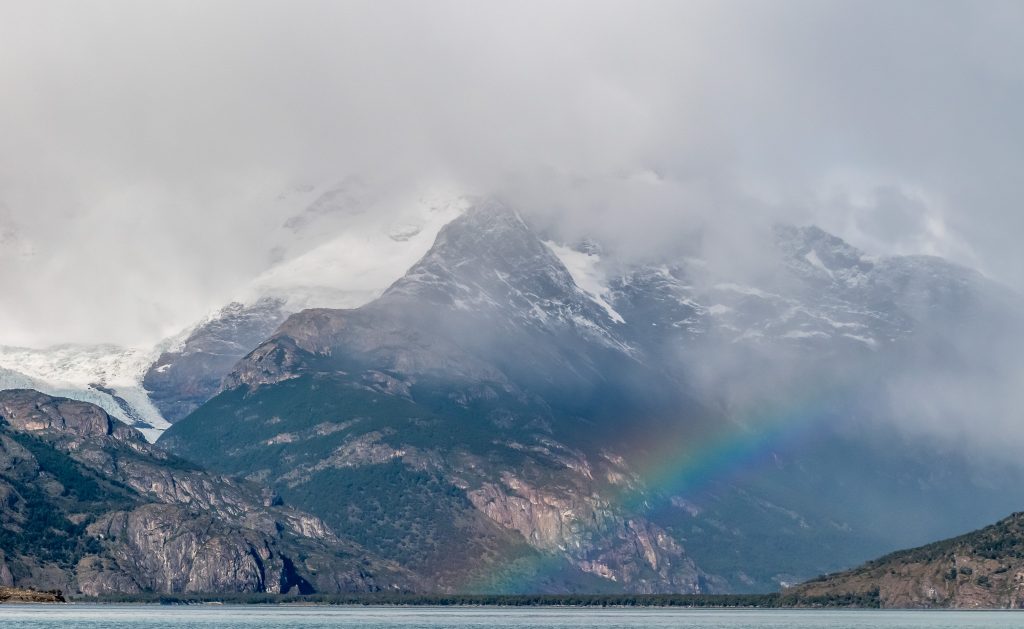
We saw a few small icebergs on Lake Argentino, but as we cruised into the Upsala Channel, more and more floating ice crossed our path. I had learned on my first cruise to Antarctica that there were different names for floating ice, depending on their size. Growlers, bergie bits, and icebergs are all defined by very specific measurements.
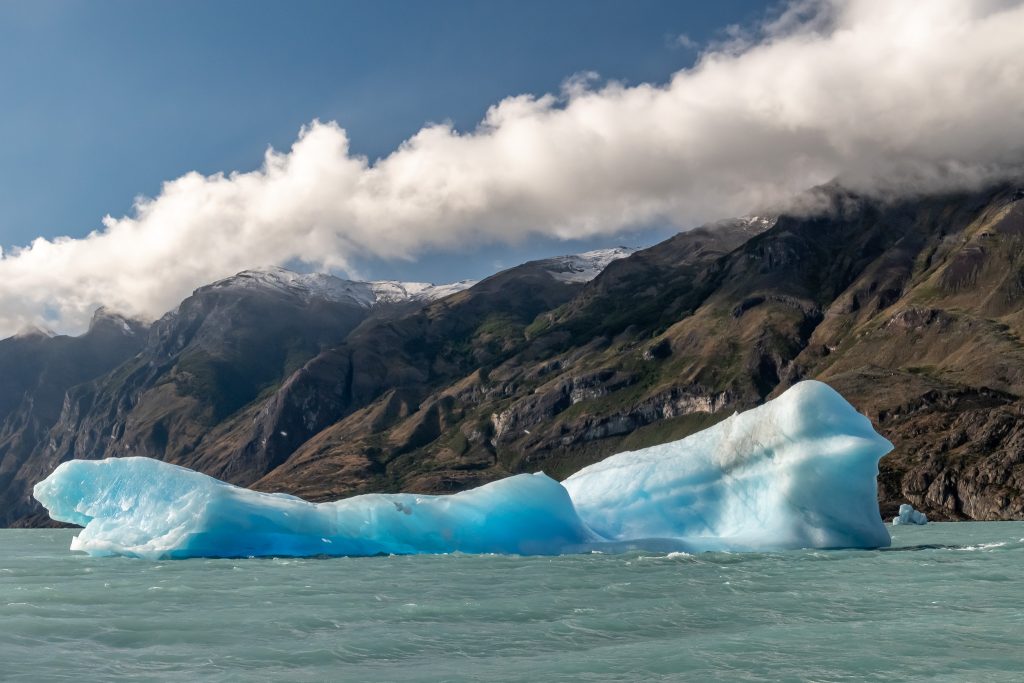
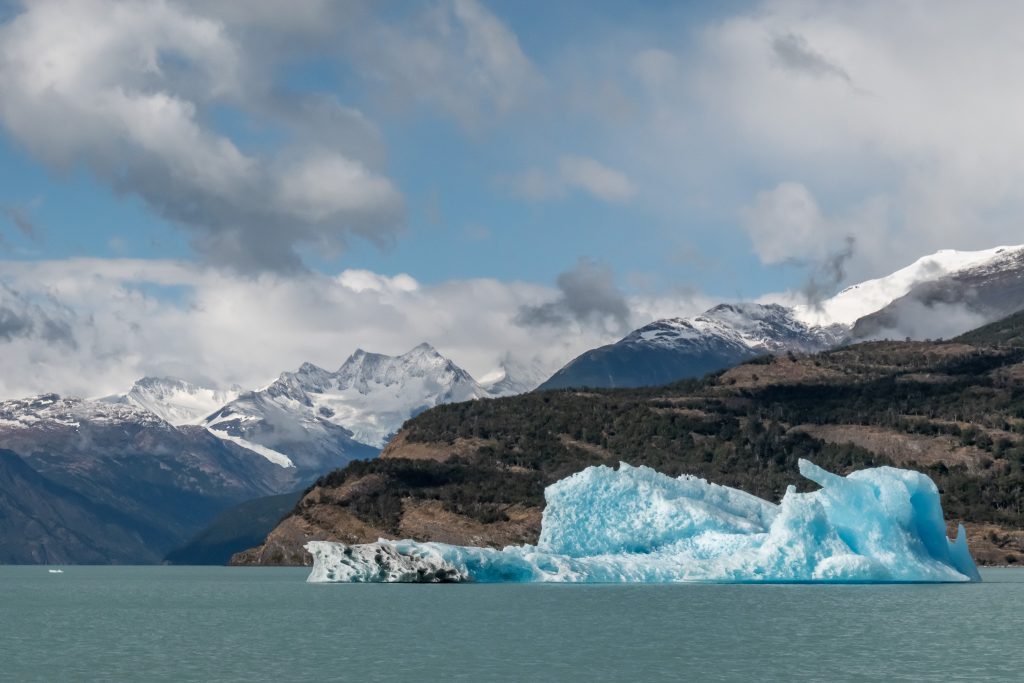
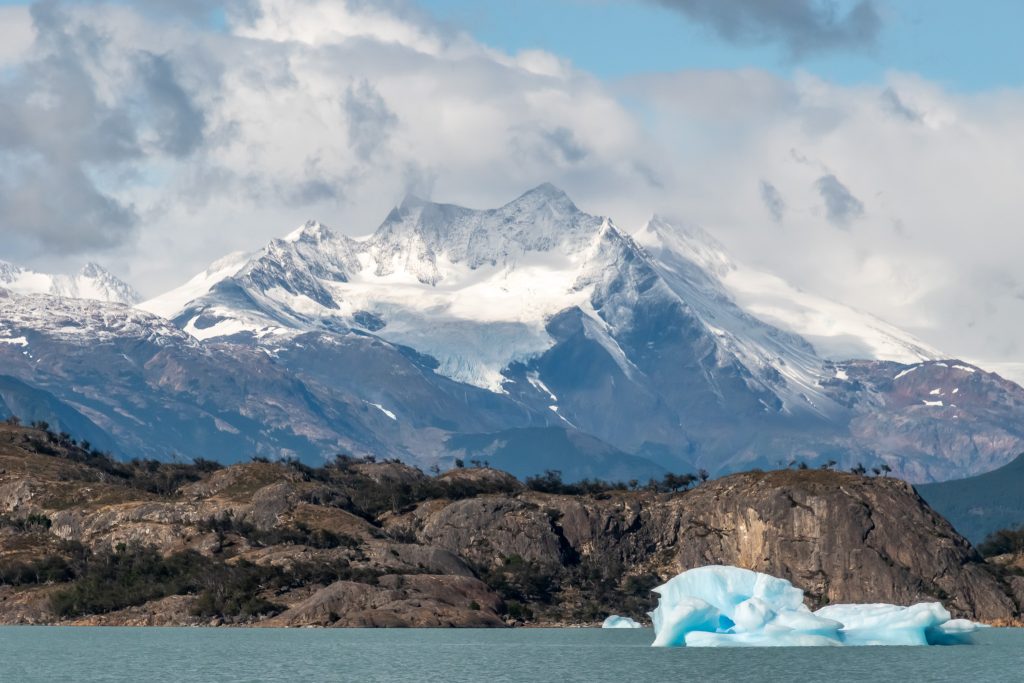
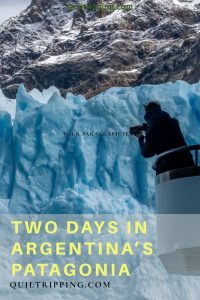
We stopped very close to a chunk of ice that was larger than our boat. Time, wind, and water had sculpted sharp angles, broad ridges, and deep gouges into the brilliant blue ice. Since only 10% of an iceberg sits above the waterline, I could only imagine how big this iceberg truly was.
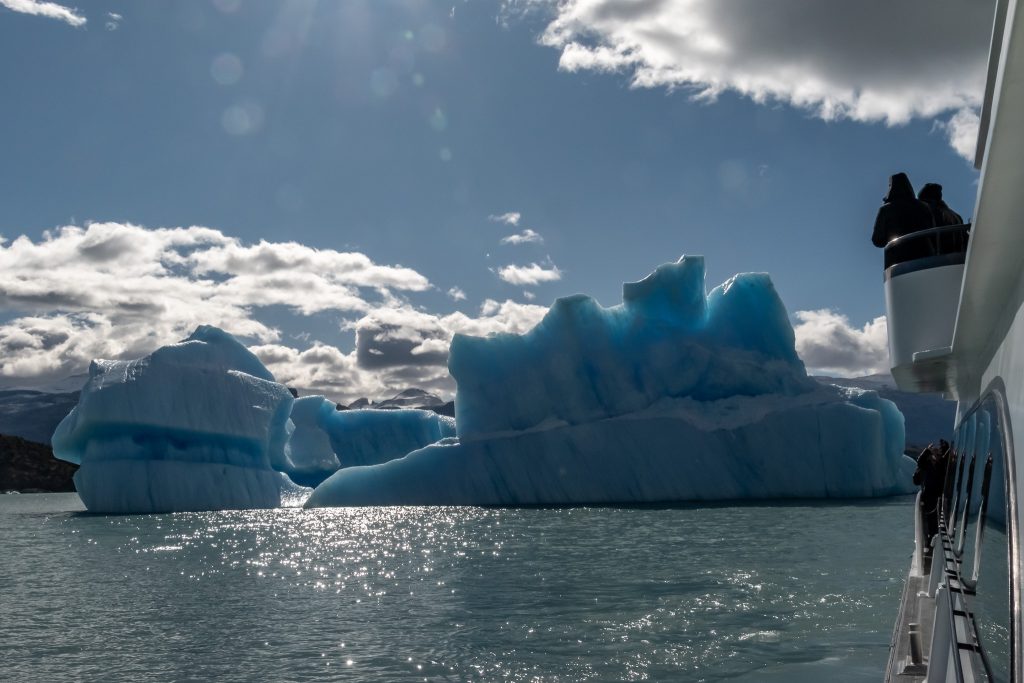
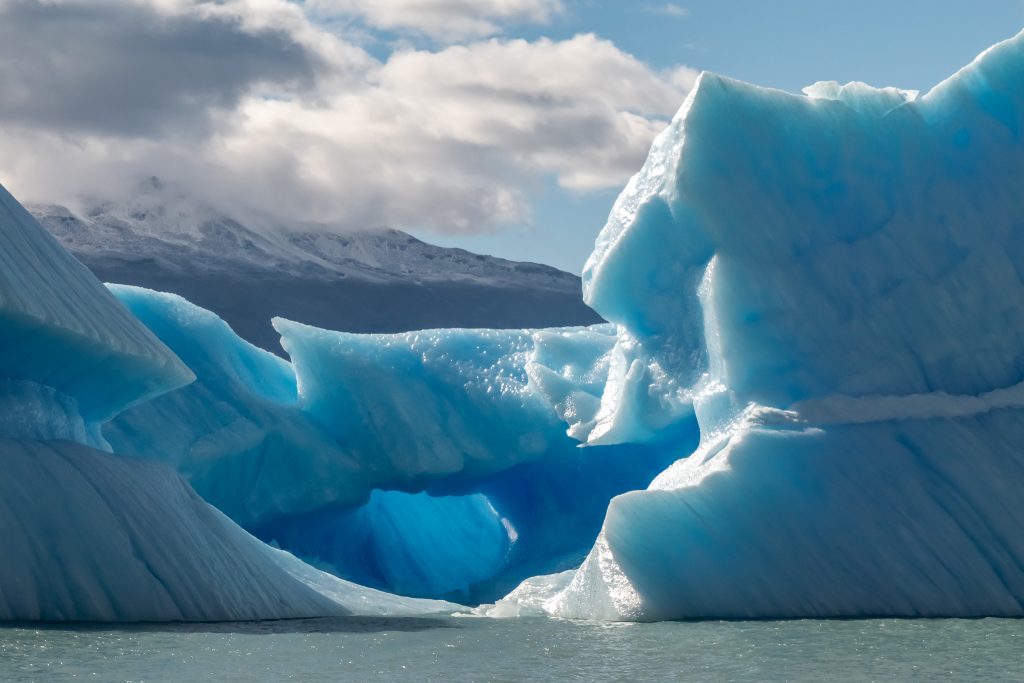
Our captain kept us in place for about 20 minutes as company photographers took portraits in front of the ice for all those who wanted one. He also circled the berg so we could see it from all angles. It was interesting how each side had a different personality.
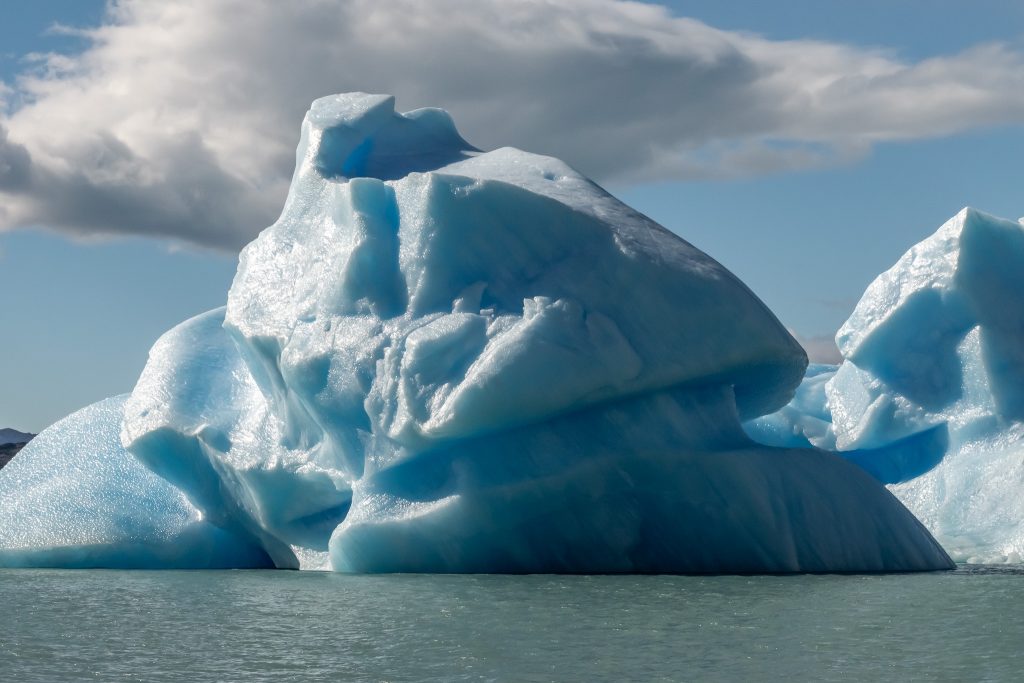
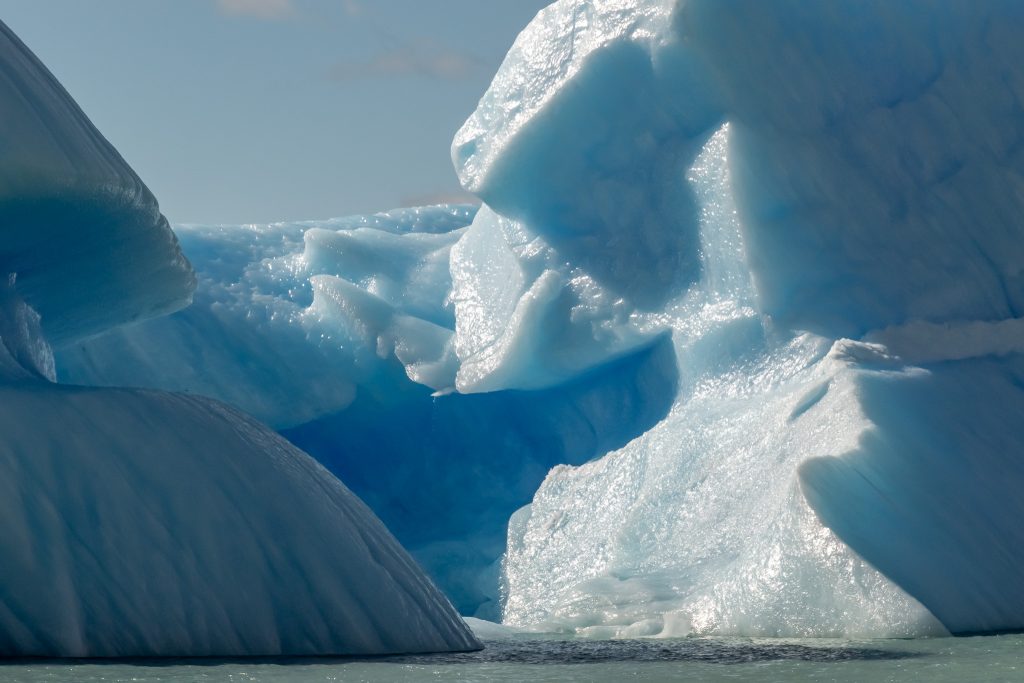
A little further on, we stopped for distant views of Upsala Glacier. The Upsala Glacier is one of many that flow from the Southern Patagonian Ice Field and is the third-largest glacier in South America. This is a very active calving glacier with an extensive amount of floating ice in front of it, which didn’t make it safe for us to get any closer.
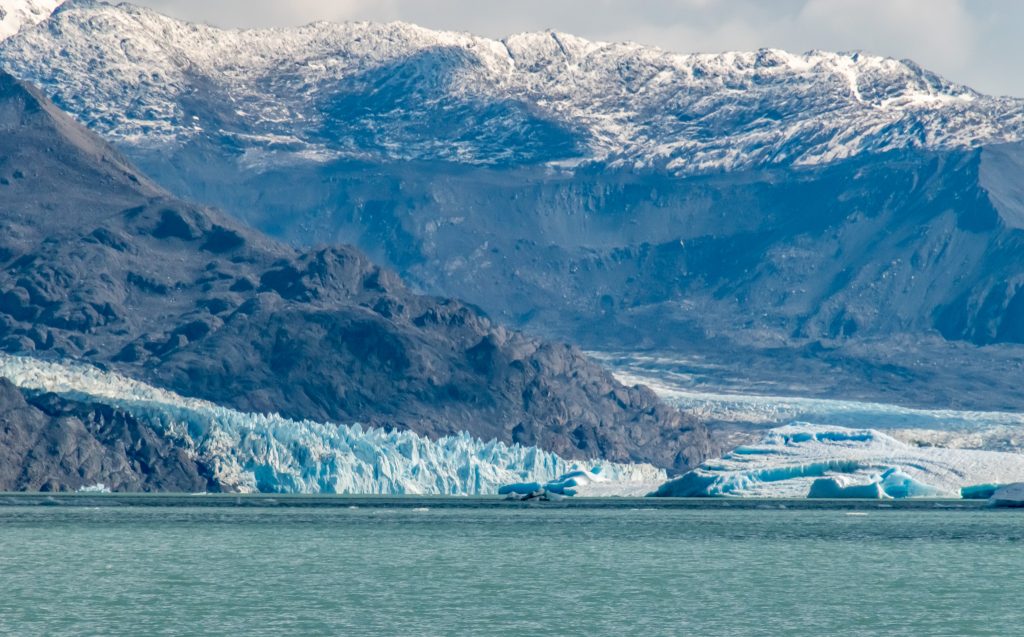
About 20 minutes later, we reached the fjord with the impressive Spegazzini Glacier. Just before the Spegazzini, we passed the Seco Glacier, a hanging glacier that has receded and no longer empties into the lake.
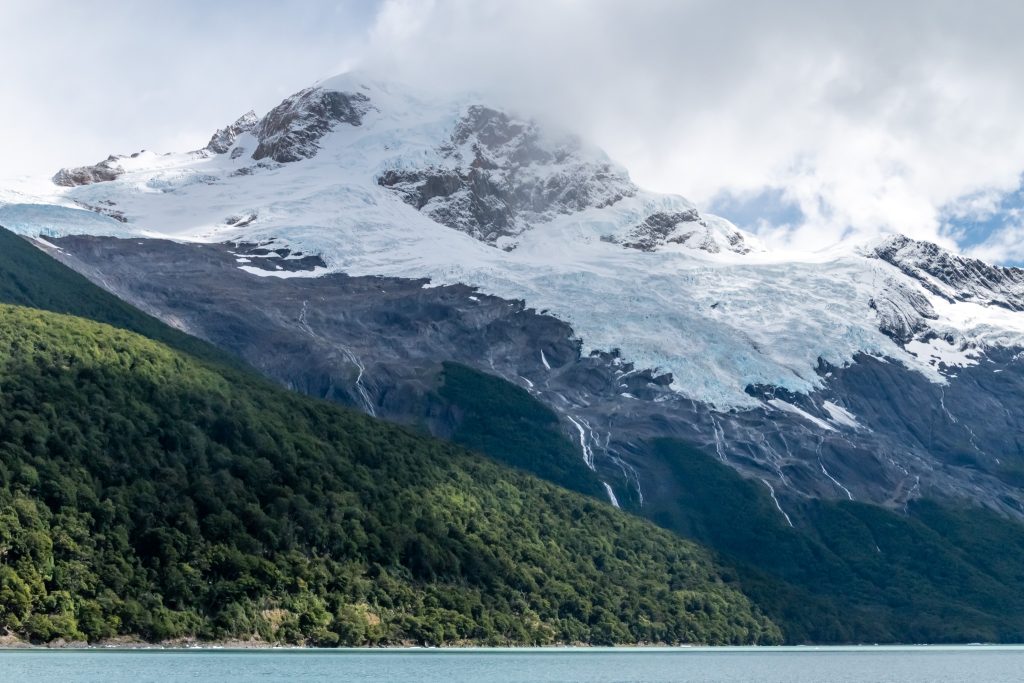

The large, stable Spegazzini glacier also originates in the Southern Patagonian Ice Field, and its face is an incredible 440 feet high. Nearby, the Peineta Glacier flows into the Spegazzini like a waterfall of ice.
Since this glacier is very stable, we were able to get to within 250 yards of its front edge. Without any real point of reference, the distance to the glacier or its height was misleading.
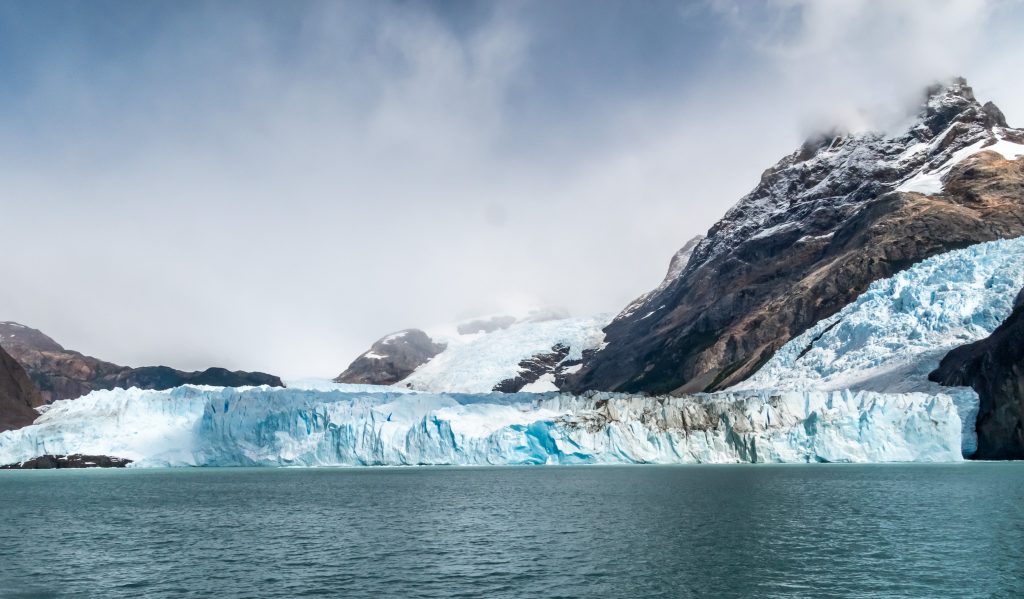
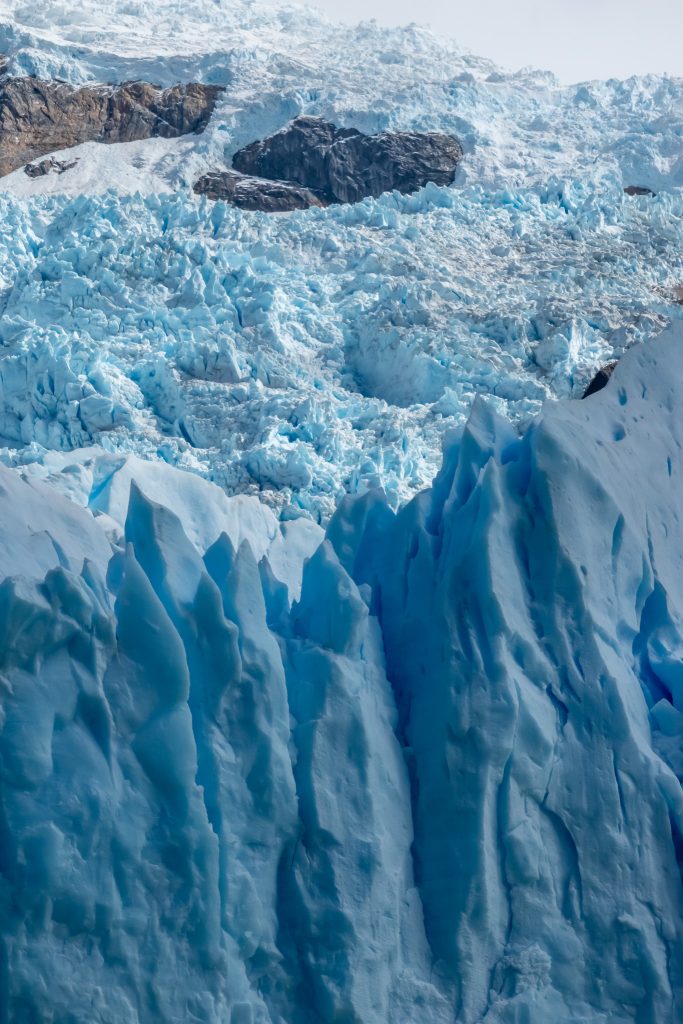
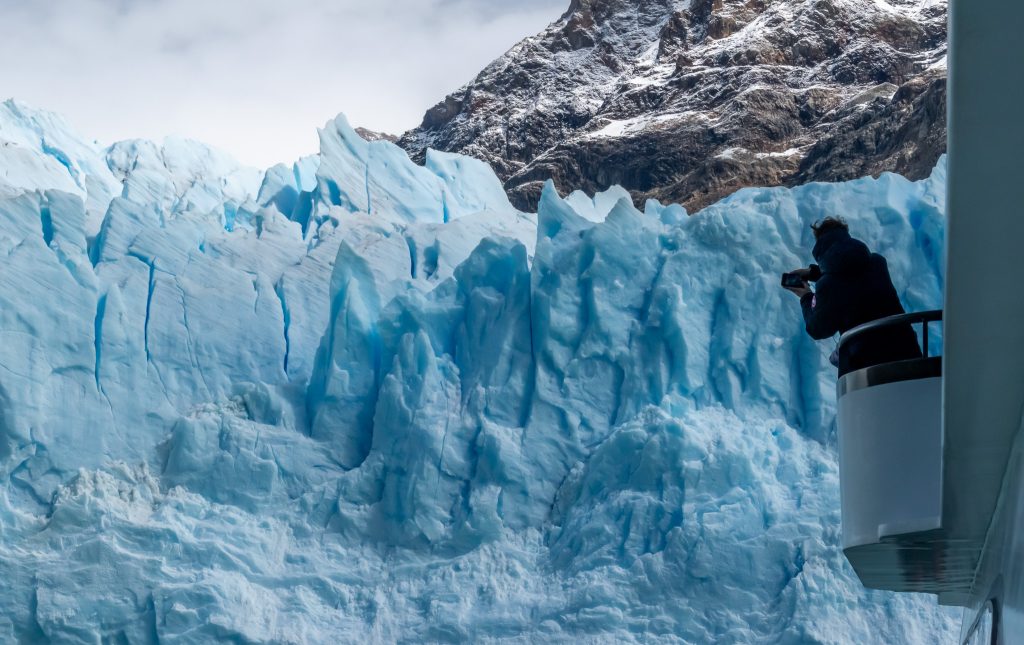
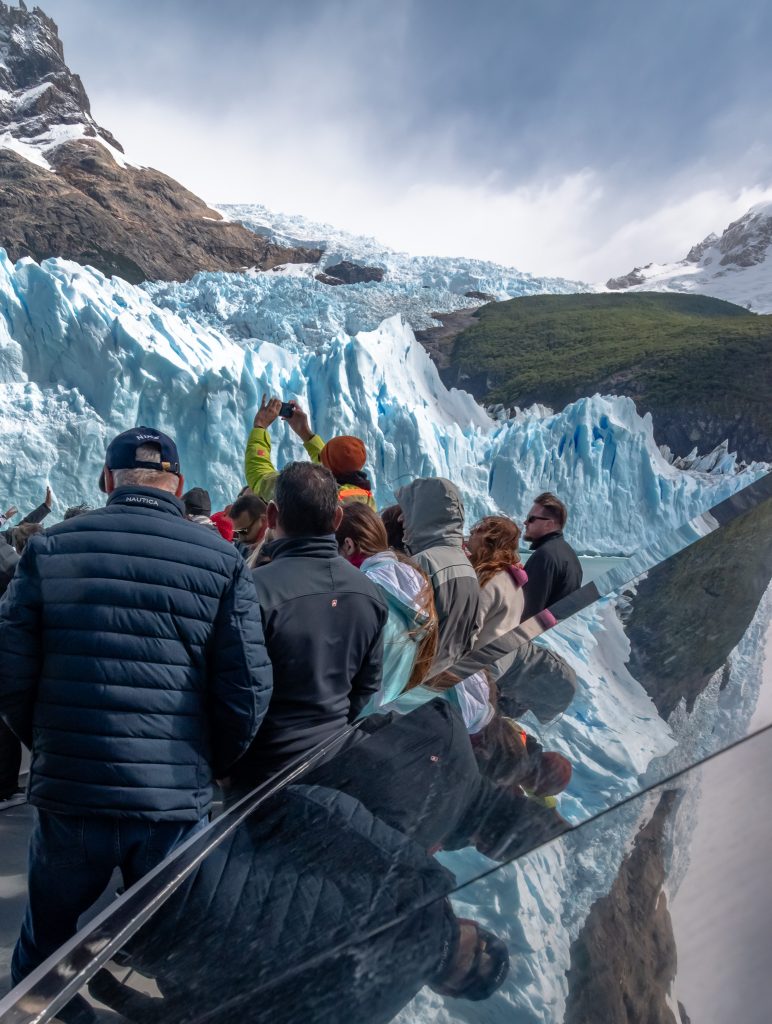
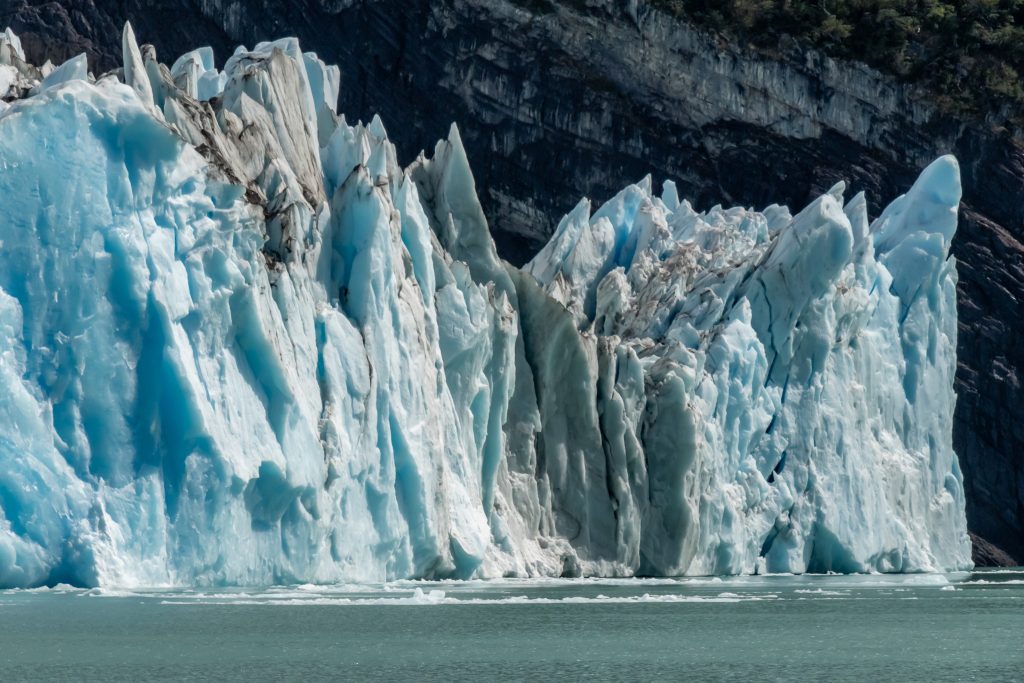
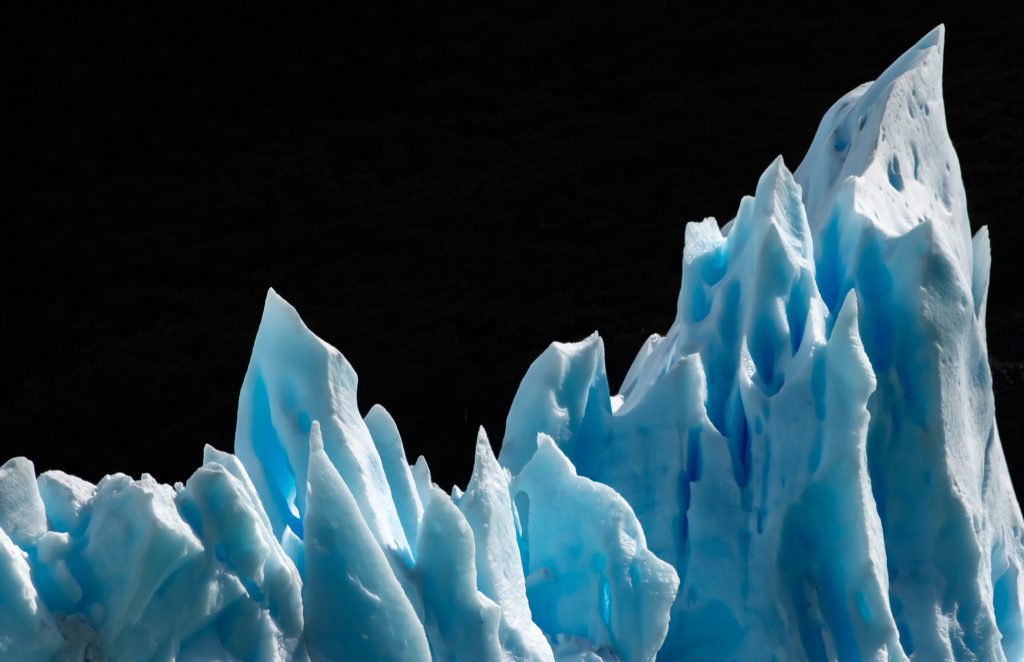
Not far from the glacier, Solo Patagonia had access to a refugio, that is, a small lodge building with a cafeteria and bathrooms. We had packed a bag lunch and chose to picnic at the outside benches with glacier views. Nearby, a metal walkway that overlooked the glacier offered more photographic opportunities.
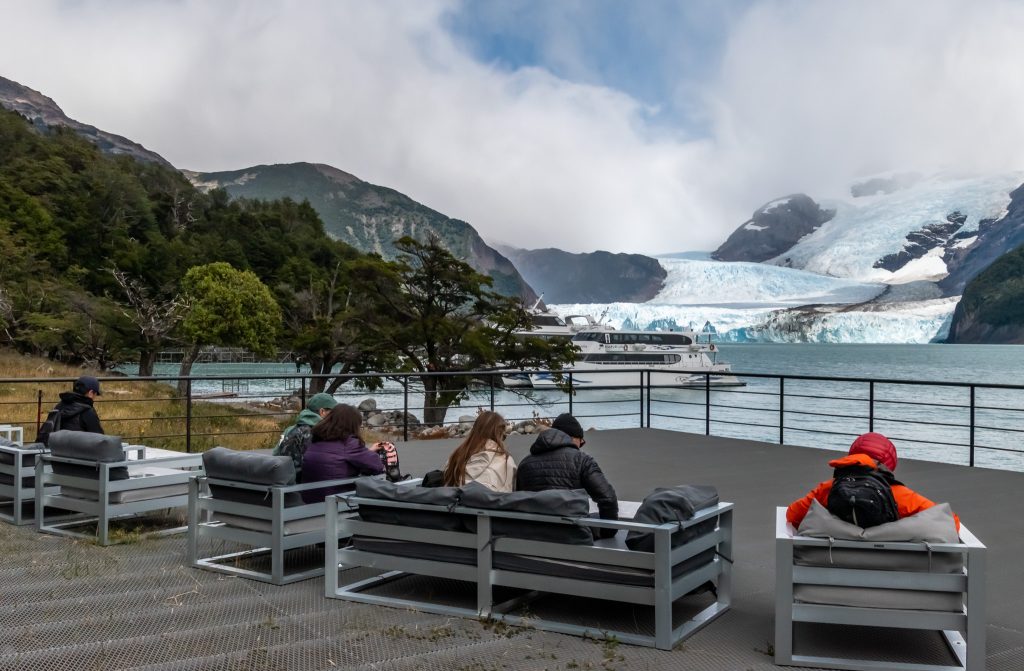
The cruise back to the port seemed to go more quickly, and we were back on land by 4 PM. Our driver was waiting for us, and it wasn’t long before I could enjoy my hot pot of tea at the hotel.
For us, our two full days in Argentina’s Patagonia Region were long enough to see the beautifully scenic highlights. With more time, I would have also spent a few days in El Chalten, three hours away from El Calafate, to see Mount Fitzroy.
From El Calafate, a six-hour bus ride took us to Puerto Natales, where we started our Chilean Patagonia adventures.
Other Patagonia travel stories:
Seeing Penguins in Punta Arenas: Two Days With the Punta Arenas Penguins
A week in Puerto Natales: Discovering Things to Do in Puerto Natales, the Gateway to Torres del Paine in Chile’s Patagonia
Our detailed Patagonia and Iguazu itinerary: My Independent Patagonia Itinerary With a Side Trip to Iguazu Falls
Things to do in Ushuaia: My Favorite Things to Do in Ushuaia, Argentina, The Gateway to the Arctic
Three days in Torres del Paine: Three Days in Torres del Paine From a Non-Hiker’s Perspective
Thanks for visiting.
Rose
Pin this!