
Last Updated on 04/05/26 by Rose Palmer
On our three-week Patagonia trip, my husband and I side-tripped to Punta Arenas for the sole purpose of seeing penguins. For those who don’t want to go to Antarctica, this is a (relatively) easy way to see penguins up close and personal in their natural environment.
Two penguin colonies could be visited as day trips from Punta Arenas. The king penguin colony on Tierra del Fuego was a very, very long day trip. Somewhat closer on Magdalena Island was a colony of gentoo penguins.
From Argentina’s Los Glacieres National Park, a 6-hour bus ride took us across the border to Puerto Natales, where we rented a car. After an overnight in town, we drove the easy 3.5 hours to Punta Arenas, where we stayed for three days.
I was surprised at how flat, grassy, and dry the scenery was in this part of Patagonia. An occasional glimpse of a rhea bird or a guanaco blended in well and did nothing to break up the monochrome scenery.

How to see the Punta Arenas penguins
The area around Punta Arenas has a king penguin colony and a Magellanic penguin colony that can be reached via day tours from Punta Arenas.
A long day to see king penguins

This was a really, really, really long day (15 hours), most of it driving in a van. I knew this when I booked the tour via Get Your Guide. Just before 8 AM, our Go Patagonia van picked us up at our hotel, and we didn’t get back to the hotel until almost 11 PM at night.
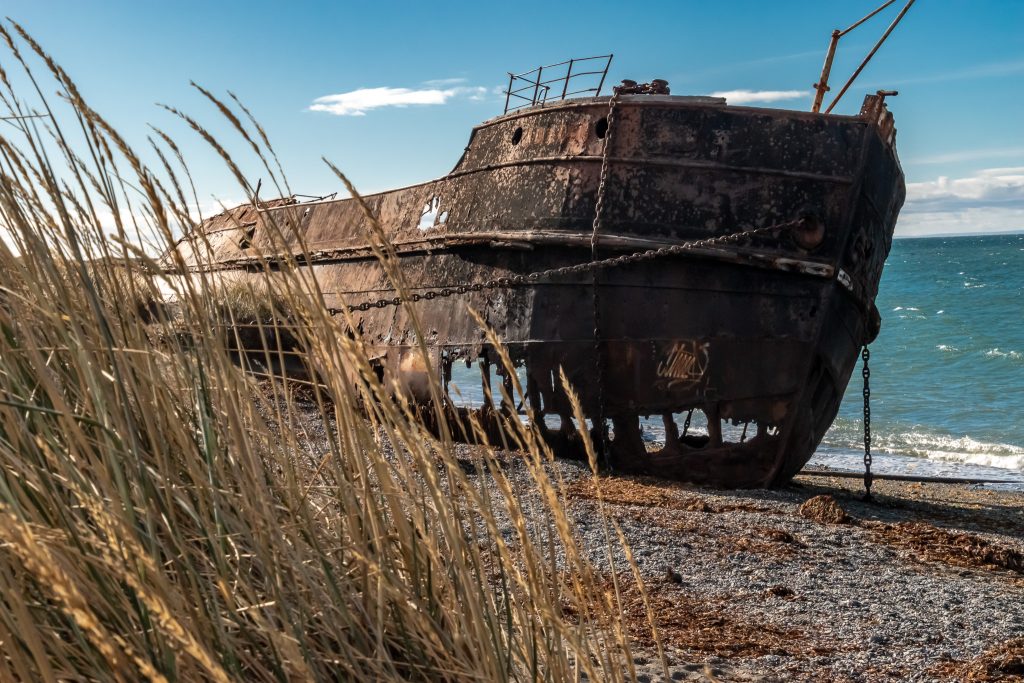
This was a small group tour in a 15-seater van with a driver and a guide. We spent the first two hours driving to the ferry at Punta Delgada. On the way, we made quick photo stops at two historic sites: Estancia San Gregario and the rusted remains of the Steamboat Amadeo and the Barge Ambassador.

We were lucky in that the line of cars waiting to get on the ferry wasn’t very long, and we were able to drive on the next one. A 20-minute ferry ride took us across this narrow channel to the island of Tierra del Fuego.
After another hour’s drive, we reached the aptly named Route 257 Restaurant. For about $17, we had a choice of chicken, lamb, or salmon, served with either rice, French fries, or a salad, along with a soda. The food was ok, and with nothing else available all day, I wasn’t going to be picky. The first rule of travel in isolated spots is to eat and drink when it’s offered and use a toilet any time it’s available.
We arrived at the king penguin conservation area around 2 PM. After paying for our tickets (credit card accepted), a conservancy guide walked us to the penguins’ current breeding site.
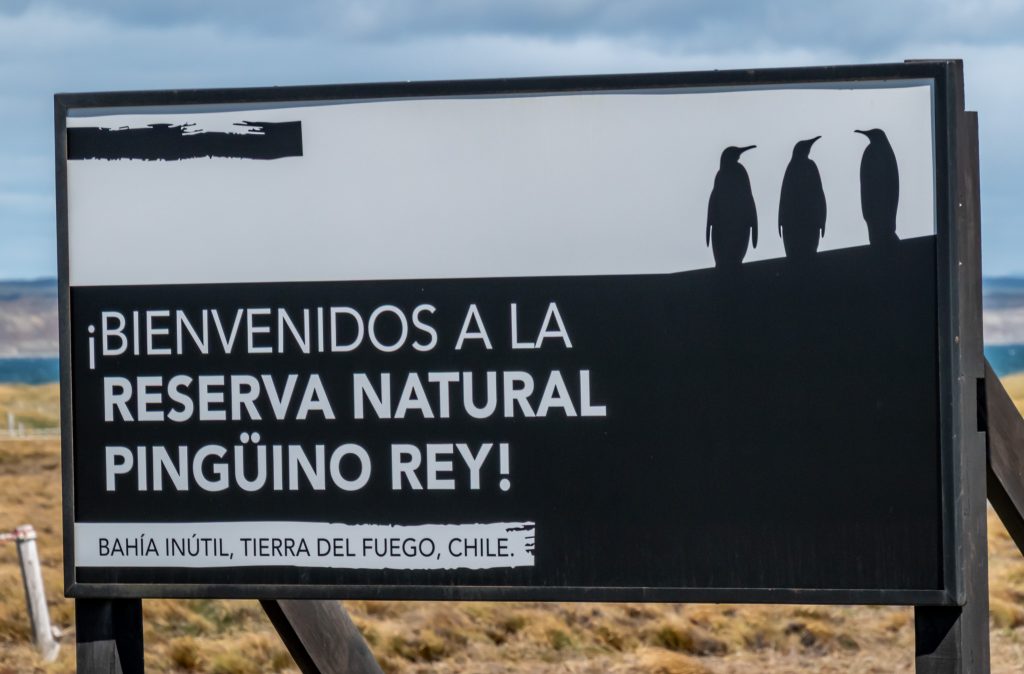
We were lucky, because this particular year, the penguins chose a site that was on the bank on the other side of the river, just across from the trail. In past years, the colony had settled closer to the ocean and had to be viewed through scopes in a shelter.
Our guide at the reserve, veterinarian Maria Paola, told us the colony currently has about 160 to 190 adult birds. She made it clear that these birds are wild and are not fed by the conservancy. I learned that this is a private conservation area and that this is the only king penguin colony in South America.
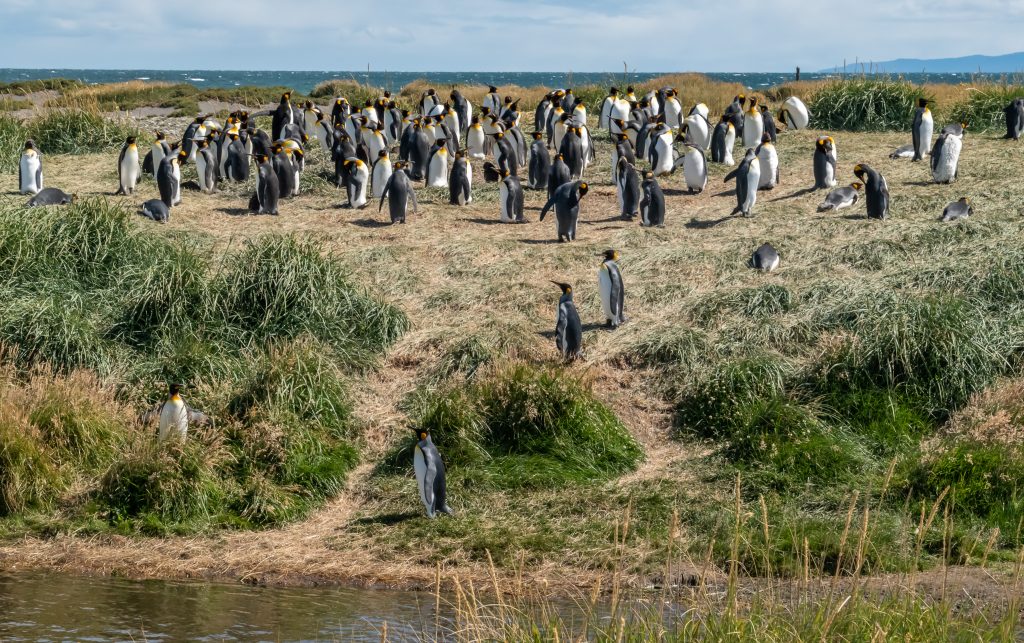
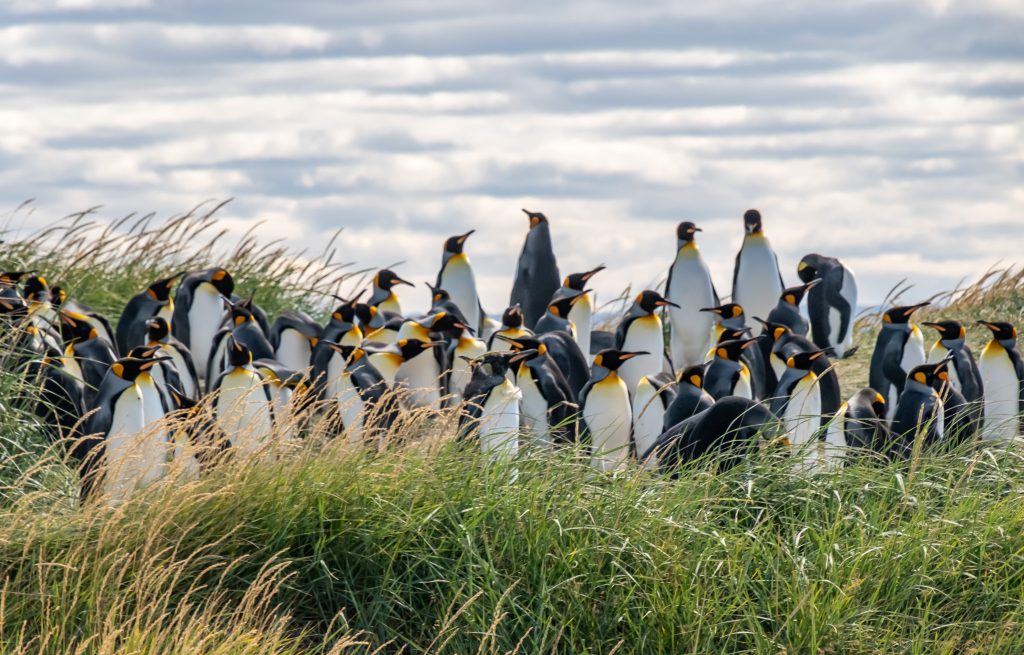

After emperor penguins, king penguins are the next largest penguin species. While emperor penguins live on the ice in Antarctica, king penguins live only in the subantarctic islands (like Tierra del Fuego, the Falkland Islands, or the South Sandwich Islands). In this way, they don’t compete with each other.
It really was a thrill to stand there and watch these beautiful, regal-looking birds. For the most part, the majority just stood in one place and conserved energy. Occasionally, some would raise their heads straight up towards the sky and vocalize loudly. To me, it sounded like nails on a chalkboard, but I suppose to other penguins, it was music to their ears.
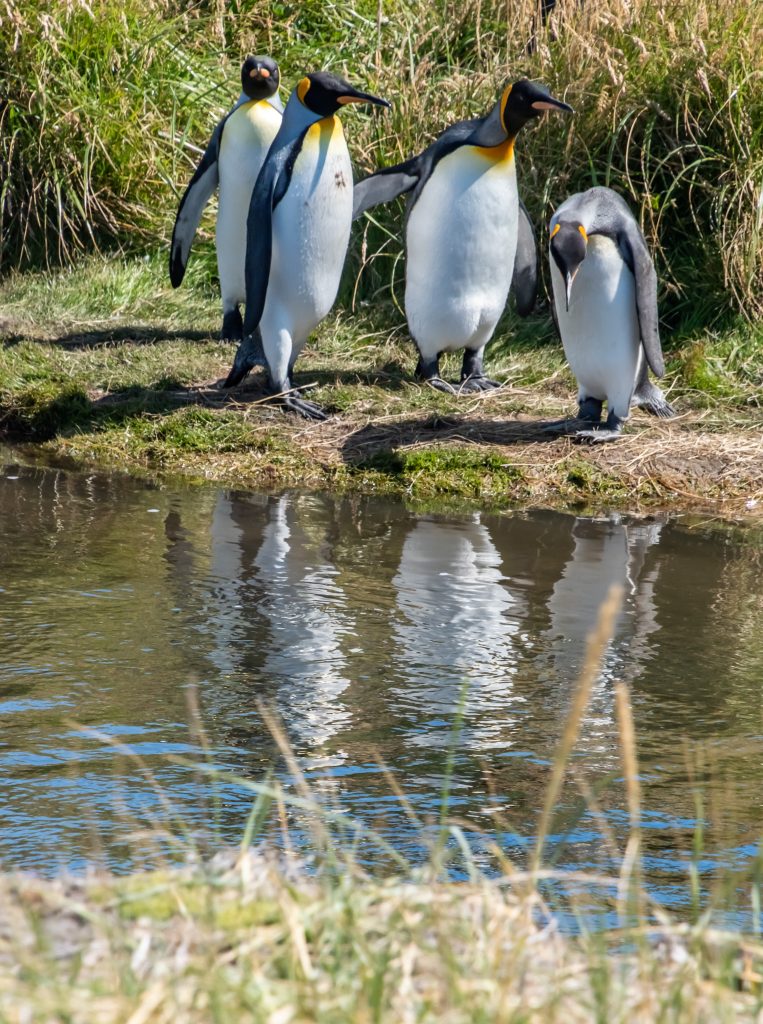
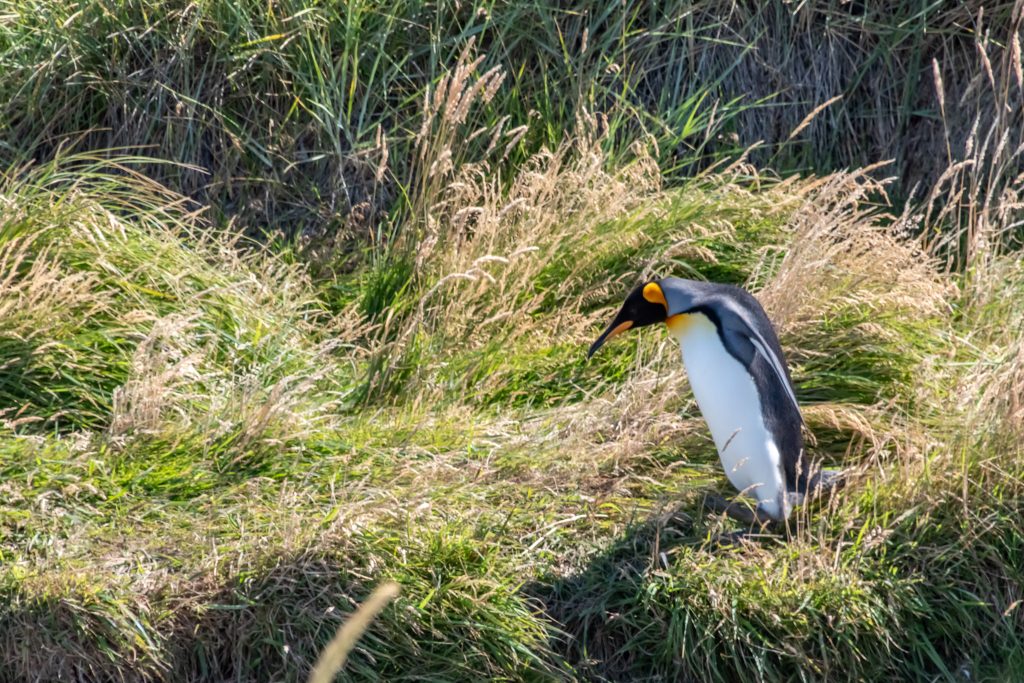
A few penguins approached the narrow river and then just stood there, looking at the water. Maybe they were trying to decide if it was worth going for a swim. Then they waddled back up the bank to the group.
We also had three penguins on our side of the river. I called them Larry, Mo, and Curly because all three stuck together and mimicked each other’s actions. They were quite curious and slowly approached our group without any fear.

Despite coming to this protected reserve to raise their chicks, the penguins still have a 50% mortality rate. This is the only spot on the planet where the penguins have terrestrial predators.
The fox and mink that were introduced to this part of the world for their fur now go after the penguin eggs and chicks. I also learned that archeological digs on this island show penguin bones that are 500 to 1000 years old.

We left the reserve around 3:30 to start our long trek back to Punta Arenas. In general, throughout our drive, the landscape was dry, flat, treeless, and windy. Besides the king penguins, we were lucky to see other wildlife.
The rhea is a big flightless bird, similar to an ostrich, but it is actually more closely related to the emu in Australia. They really blend in with the landscape and are hard to spot. Our guide told us to “look for a bush with a neck”, and he was right.
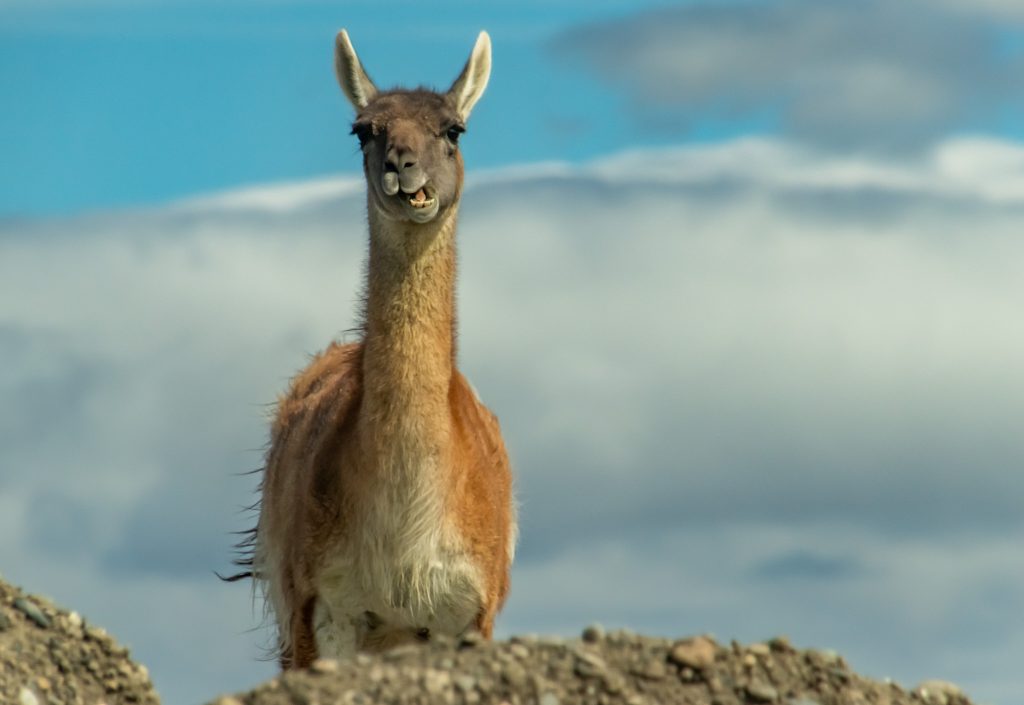
Guanacos are native and were very prevalent. They are actually part of the camel family, though they do not have a hump. Sometimes they were close to the road, and as long as we stayed in the van, they were not bothered by our presence.
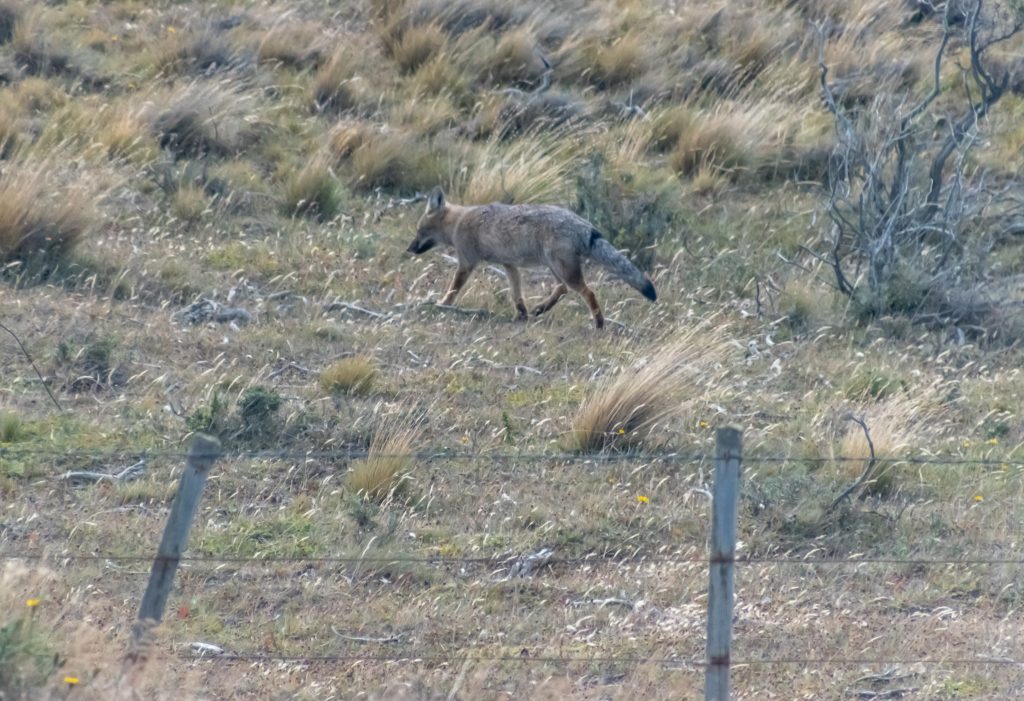
A few times, we saw a grey fox hunting, and they also blended in with the landscape. They are not native to this part of the world, but we’re introduced to control the European rabbit population, which is also not native.
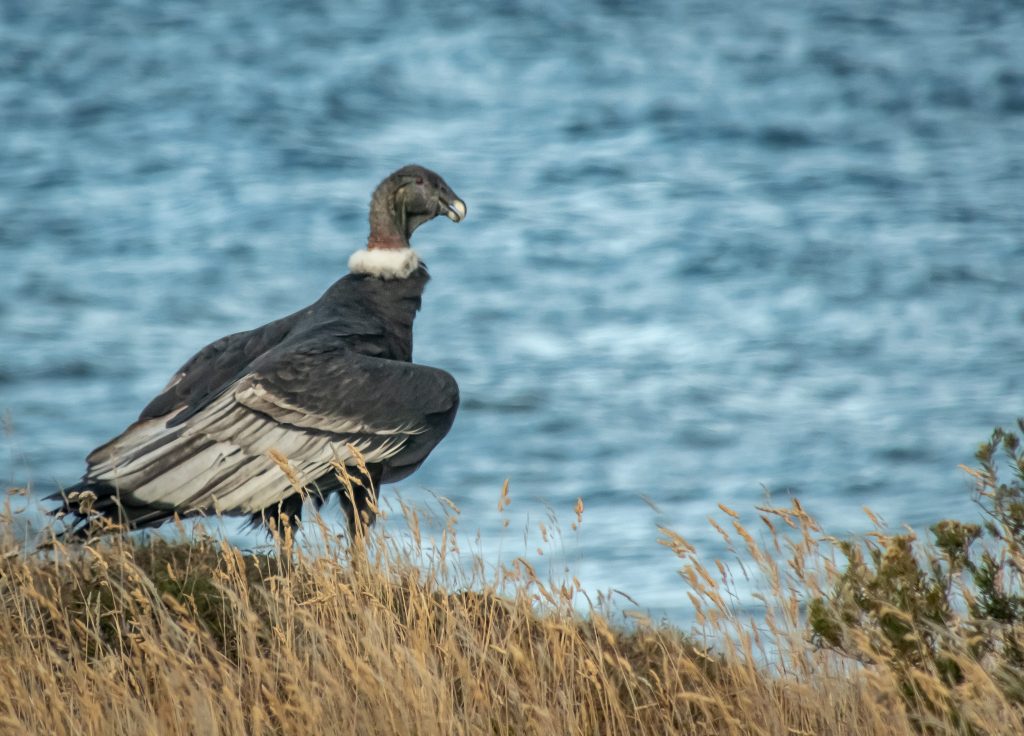
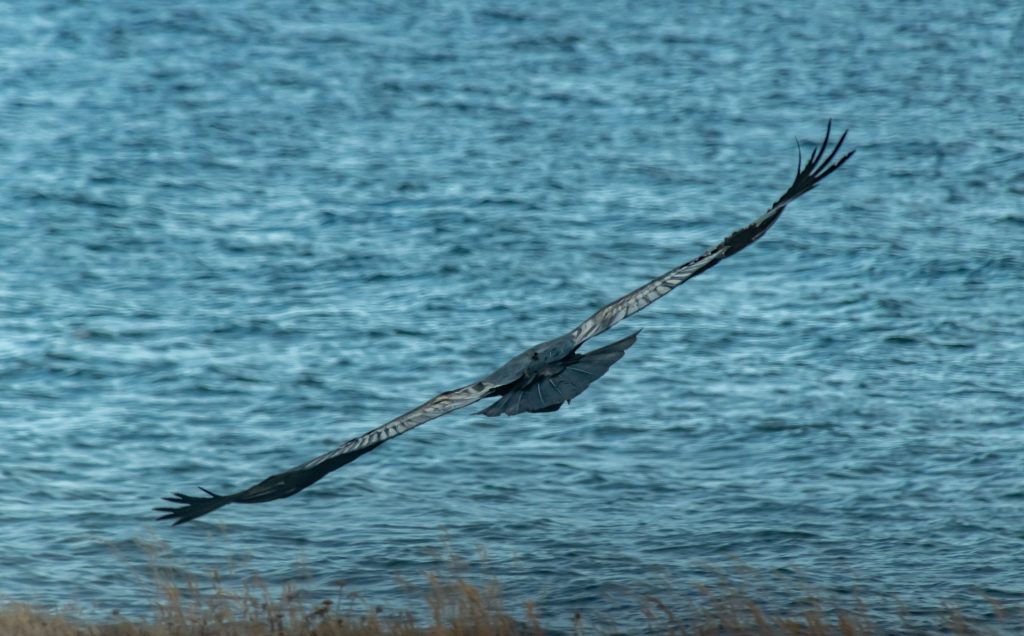
We were also very lucky to see a female condor as we drove along the coast. Our guide said they are not normally seen here and assumed that some kind of carcass had attracted her.
Another two-hour drive took us to the town of Porvenir, where we were scheduled to catch the ferry back. Since we had time before our scheduled ferry, we stopped at two memorials that remembered the Selk Nam or Onas people. This was a native tribe that once lived on the island, but is now extinct.
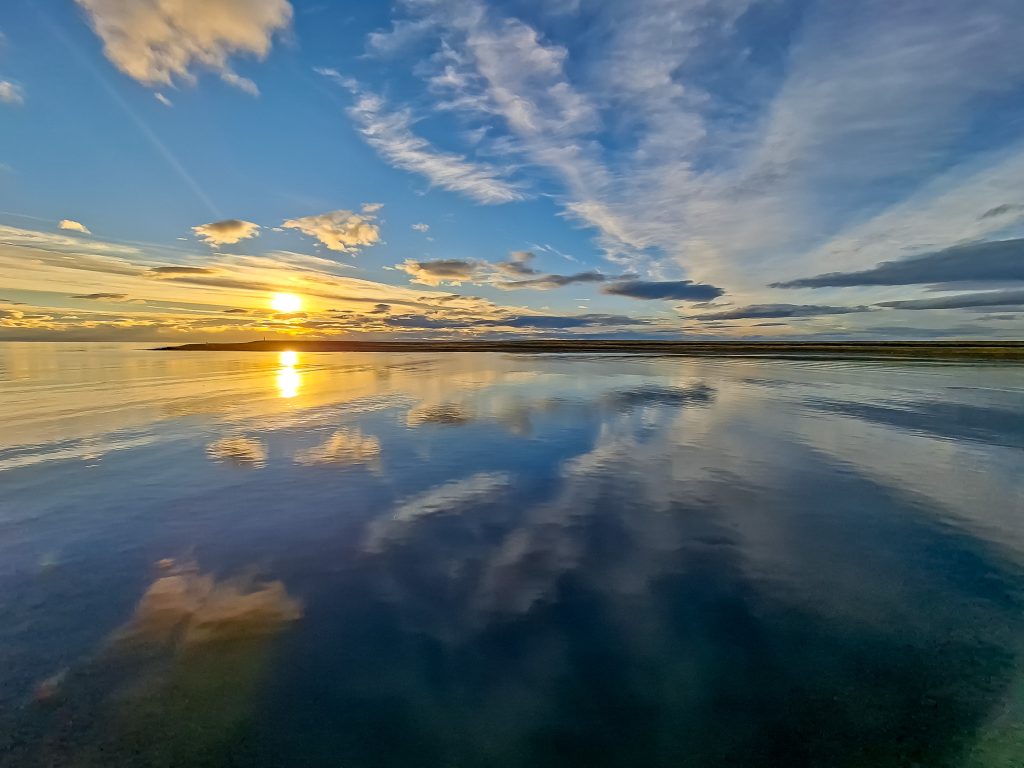
We started boarding the ferry at 7:30 PM and set sail at 8:30, just in time to see a beautiful sunset. Two hours later, we reached Punta Arenas, and by 11 PM, we were back at our hotel.
Whew! Was a 15-hour day worth it? My husband thought so. He gets very seasick, so he will never have the chance to take a cruise to Antarctica to see penguins. For him, this really was a once-in-a-lifetime opportunity.
A day to Magdalena Island to see Magallanic penguins


This shorter day trip to see the Magellanic penguins was run by Solo Expediciones. We took a taxi from our hotel to their offices for a very early morning 6:30 AM start.
A 30-minute ride in a large coach bus was followed by a 50-minute speedboat ride to Magdalena Island. This was a typical mass tourism, large group tour with a lot of people packed into a small boat.
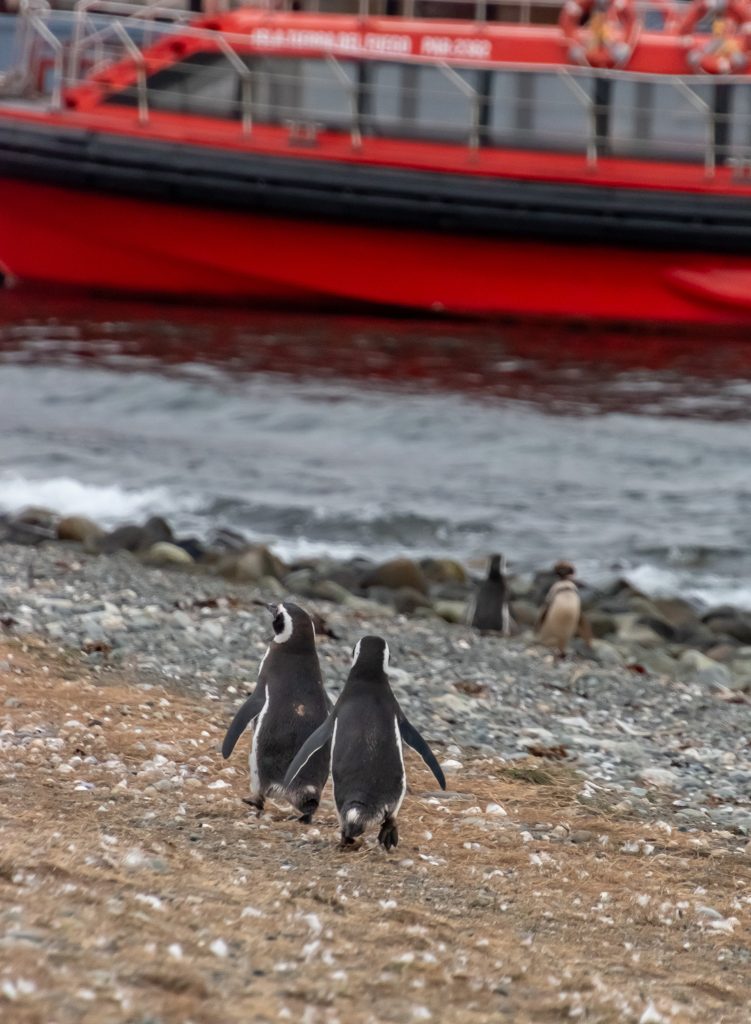

The company advertises that you can see 60,000 Magellanic penguins on the island. Apparently, that was the case 15 years ago, but it is no longer true today. Due to habitat loss, the penguin population on the island is now barely 6000.
Once we reached the island, we walked as a group on a roped-off trail. Our guide was there just to keep the group together – there was no commentary at all about the penguins or their habitat.

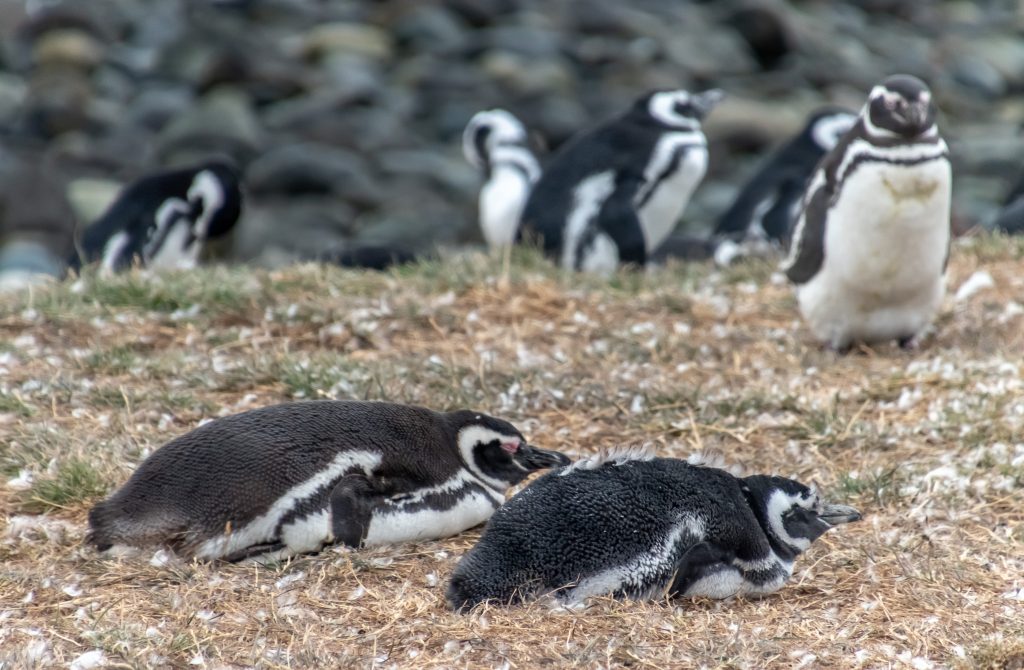
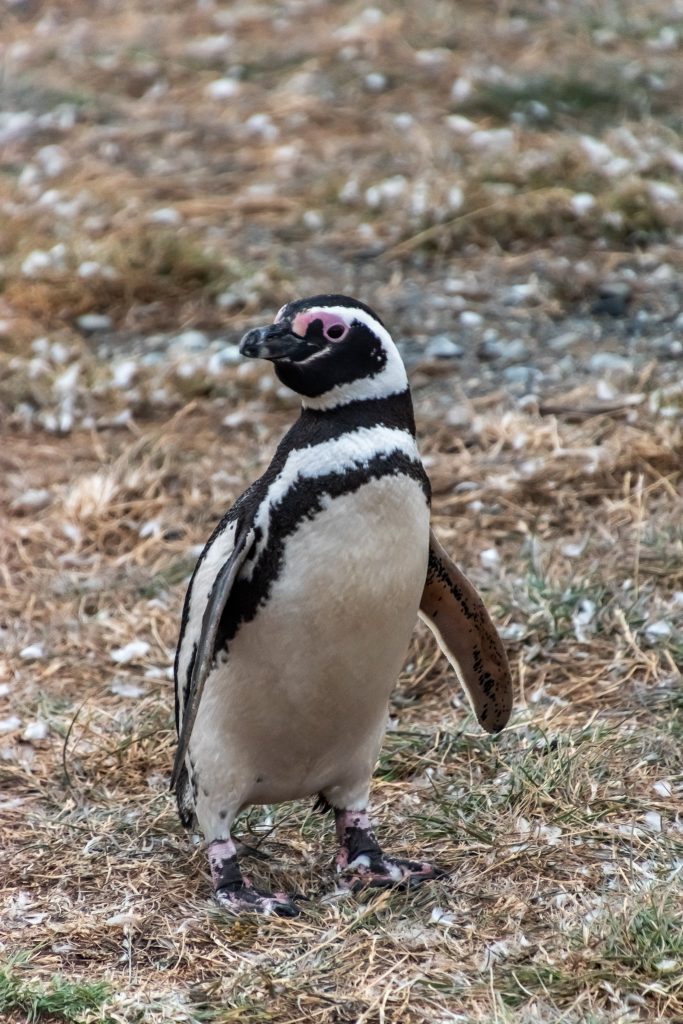
After walking the loop trail around the lighthouse for an hour, we boarded back onto the boat and headed to Marta Island. The huge rock was covered with cormorants and some penguins on top, and a lot of lounging sea lions at the shore. We did not get close enough to get any good photos.
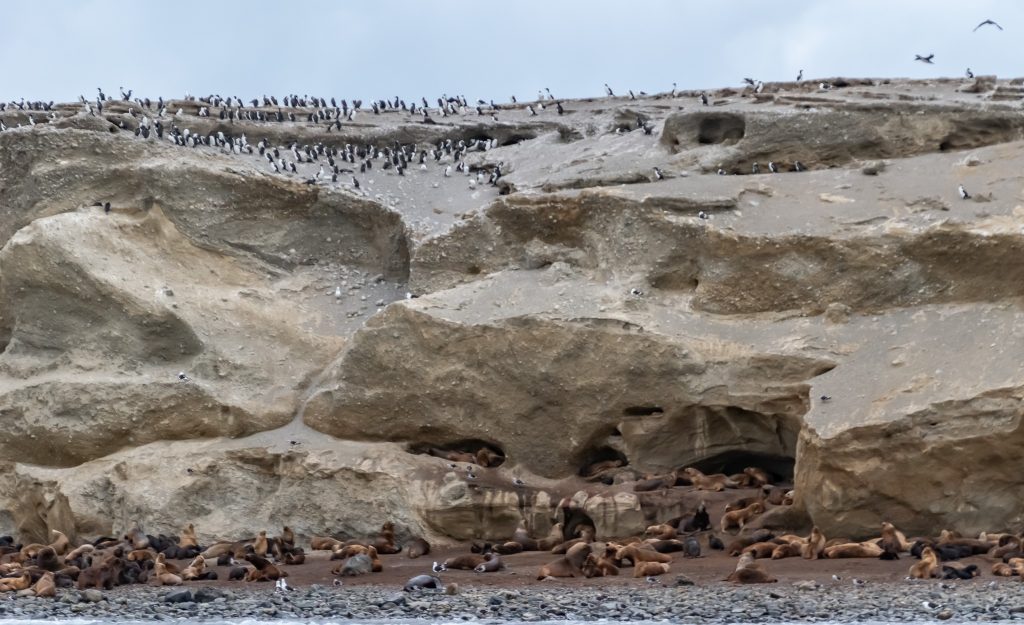
After 30 more minutes in the boat, it was back to the mainland and the coach bus back into town. It was fun to see the penguins, but disappointing that there weren’t as many as advertised.
The boat was also small and cramped, especially the outside viewing space on the roof. Next time, I will choose one of the companies that uses a larger boat.

From Punta Arenas, we drove back toward Puerto Natales, where we spent a week exploring Torres del Paine National Park, and my husband tried his hand at fly fishing for a few days.
Other Patagonia stories:
Exploring Argentina’s Patagonia: Two Days in Los Glacieres National Park -The Best of Argentina’s Patagonia Region
Thanks for visiting.
Rose
Pin this!