
Last Updated on 05/05/26 by Rose Palmer
It’s important in any craft to continue honing your skills. Whether it’s blogging, photography, or quilting, I like to try classes that offer a different perspective, but they also need to be in interesting locations.
One of my favorite quilting class experiences is offered by Empty Spools Seminars at the Asilomar Conference Center located in beautiful Pacific Grove, California. In fact, I liked it so much that I’ve gone twice.
I am primarily a self-taught quilter, but once I had more free time, I decided to take some quilting classes from the craft’s top instructors. I’ve been fortunate to take a class with Kaffe Fassett in Dubai, experienced a European quilting class with Crafty Retreats in central France, and learned how to paper piece with Judy Niemeyer from Quiltworx, one of the industry’s leading quilt pattern designers.
Since I also love to travel and take photos, I look for quilting classes in interesting locations, so attending one of the Empty Spools Seminars sessions was a natural fit. The program takes place at the historic Asilomar Conference Grounds, known as the “Refuge by the Sea” on the Monterey Peninsula in California.

This one-of-a-kind quilting retreat has been a yearly event since 1985. It has grown into a 5-week program featuring classes by a dozen or more well-known artists during each of the five scheduled sessions. Instructors have included renowned quilters like Victoria Findlay Wolfe, Bonnie Hunter, and Susan Carlson, among others.
One of the things I really liked about this program was the wide variety of quilting styles that were presented in the workshops. I could hone my skills with traditional piecing, learn how to make an intricate paper pieced design, try my hand at producing a pictorial quilt, or improve my machine quilting techniques, just to name a few of the artistic options available. Instructors teach for one or two sessions, and each class is a different project or technique.

The five Empty Spool Seminars sessions start at the end of February and run through April. Each session lasts for six days, and the fees include class instruction, accommodations, and all meals – as well as spectacular west coast, Pacific Ocean sunsets.
My first Empty Spools Seminars experience
The schedule and program for the Empty Spools Seminars are set a year in advance, and registration usually opens in June (check the website for the exact date). Some of the very popular classes filled up almost immediately, but the first time I went, I was able to register in December for an end-of-February class.
My session started on a Sunday afternoon in late February and went through Friday lunchtime. I scheduled my trip to arrive in San Francisco on Saturday and leave from SFO the following Saturday. I was able to book less expensive airfare and better flight options into SFO versus the Monterey Airport, which is the one closest to the Asilomar Conference Center.
Because I was arriving a day early, I booked an additional night at Asilomar for the Saturday night that I arrived. I also booked a hotel near the San Francisco airport for Friday night after the class ended, so that I was nearby for an early morning flight back to the East Coast.
The closest airport to the Asilomar Conference Center was the Monterey Airport. From here, I could have taken a taxi or an Uber to Asilomar, 30 minutes away. Since I was flying into San Francisco, which was a little over 100 miles away, I needed a rental car, which was fine since it gave me the option for some additional sightseeing during my free time.
After landing at the San Francisco airport on Saturday, I headed to the Land’s End Lookout Point and lunch with a view at the historic Cliff House (sadly, this restaurant is now permanently closed).
Land’s End is part of the extensive Golden Gate Recreation Area, which has several interesting sights and outdoor options. After lunch, I explored the Land’s End area, including the ruins of the old Sutro bath house and some of the trails with views of the distant Golden Gate Bridge.

I walked for a few hours and then started my drive toward Pacific Grove and the Asilomar Conference Center. I chose to take Rt 1 along the coast rather than the more direct interstate route. This turned the 125 miles into a slower 3-hour drive, but it was infinitely more scenic and much more pleasant with less traffic. Before it got dark, I stopped at many of the pull-offs along the way and discovered some of the Pacific coast beaches and trails.

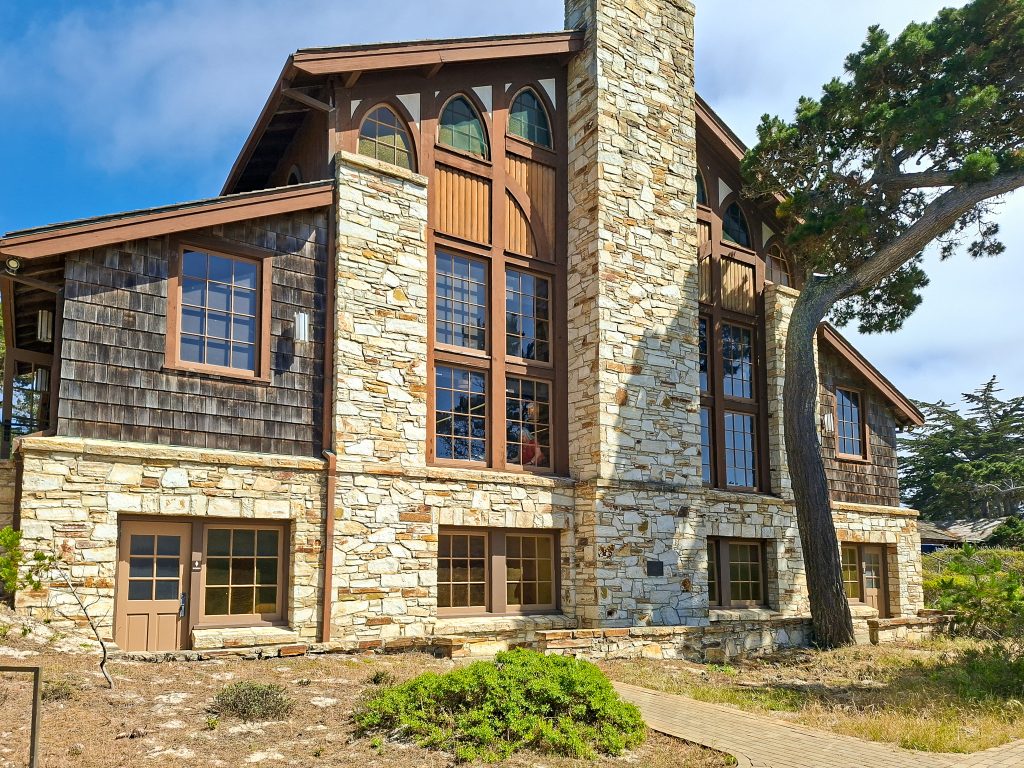
Even though I checked into Asilomar after dark, it was still easy to appreciate the historic architecture. The site was originally built as a YWCA training facility in 1913 and was designed by female architect Julia Morgan in the California Arts and Crafts style (she also designed the famous Hearst Castle).
Despite its size and the massive redwood beams and huge stone fireplace in the Hearst Social Hall, where I checked in, the space was warm and comforting and turned out to be a great place to relax during free time.
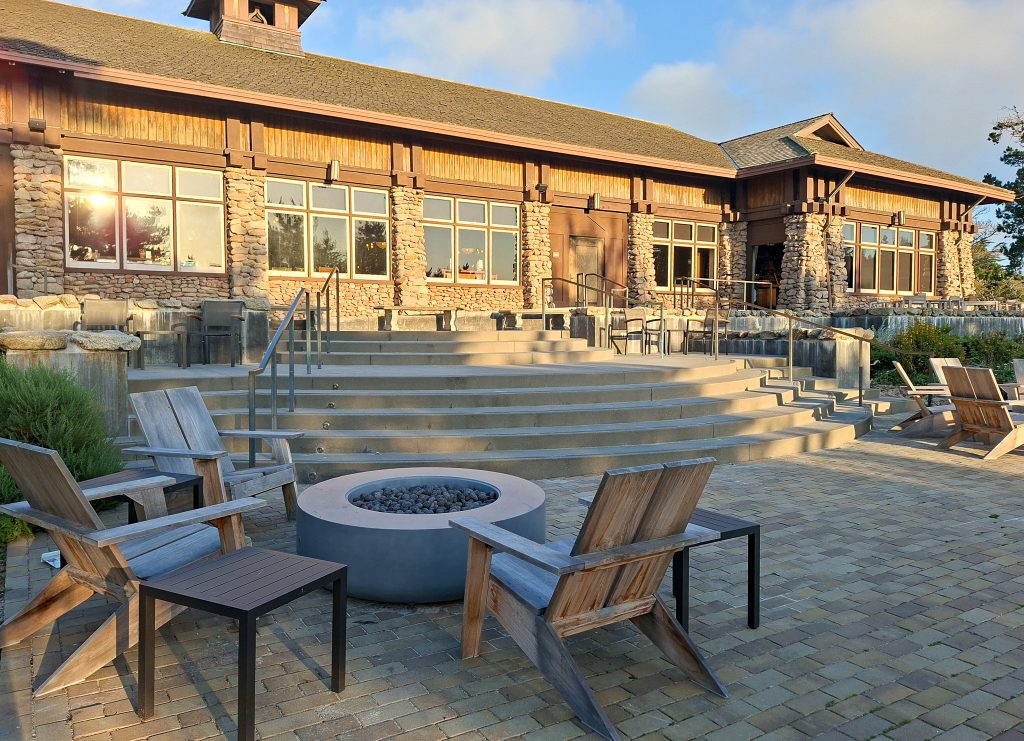

I chose a single room option in one of the original historic buildings and loved my very comfortable room with its wood-paneled walls, rustic furniture, and private bath. There were also more contemporary room options available, but none of the rooms had TVs, so this truly was a relaxing escape.
The Asilomar campus was pretty large, and it took me a few days to easily find my way around. Fortunately, there were many maps throughout the property.


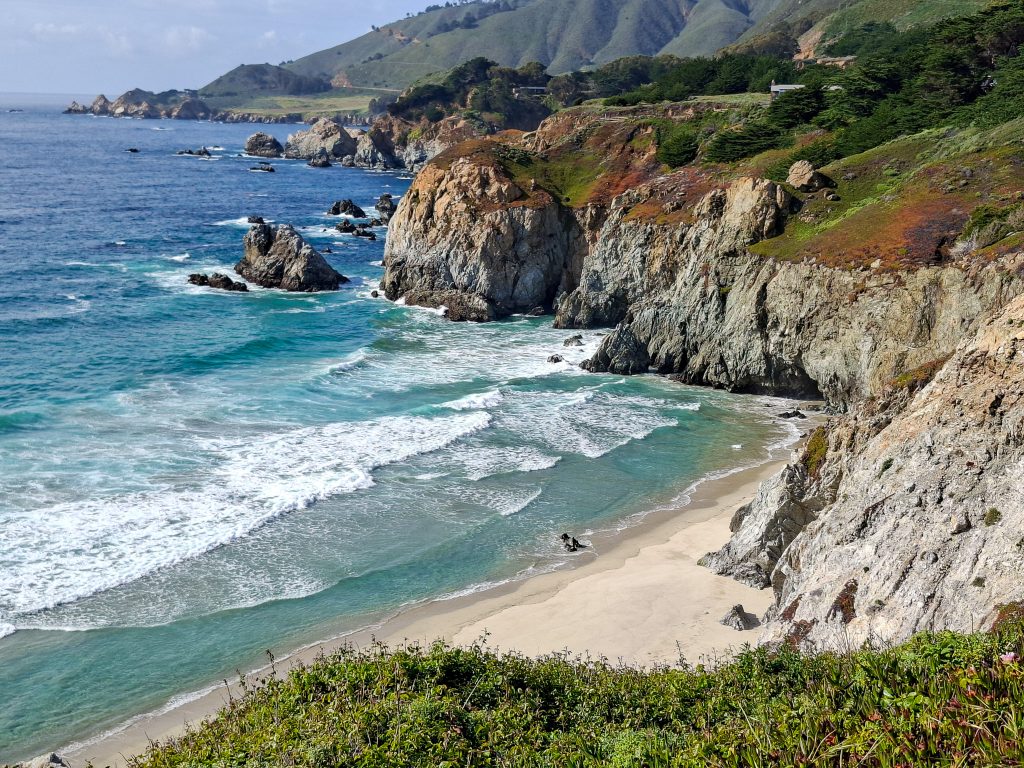
My class did not start till the afternoon on Sunday, so I used my free time to explore some of the Monterey Peninsula scenery. Of the many activities available, I chose to drive the scenic 17-Mile Drive that hugs the rocky Pacific coastline. It was a perfect, warm, and sunny day to enjoy the sea views – nothing like the dreary winter weather back home.


I continued my coastal drive south on Rt.1 for about an hour. I would have liked to continue driving longer along the Big Sur coastline, but at this point, I needed to turn back so that I could get to my class on time.
Six Creative Days With Empty Spools Seminars
The first time I attended Empty Spools Seminars, I chose an Independent Study with Wendy Mathson, which had the option of working on whatever quilting project I chose or learning Wendy’s foolproof technique for making the Storm at Sea quilt pattern. Since my son and daughter-in-law had chosen a Storm at Sea variation for their wedding quilt, this class was a perfect fit for me.

The first afternoon and evening were all about getting set up, getting acquainted, and initial class instruction. An entertaining after-dinner presentation introduced us to all the artist-faculty.

Days 2-5 had a routine that nicely balanced workshop time, meals, and free time.
General schedule:
- 7:30 – 9:00 AM breakfast in the dining hall
- 9-12 AM quilting workshops
- 12 noon lunch in the dining hall
- 1-4 PM quilting workshops
- 4-6 PM free time (or more sewing)
- 6 PM dinner in the dining hall
- 7 PM evening programs (except day 4) in Merrill Hall
Day 6 continued through lunchtime and included breakfast, morning class time, and lunch.

During the afternoon of day 5, all classrooms had an open house so we could see what each instructor was teaching and gain inspiration from the students’ work, which was out on display. In each classroom, it was fascinating to see the many variations and interpretations of a single design.

Every class had its own large room with plenty of space for a workstation for each student, including room for a design “wall”. Most everyone brought their own sewing machines, but the program had some for rent if you could not bring one with you. There was also an on-site fabric shop with many items offered for sale by one of the local quilt stores.

For me, the class with Wendy Mathson was everything that I was looking for. It was a small class with about a dozen participants. A handful took advantage of the independent study and worked on individual projects. The rest of us learned Wendy’s method, tips, and tricks for putting together a perfect Storm at Sea quilt. I found her teaching style to be extremely organized and logical, which I really appreciated.
Wendy has been teaching quilting for many years, and she had a wealth of quilting tips and hints that she happily shared with us. I know I left her class a much more knowledgeable quilter.

I found that there was quite a bit of flexibility with the schedule, which I found very helpful. I love to sew, but I can only sit for so long, so I appreciated being able to take a break and head for a short walk to the beach. On the free afternoon, I headed into Pacific Grove and explored the quilt shop in town as well as the Cannery Row area where John Steinbeck once worked as a fisherman.
Meal times, however, were quite fixed, so I always made sure to be back on time at the Crocker Dining Hall. The food was basic but did offer items for vegan and vegetarian diets.
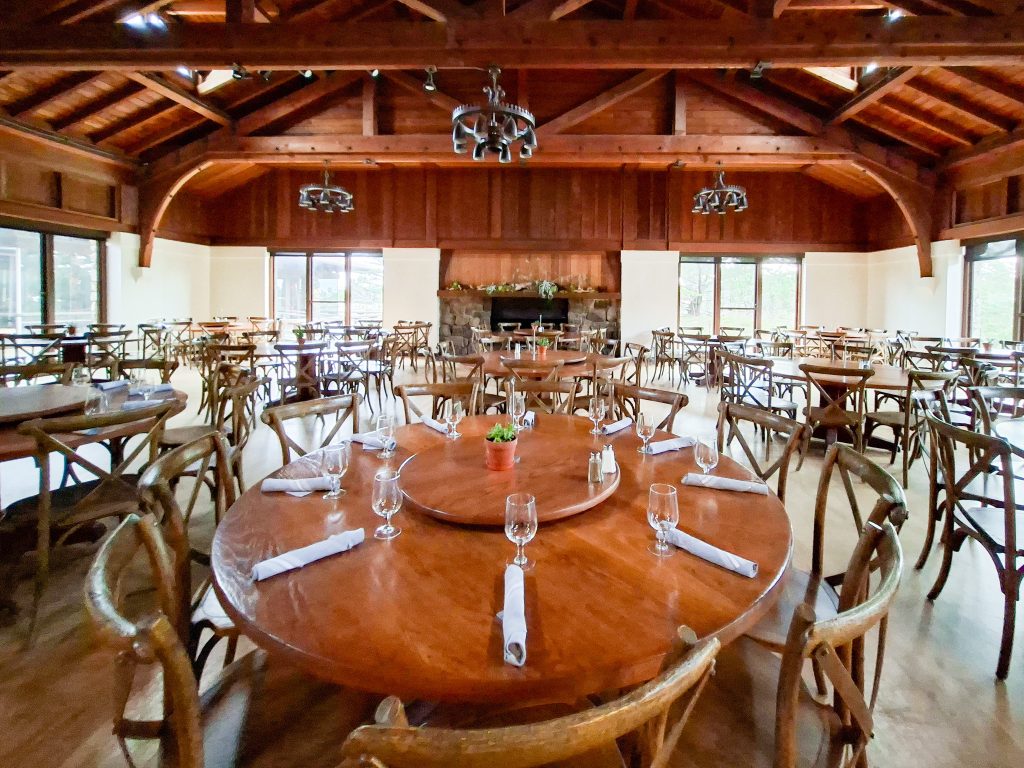
With its huge open-beamed ceiling and stone work, it was obvious that the Crocker Dining Hall was one of the original Arts and Crafts buildings designed by Julia Morgan. It was a true treat to get to eat in this amazing space three times a day.
My second Empty Spools Seminars experience
I recently returned to Empty Spools Seminars at Asilomar a second time. Once again, I arrived a few days before the class and this time stayed in the Big Sur area. Now, I could finally take my time to explore the Big Sur coastline, including a tour of Hearst Castle.


One of the Big Sur highlights was a visit to the Neopenthe restaurant. This is where Kaffee Fasset, the famous quilt fabric designer, grew up. The store had a colorful display of some of the things he’s produced, as well as some of his fabrics and books for sale.

This time, I took another independent study class at Empty Spools, where I was working on a very intricate paper pieced pattern designed by Jacqueline de Jonge. My instructor, Josephine de la Cruz Keasler, was a very experienced instructor certified to teach paper-pieced designs by both Judy Niemeyer and Jacqueline de Jonge. Her tips were very helpful as I got back into the swing of sewing this complicated design
My second Empty Spools program was exactly like the one I had experienced the first time. This time, however, I did not have a choice of accommodations and was assigned a room in the Forest Lodge building.
While my room was extremely convenient because it was located across from the classroom, it was very dated and worn (which is different than historic) and in dire need of updates. Fortunately, I didn’t have to spend much time in the room, but next time, I may look for accommodation options outside of Asilomar (there is a Best Western up the road).
The sunsets on the beach were still very nice, though.

Tips for attending an Empty Spools Seminars session
- If you want to take a popular class with a specific instructor, plan to register the day registration opens.
- If you do not get into the class you want, it is worth getting on the waiting list, as people change their minds over the course of a year.
- While you may have a preferred instructor or class, it is worth taking any of the classes offered. All the instructors are top-notch and are among the best in the craft. Being at the beautiful Asilomar setting for six days with so many like-minded quilters is inspirational in and of itself.
- If you are flying, you’ll want to decide which airport to fly into. Monterey Airport is the closest and allows you to get to the conference center by taxi, so you would not need to rent a car. But this is a smaller regional airport and may not have a direct flight from your starting point, and the ticket price may be higher than a flight into a large airport hub like San Francisco. If flying into San Francisco, you will need to rent a car to get down to Pacific Grove and the conference center, but this would also allow for additional sightseeing in San Francisco and along the coast.
- Make sure you have extra room in your suitcase for items you’ll want to buy at the quilt shop or for one of the books sold by each of the instructors.
- Do give yourself some additional time to explore the Monterey Peninsula and the gorgeous California coastline.

I really enjoyed both Empty Spools Seminars’ quilting class experiences, both for the quilting instruction and for the location. I especially loved having so much uninterrupted sewing time as well as the gorgeous nightly ocean sunsets.
Other quilting stories:
This is my extensive list of classes I would like to take: Quilting Classes, Quilting Retreats, Quilting Workshops, and Quilting Holidays
What it was like to take a quilting class with Kaffe Fassett: Making a Kaffe Fassett Quilt: Taking a Class With the Master of Glorious Color
Experience the story behind the quilt barn trail outside of Portland, Oregon: Legacy, History, and Community connect on the Tualatin Valley Quilt Barn Trail
Use this inspiration for making your quilt backs interesting: 19 Ideas for a Unique Pieced Quilt Back
My extensive list of where to donate quilts: Be A Quilt Volunteer – Where to Donate Quilts
Thanks for visiting.
Rose
Pin this!
