
Last Updated on 12/30/25 by Rose Palmer
Seeing the aurora as it undulates across the night sky is an unforgettable experience. I was fortunate to see it for the first time in Alaska. Since then, I’ve chased the northern and (soon) southern lights around the world and have been very fortunate to see them on many occasions.
What creates the auroras
The source of the auroras on our planet is the sun. Not only is the sun responsible for our light, heat, and the gravity that keeps our planet traveling in a tight circle around it, but it is also the source of our northern and southern lights.
The surface of the sun is constantly active, sending solar winds toward the Earth. These solar winds are made up of charged particles and electromagnetic radiation.
Three to four days later, the solar wind encounters the Earth’s magnetic field, which channels the energy toward the poles in the form of an oval centred around the magnetic poles.
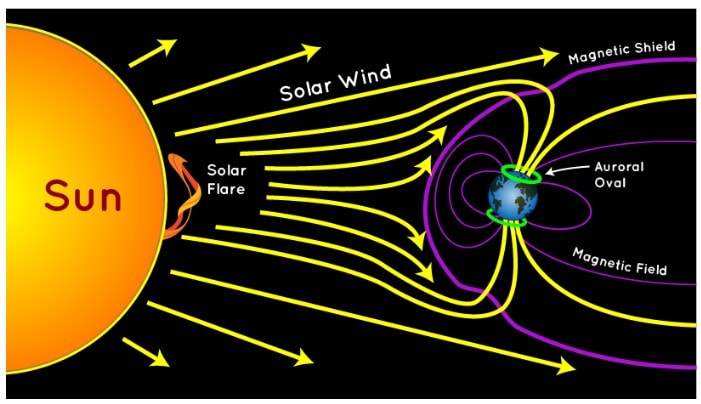
The charged particles in the solar wind collide with the oxygen and nitrogen molecules in our atmosphere, transforming them into an excited state. At lower altitudes (62-93 miles above us), as the excited oxygen molecules transition back to their normal state, they release energy in the form of green visible light. At higher altitudes (93 to 217 miles above us), the energy released by these oxygen molecules looks reddish.
Nitrogen molecules are harder to excite to a higher energy level. But when that does happen, they give off a purple, mauve, or occasionally, a pink light.
During periods of high solar activity, the sun emits higher concentrations of charged particles, leading to more frequent and more intense aurora displays on Earth. Scientists have noticed a (roughly) 11-year cycle in this increased solar phenomenon. 2025 to 2026 is the most recent solar maximum.
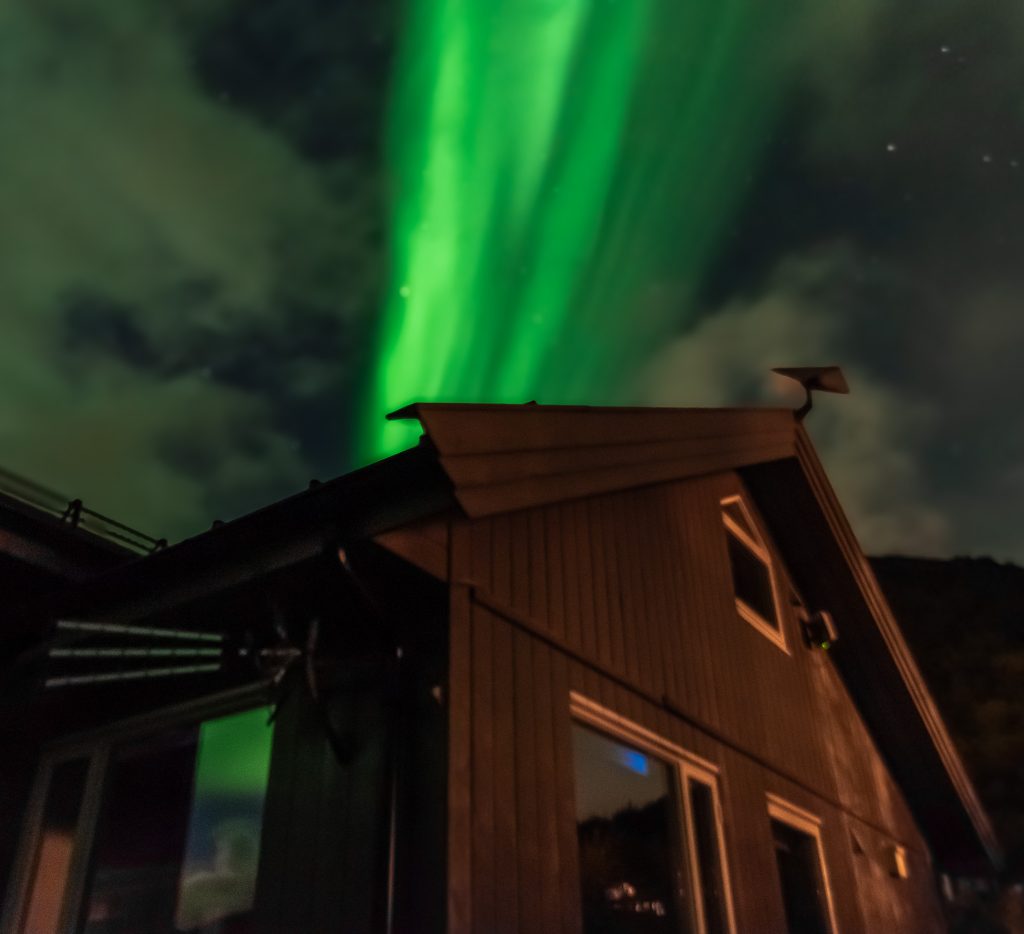
In the Northern Hemisphere, the northern lights are called the aurora borealis (boreal means’ north’ in Latin). In the southern hemisphere, the southern lights are called the aurora australis (australis means’ south’ in Latin).
NOAA’s 30-minute aurora forecast is a good resource for current space weather activity: https://www.swpc.noaa.gov/products/aurora-30-minute-forecast .
Scientists have developed the Kp index, a standardised scale from 0 to 9 that measures the strength of the solar wind’s interaction with the Earth’s magnetic field. The higher the Kp, the stronger the visible aurora will be. Various aurora apps show a predicted Kp index that acts as a gauge for the strength of the northern lights that night.
I track possible northern lights activity with the My Aurora Forecast and Alerts app.
How to see the northern lights
You need three things to see the aurora:
1 – Location, location, location.
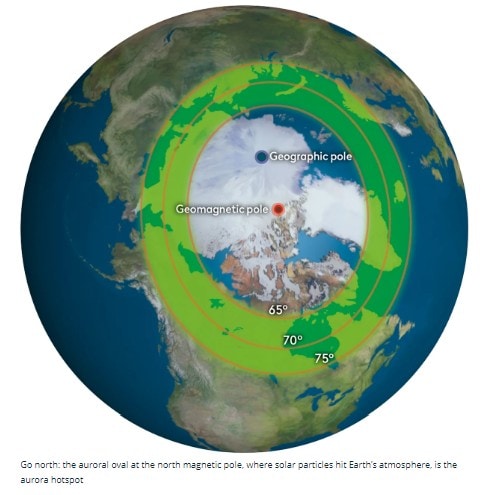
You want to be in a location that is under the aurora oval. The aurora oval is a doughnut-shaped area normally seen between latitudes 60 and 75 degrees centered around each magnetic pole (both north and south). In the north, the doughnut straddles the Arctic Circle, which is at a latitude of 66.5 N.
2 – High solar activity.
There is solar activity every day, so there is the potential for seeing the aurora every night. However, the higher the solar activity, the more intense the northern lights will be (and the higher the Kp), and the easier it will be to see the lights with our eyes.
3 – Dark, cloudless night skies.
Clear, dark skies make it much easier to see the aurora, especially with the naked eye. If the solar activity is really intense, then a little light pollution or a hazy sky doesn’t get in the way too much. But, under normal conditions, it is best not to have any light pollution or any clouds at all. Going outside to find the aurora during a moonless night is best.
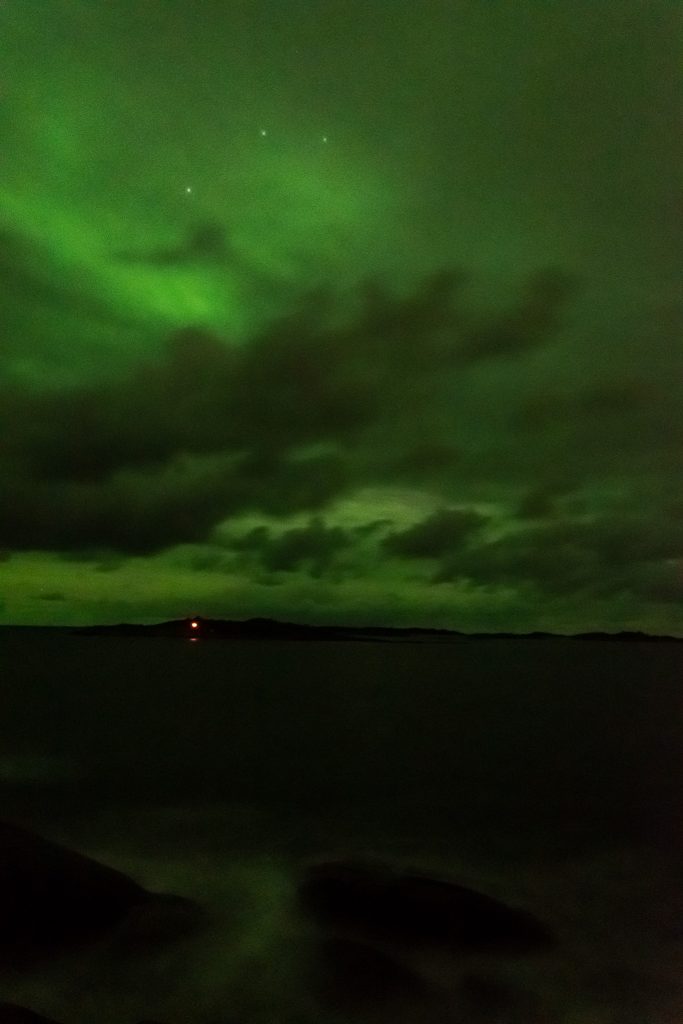
Since the aurora oval is usually visible around the Arctic Circle, it means the best time to see the northern (or southern) lights is in late fall, winter, and early spring when the nights are dark.
During the summer months, the northern part of the planet is tilted toward the sun and gets 24 hours of daylight. Even if the solar activity is very high, it will be too light for the human eye to see the aurora (though a camera sensor may pick it up).
For example, in Fairbanks, Alaska, the midnight sun season lasts from April 22 to August 20, and from May 17 to July 27, the sun does not set below the horizon at all. By early September, the skies start to get dark enough that the aurora is once again visible.
Of the three requirements, I think the clear sky component is the hardest to achieve. I can schedule a trip and fly to a location underneath the aurora oval during a time when there is no moon and when there are enough hours of darkness. There is always some solar activity, but having a cloudless sky is unpredictable.
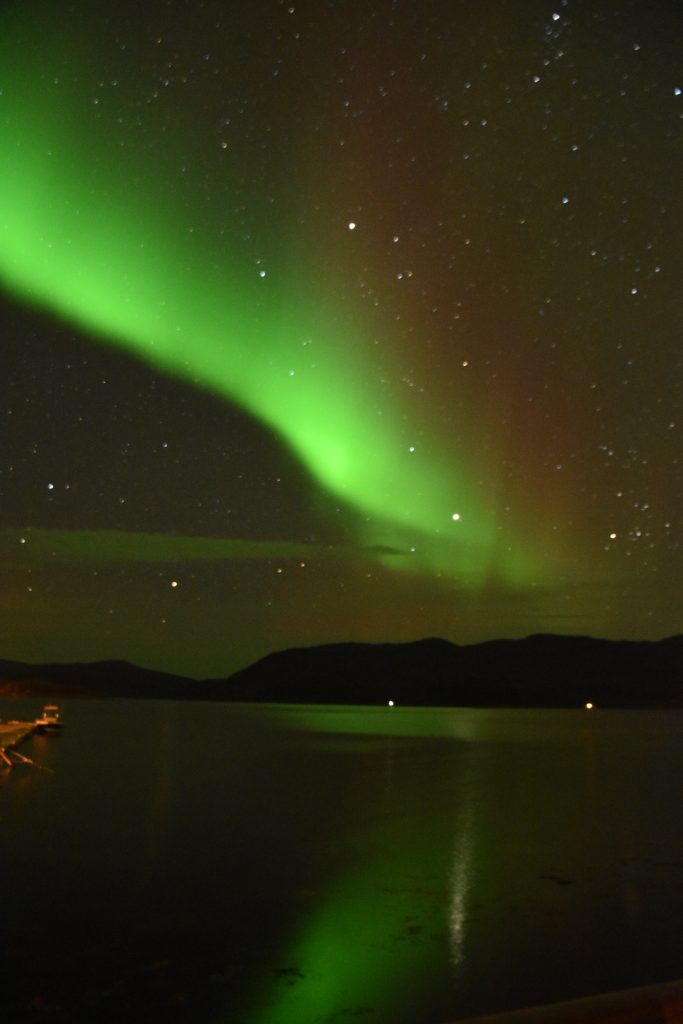
Seeing the northern lights is like sitting on a three-legged stool – if one element is missing, it doesn’t happen. But when all three come together in perfect balance, the sight is unforgettable!
When to see the northern lights
The key to seeing the aurora is clear, and dark, dark skies. In general, I’ve seen them mostly between 11 PM and 2 AM, though of course, they can show up any time when it is dark.
The fall and spring equinoxes (around late September and mid-March) are also prime times to see the northern lights due to increased geomagnetic activity. This post gives a good explanation of why this happens: https://earthsky.org/sun/aurora-season-auroras-equinox-connection/
Where to see the northern lights
The key to seeing the auroras is to go to a location that is under the aurora oval. They are most visible at latitudes between 60 and 75 degrees (north or south)
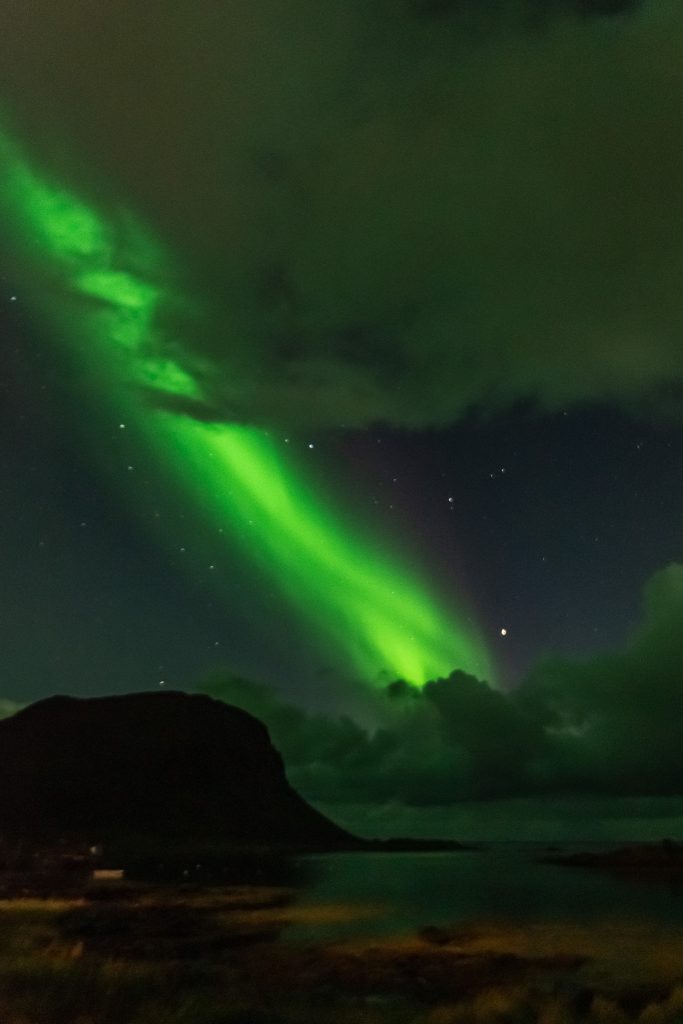
For reference, these major northern lights gateways are at the following latitudes:
Tromso, Norway – latitude of 69.65 N.
Rovaniemi, Finland – latitude of 66.50 N.
Fairbanks, Alaska – latitude of 64.84 N
Nuuk, Greenland – latitude of 64.17 N
Reykjavik, Iceland – latitude of 64.13 N.
Yellowknife, Canada -latitude of 62.45 N.
The Shetland Islands in the UK are just at the edge of the oval at a latitude of 60.09 N.
In the southern hemisphere in Antarctica, Elephant Island is at a latitude of 61.11 S, and Wilhelmina Bay on the Antarctic Peninsula is at a latitude of 64.38 S.
My travels to see the northern lights
Fairbanks, Alaska
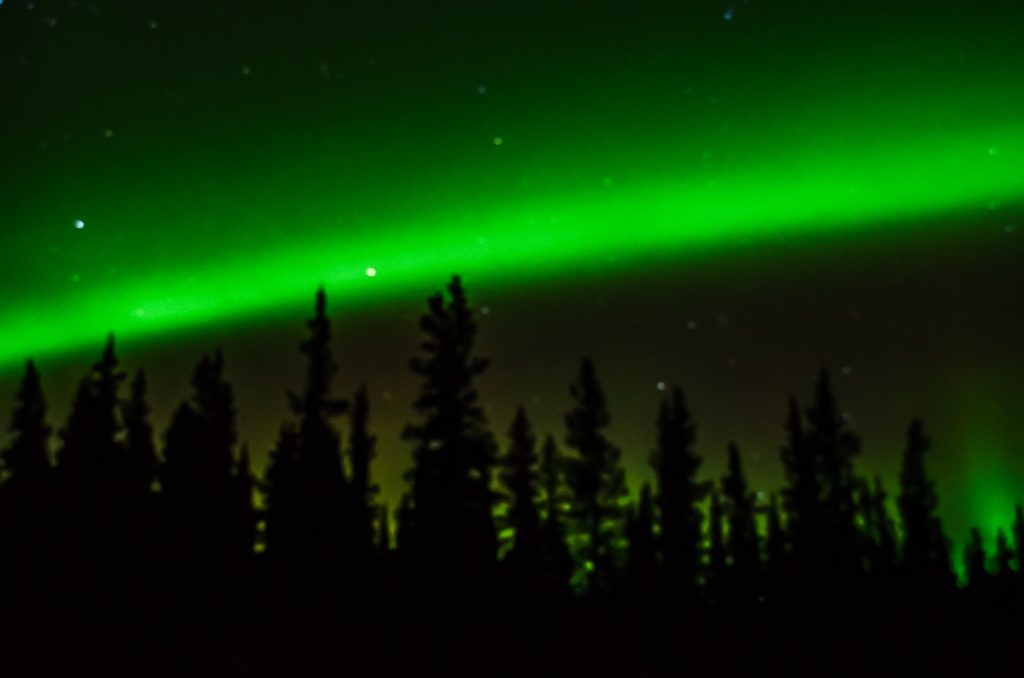
The first time my husband and I decided that we wanted to see the northern lights was in 2014. It was a peak in the 11-year solar activity cycle, so we thought we would give it a try and head to Fairbanks, Alaska.
Fairbanks is ideally located for seeing the northern lights in winter. The city is perfectly situated under the aurora oval, and because it is located so far from the coast, it also has consistently clear (though cold) skies in winter.
We flew into Anchorage in the middle of February and drove to Fairbanks. The road was well-maintained, and the drive was easy and very scenic. We had 4 nights in the Fairbanks area and saw the northern lights every night. Each night, the display was totally different in shape and intensity.
I describe my whole winter Fairbanks experience in my story Yes, You Should Visit Fairbanks in Winter to See the Northern Lights.
My first attempt at photographing the northern lights didn’t turn out all that great. The camera sensors have also gotten much better since then, and my skills with the camera have also improved.
Iceland
We went to Iceland in September 2022 for a two-week road trip around Iceland’s famous ring road. We were going to see the country’s incredibly beautiful scenery, but we were also hoping to catch the northern lights while we were there.
Unlike Fairbanks, Alaska, Iceland was much easier to get to from the East Coast. A 6-hour flight from the Newark, NJ airport took us directly to Reykjavik, Iceland’s capital.
Iceland sits right under the aurora oval, but it’s a (relatively) small island surrounded by water. The skies can be cloudy up to 85% of the time, which leaves a very small window of clear nights for aurora viewing. I’ve been to Iceland twice, and out of the four weeks there, I can count on one hand the number of days and nights with clear skies.
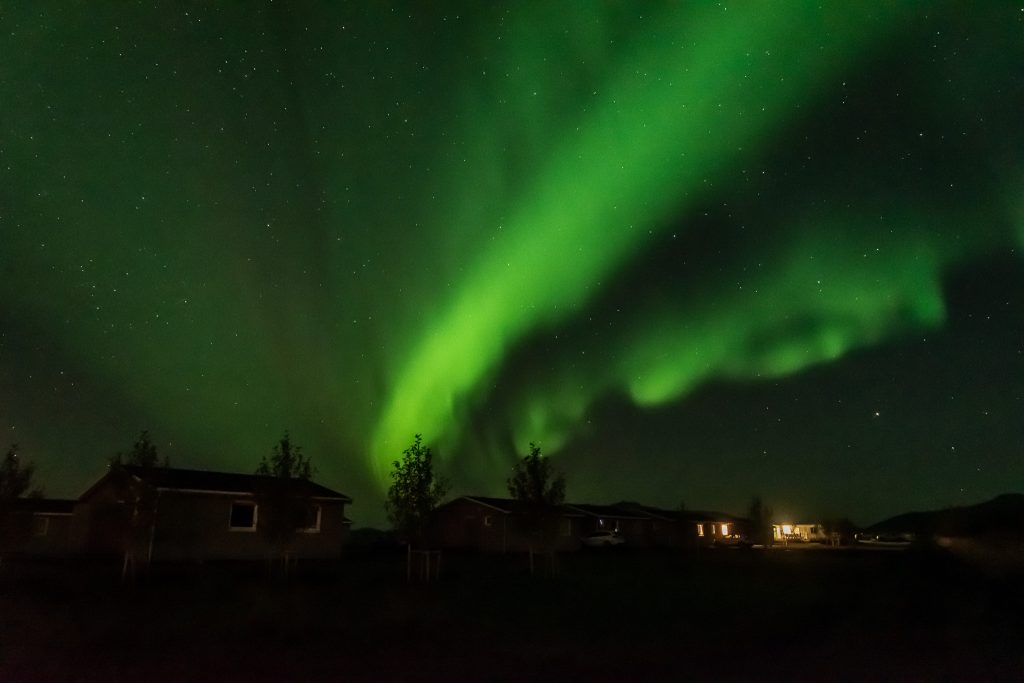
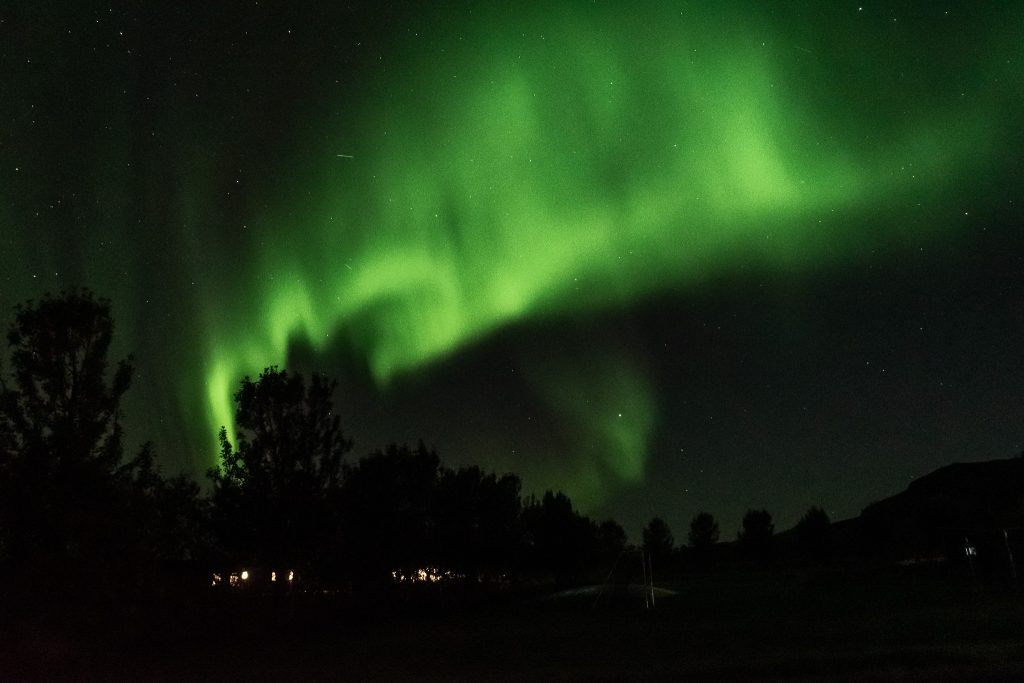
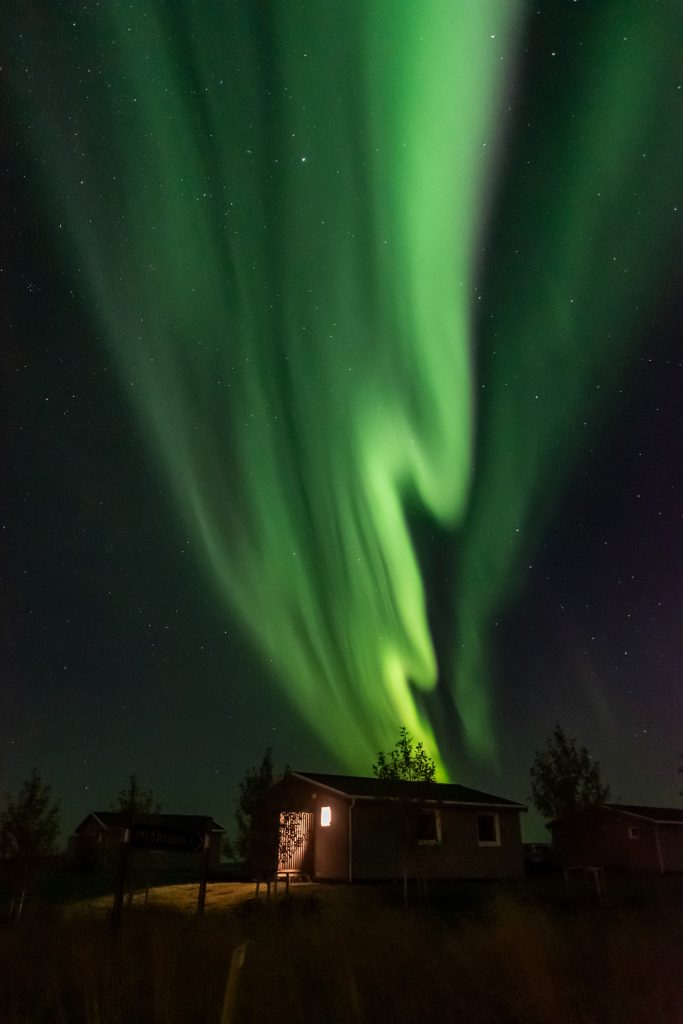
Since we had our own (rental) car, it was easy to go out at night to try and spot the aurora if the cloud cover was even remotely low and the predicted Kp index was high. As it turned out, we saw them best on the second night of our trip.
Iceland is not very populated outside of the capital, so there is very little light pollution. We were able to see the northern lights very well in the field in front of our inn on the Snaefellsnes peninsula.
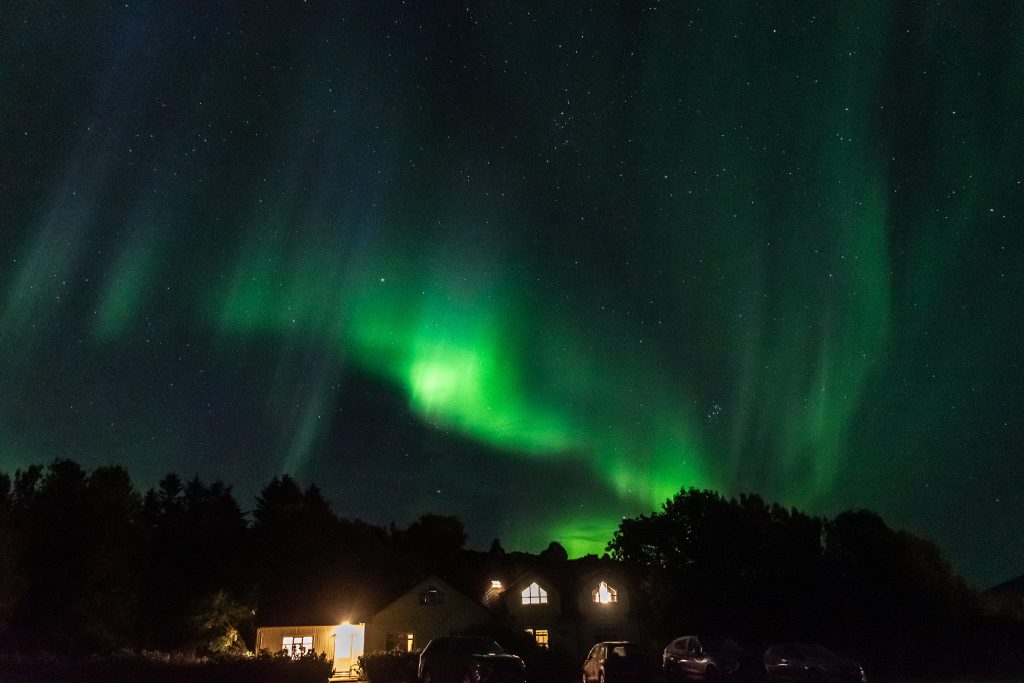
There are many Iceland northern lights tours advertised, and while they do all the work for you, there is no guarantee they will succeed. I think it is just as easy to go out on your own. The Vendur.IS website offers good predictions for cloud cover over Iceland.
Norway
My husband and I planned a month-long road trip in Norway for September 2024. We drove the full length of the country, from Bergen to Tromso, and then ended the trip we a few days on the island of Svalbard.
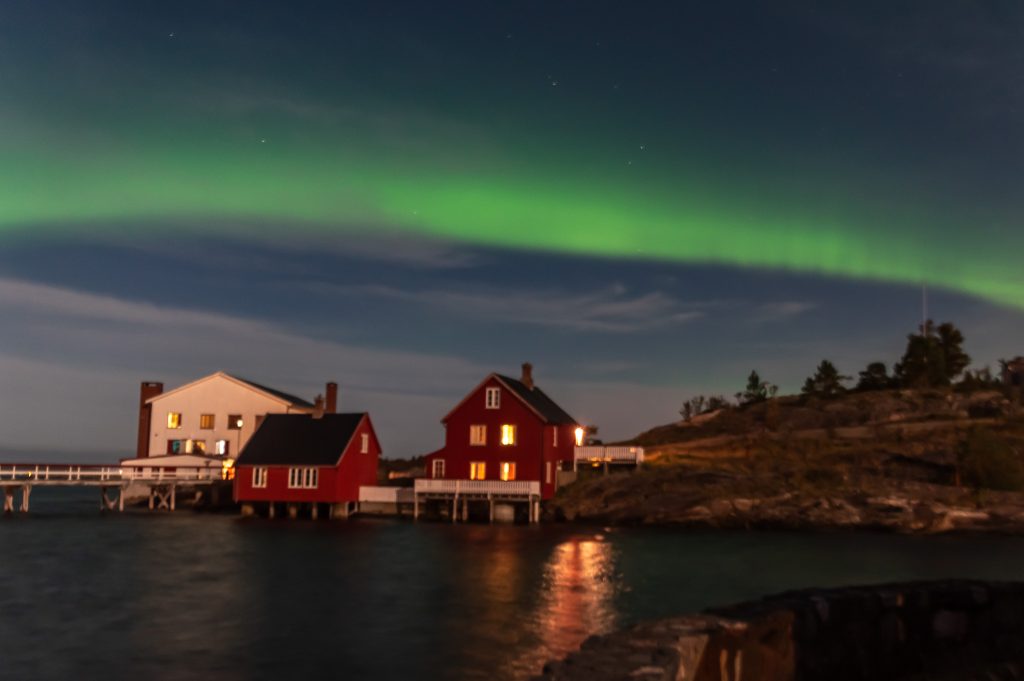
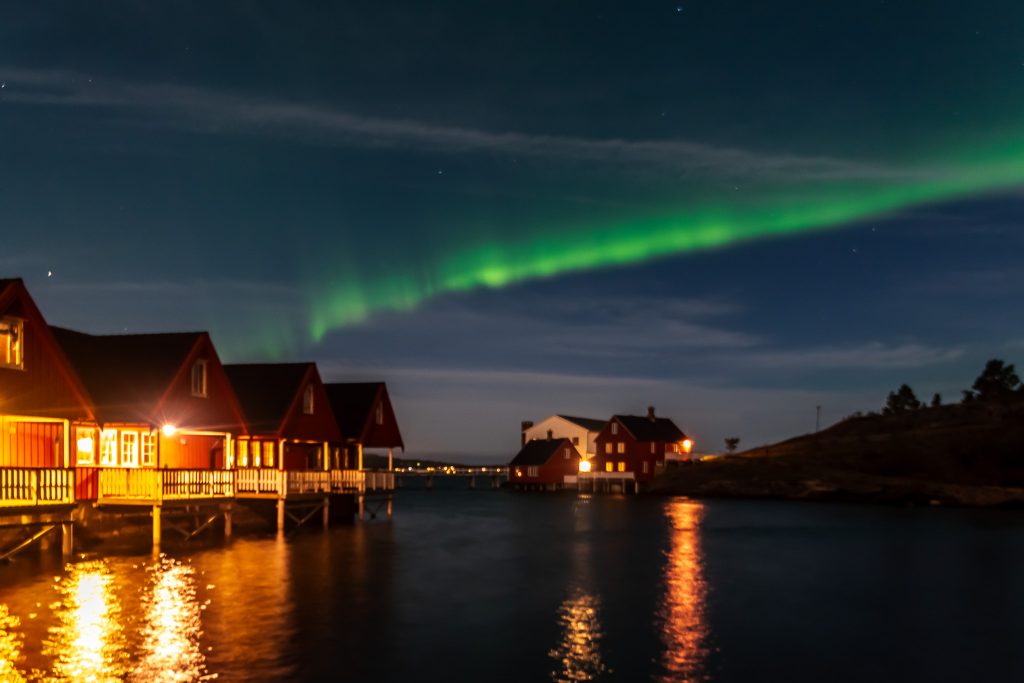
Once we were above the Arctic Circle, I specifically booked cabins or hotel rooms in lodges that were away from highly developed areas without a lot of light pollution so that we could easily see the northern lights if they were active. I also looked for accommodations on the coast with northerly views so that we could just step out the door and see the lights.
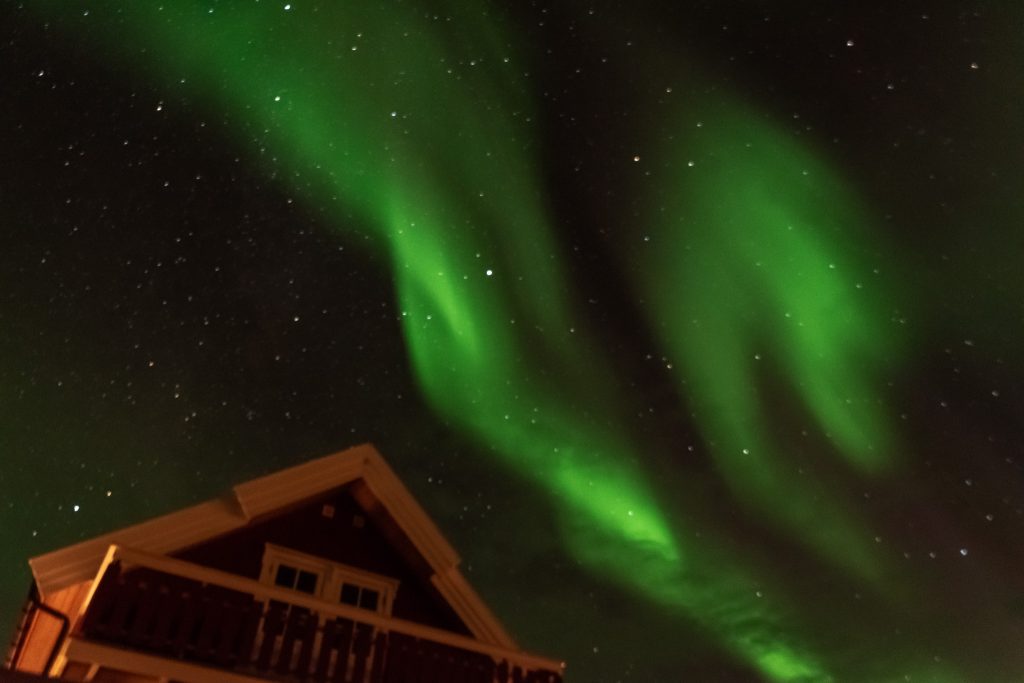
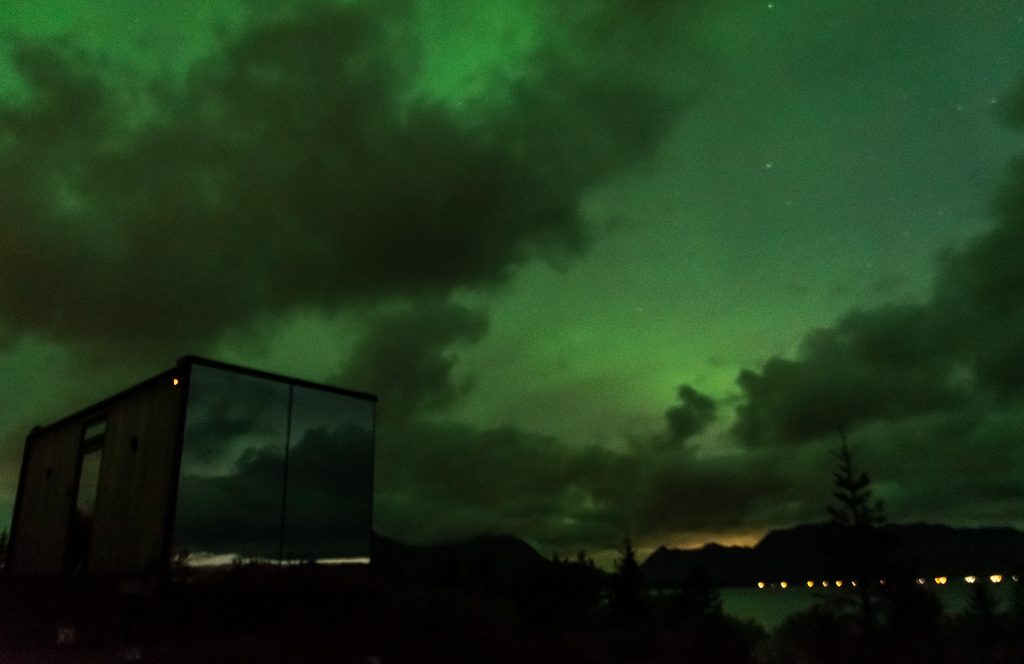
One of our accommodations in Norway was a glass cabinIt turned out that September is Norway’s rainiest month, so most of our days and nights were cloudy. But we did have 4 nights with strong northern lights activity, and they were visible to the camera even with some cloud cover.
We really enjoyed our 3 days in Svalbard, but the island is actually too far north of the Arctic Circle for regular northern lights views. If the lights are intense enough, they will be visible, just like they are further south in Norway.
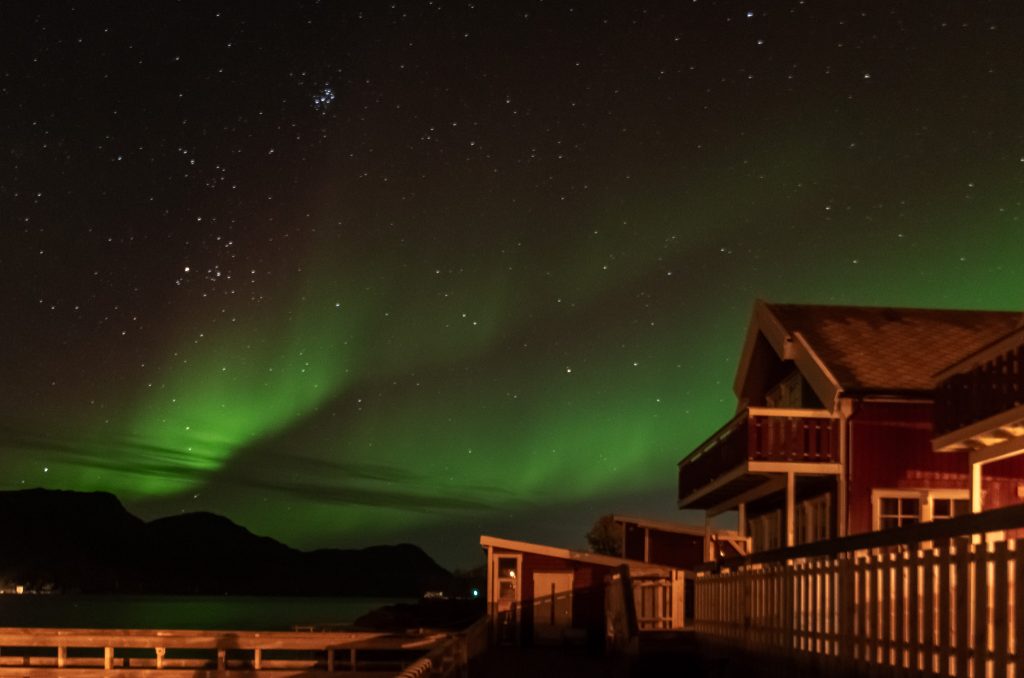
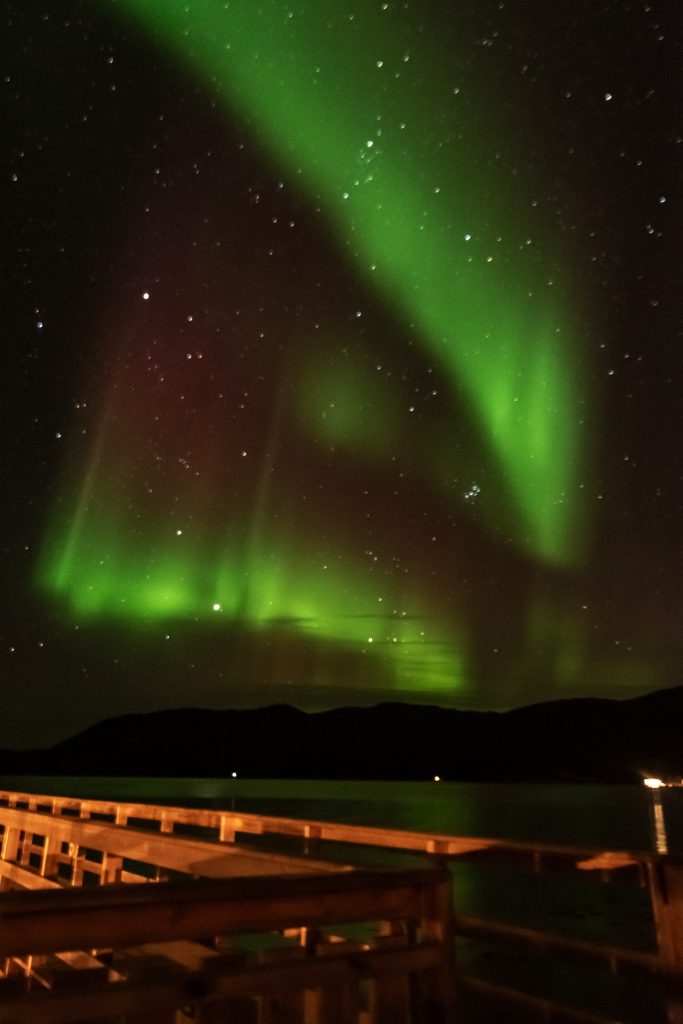
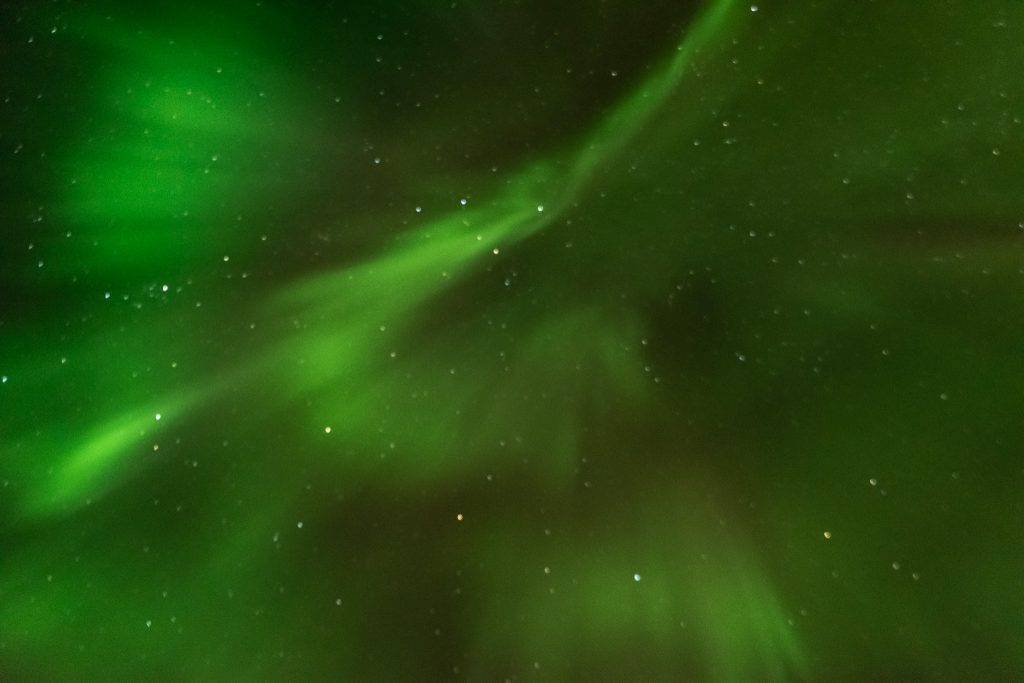
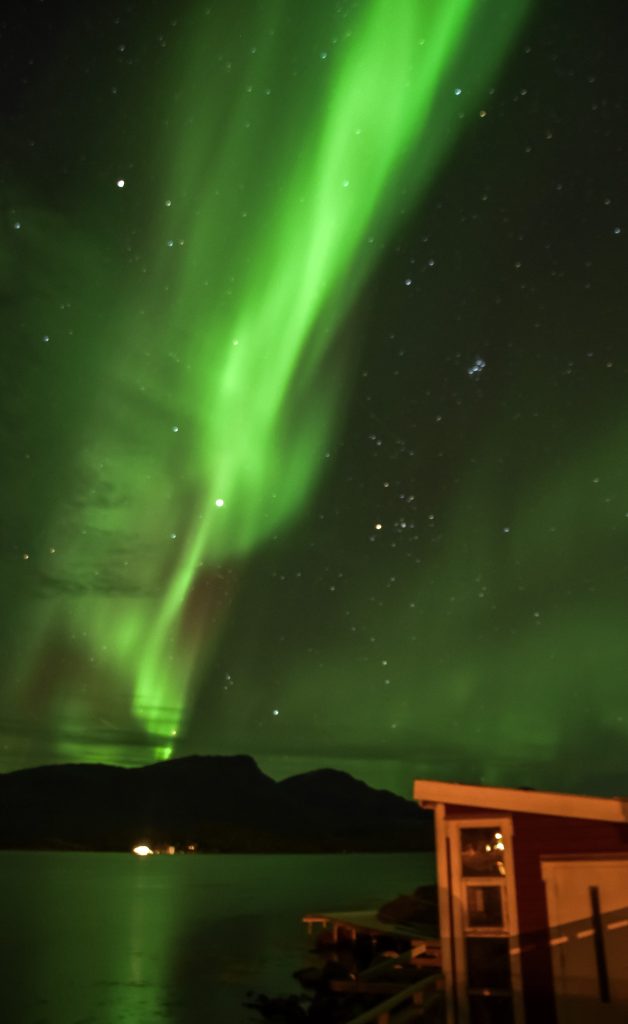
The best spot for us in Norway was in the countryside around Tromso. We stayed in a converted fisherman’s cabin on the island of Vengsoya and had the most incredible aurora display on the last night of our trip. We hit the trifecta: clear skies, perfect location, and high aurora activity. As soon as the sky was dark enough, we saw the light display overhead.
The northern lights danced across the sky for hours in front of, above, and behind our cabin. It was absolutely mesmerising! Each time the intensity diminished, and I thought the show was over, a new display started and intensified as it moved across the sky. This happened about 4 or 5 times. By the time I finally went to bed, it was well past 1 AM.
Finland
In September 2025, we went to Finland. After spending a week in England on a luxury barge cruise on the River Thames on the Magna Carta to celebrate our 40th anniversary, we decided to extend the trip with an additional week in Finland.
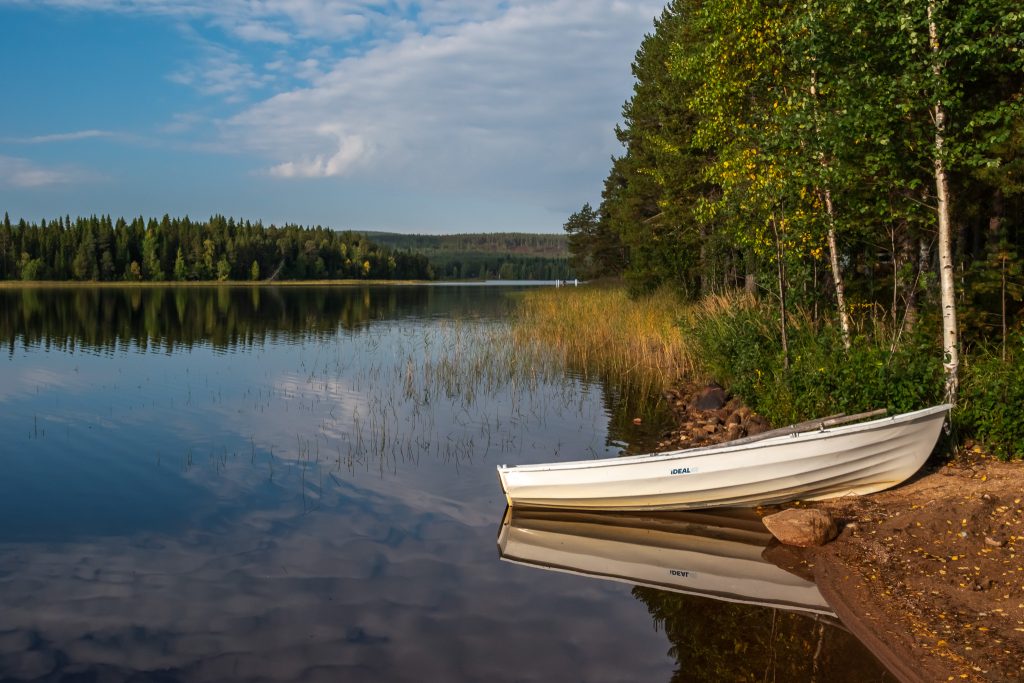
We rented a beautiful house on a secluded lake about 30 minutes north of Rovianemi. It was the end of September, and we hoped that over the course of the week, we would catch a glimpse of the northern lights at least once.
Rovianemi promotes itself as the “official home of Santa Claus” and also as a prime location to see the northern lights.
Nope! Nada! Nothing!
Even though we were there for 8 nights, the skies were either too bright due to the waning moon, too cloudy, or the solar activity was too low, or all of the above. It just wasn’t meant to be. Still, we enjoyed our relaxing holiday with beautiful lake views.
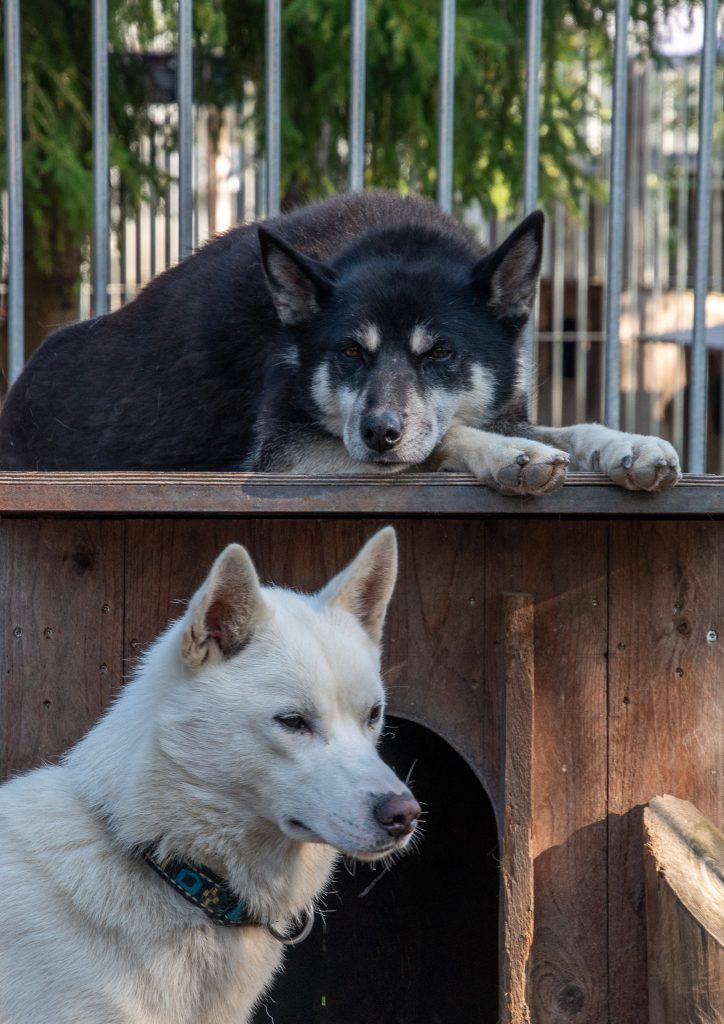
Another tip for chasing the northern lights: make sure there is something else to do during the day in case you don’t see the aurora. We went to see Santa’s Village, a theme park of activities that has evolved around the big man, though most activities were not yet available in September. We did, however, get to spend some time with loveable dogs in the Arctic Circle Husky Park.
Catching the southern lights
Around the South Pole, the southern lights, or aurora australis, are also visible during the winter nights over Antarctica. The 1000 or so researchers who stay for the winter on the white continent get to see this beautiful spectacle on a regular basis. For the rest of us, seeing the southern aurora is much more challenging.
Antarctica
The Antarctica cruise season goes from the end of October through the end of March. For most of this season, the continent has nearly 24 hours of daylight, making it difficult to see the southern lights.
I have plans to take an expedition cruise in Antarctica in March 2026. By the time I will be there, the nights will start to get dark again. I’ll have a few days in the Antarctic Peninsula area and hope to catch the southern lights if the night skies are clear, though the waning moon will be in the sky all day and night. Fingers crossed.
How to photograph the aurora
The reality is that the sensors on a camera or cell phone can “see” the northern lights when the human eye can’t. The sensors will also pick up the green hue normally associated with the aurora, even though it may just look like white haze to our eyes.
The newest cell phones have very good camera sensors and take very good photos in low light. It is possible to get a decent photograph of the aurora with a cell phone, especially by setting it in nighttime mode. Even with a cell phone, a tripod can help get a sharper image. I recommend playing around with the camera settings to get the best photos.
Photographing the aurora with a DSLR will require a tripod. I changed my settings to manual focus, which I set to infinity. I use the widest angle on my lens (16 mm) and set the camera shutter to manual mode. I open up the lens to the widest aperture and start with an ISO of 3200. Then I start photographing with a shutter speed of 5 seconds.
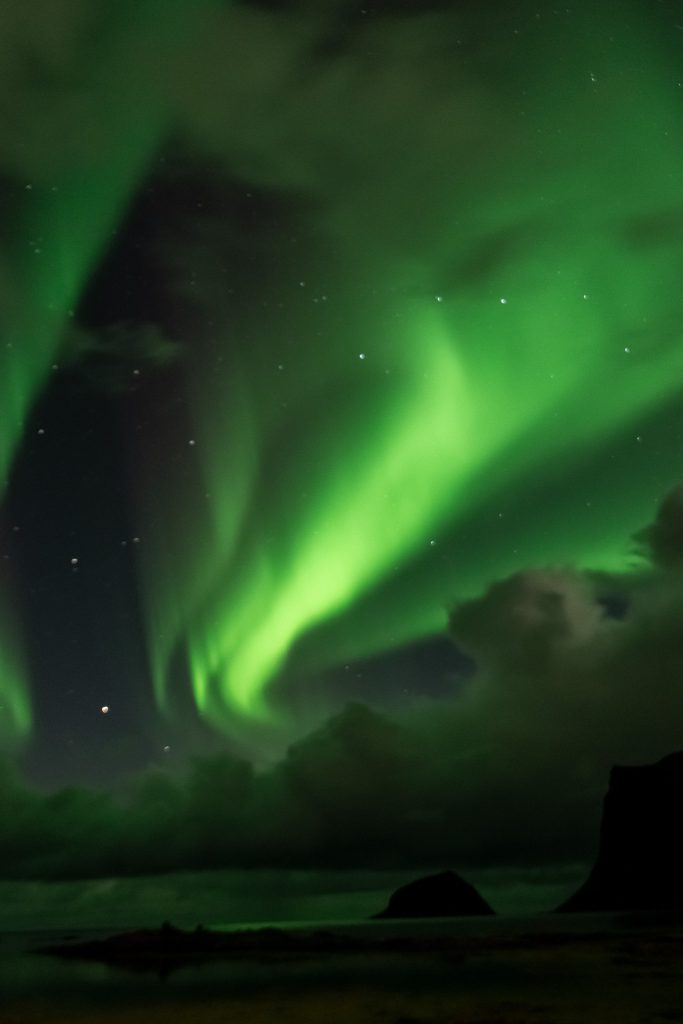
If my photo is overexposed, or the northern lights are very bright but are moving slowly, I’ll decrease the ISO. If the lights are bright and moving quickly, I also speed up the shutter speed. If the lights are not very bright, then I might start with a 10-second exposure and a higher ISO. Basically, I play around with the ISO and shutter speed settings until I get the photos I want. It’s a trial-and-error process, which is what makes it fun (I think).
Since the shape of the aurora constantly changes, each photo is always different. If I can, I also like to include a subject that is slightly lit in my composition to make the photos more interesting.
I shoot in both JPEG and RAW and post-process my photos in Lightroom. This is one time where post-processing really helps make the photos look like what I remember seeing.
I also take a lot of photos because the lights are constantly changing. Since what my eyes see and what my camera sensor sees is different, I won’t really know what looks best in a photo until I look at it on my computer.
More tips to see the northern lights
- Patience is a virtue. The apps are good at providing guidance on aurora visibility, but they will not appear on a fixed, predictable schedule. Plan to spend a lot of time waiting.
- Plan to spend multiple nights in one location to increase the chances of seeing the northern lights.
- Have your own car so you can drive to spots where the lights are visible.
- When the aurora is not very strong, it looks like a wispy white cloud moving across the sky. The camera will pick up the typical green light.
- Expect to stay up late into the night and take naps during the day.
- Have your camera ready and set it up beforehand.
- Keep in mind that despite all the best planning, you may not see anything.
- If it’s winter, dress in warm layers – wool and down are your friends.
- Beware – seeing the northern lights is addicting, like eating potato chips. Once you’ve seen them, you want to do it again – and again.
Other stories of interest:
Photos in Iceland: In the Land of Fire and Ice – My Beautiful Photos of Iceland and Favorite Iceland Photography Spots
Photos in Norway: Beautiful Storybook Norway Photos to Inspire Your Next Trip
Antarctica photos: Penguins and Ice and So Much More – My Favorite Antarctica Cruise Photos
Thanks for visiting.
Rose
Pin this!


