As I held on tight and leaned further into the Land Rover to keep branches from whipping into my face, it occurred to me that this felt a lot like the safari ride I once took at Disney World, except that this was not pretend.
Our guide had received a call about a rare leopard sighting, and he was racing along the preserve’s roads, taking the tight turns like an experienced Formula 1 racecar driver. Neither large bumps nor deep divots in the narrow sandy track slowed him down. But instead of a black-and-white checkered flag, our goal was a gold-and-black spotted cat, one of the more elusive of Africa’s “Big Five”.
We knew we had reached the right location when we spotted the group of vehicles circling a small clearing. Not content to stay on the sidelines, our guide deftly maneuvered his Land Rover, driving over the rough grasses and bushwhacking through the shrubs to get us into prime photographic range.
In the Circle of Life, one animal’s death sustains the lifeblood of another. Nowhere is that more evident than in Africa’s national parks and private game reserves. Even with Africa’s abundance of wildlife on easy display, observing the life-and-death struggle between predator and prey is not necessarily a common sighting. But when it does occur, it is unforgettable and can be very uncomfortable to watch.
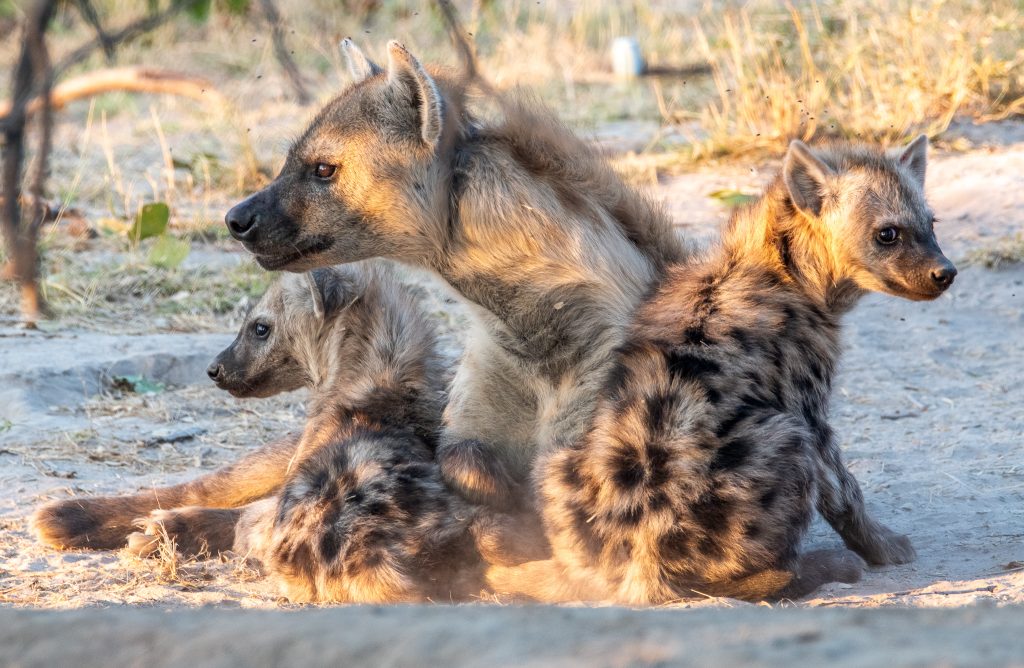
I was in the Khwai Concession, one of the private game reserves on the eastern edge of Botswana’s famed Okavango Delta. This was day 3 of a 4-day game viewing trip, and our guide was tenacious about showing us the preserve’s apex predators. We had seen plenty of impalas, elephants, zebras, and even a family of hyenas, but the big cats continued to elude us.
The lion sleeps this morning
However, this morning our guide had successfully followed fresh lion tracks for almost an hour until we spotted the pride resting in a clearing behind a copse of tall bushes. The sun was just rising, and the three females were trying to get a little more sleep while a 6-month-old cub cavorted from one to the other, focused on getting attention from a parent that had just hit the snooze button for the third time.
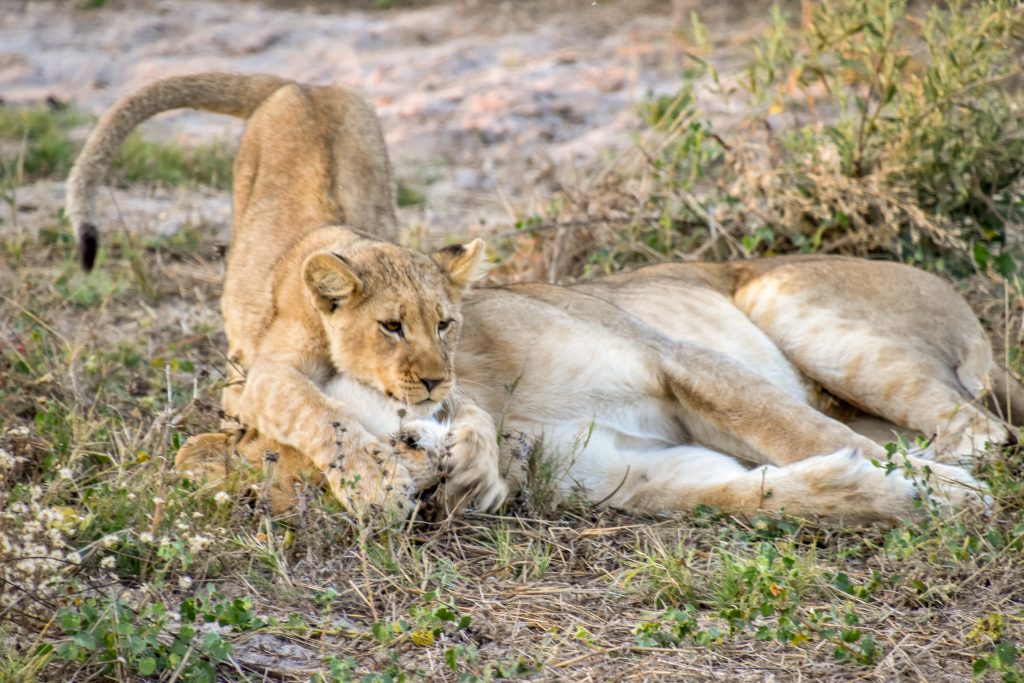
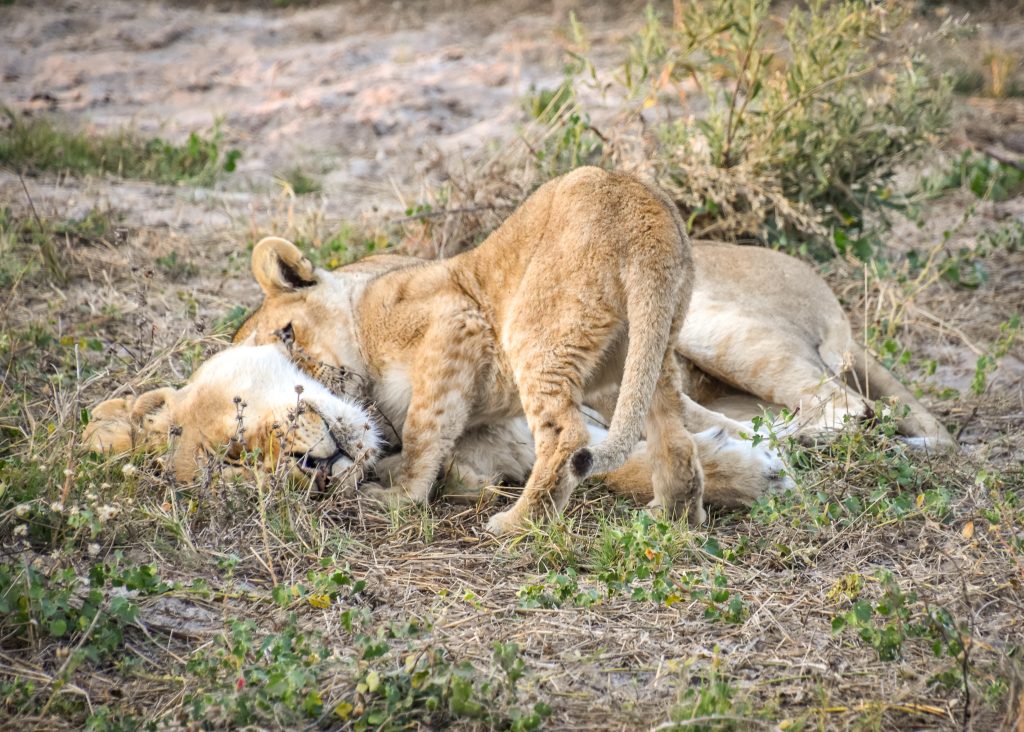
As the sky brightened, so did the lionesses. They yawned, they stretched, they nuzzled the cub, and eventually got up and moved on into the bush, oblivious to the fascinated onlookers sitting in their big machines.

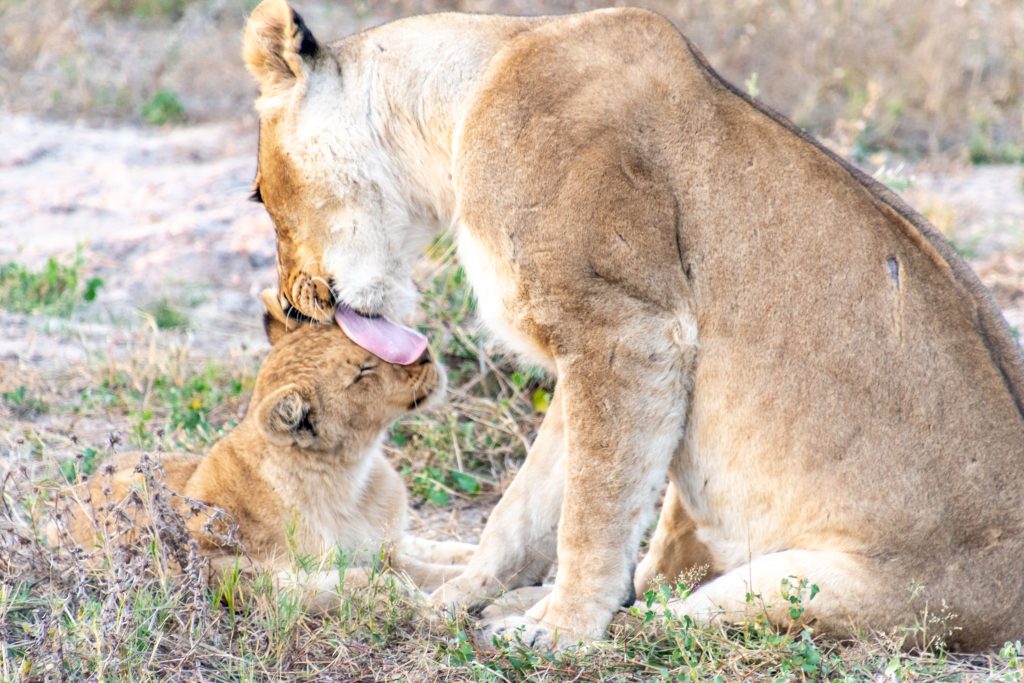
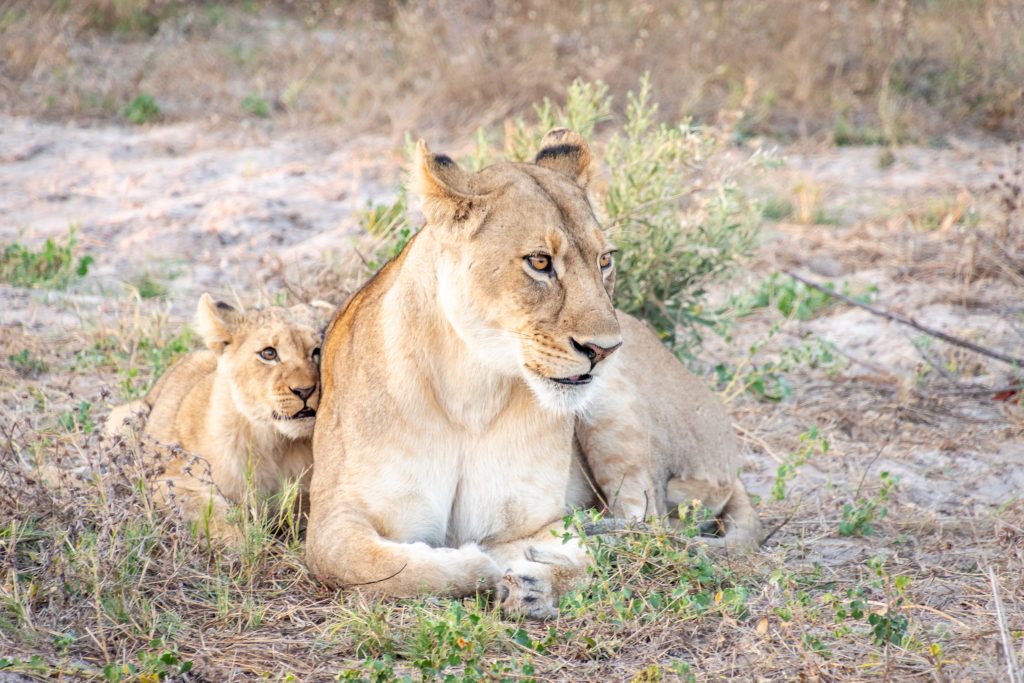
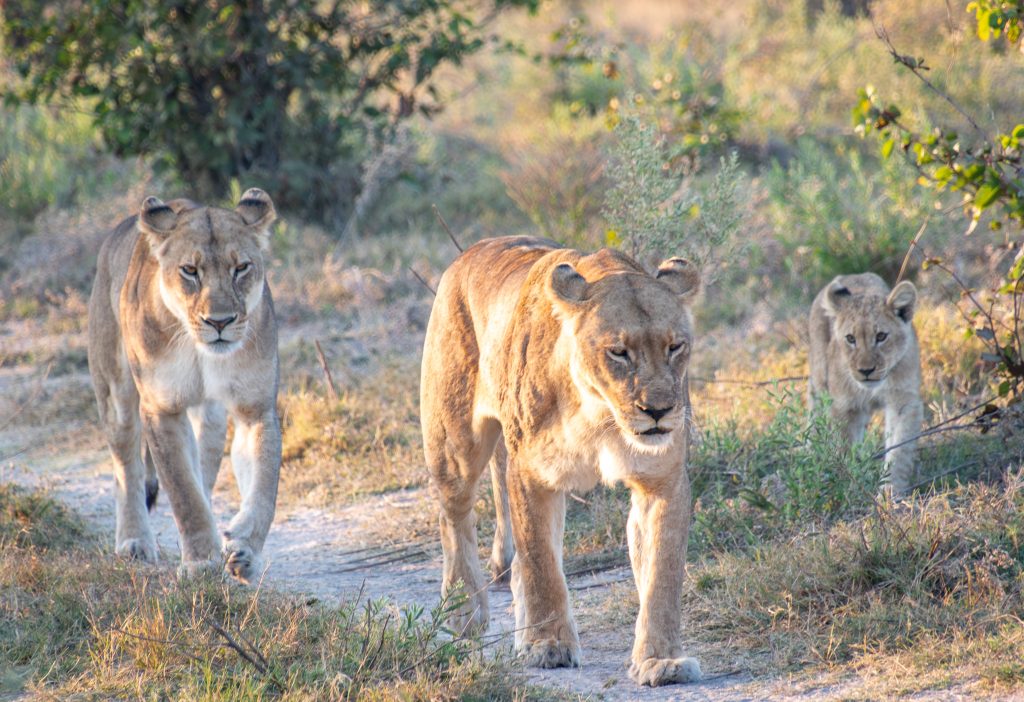
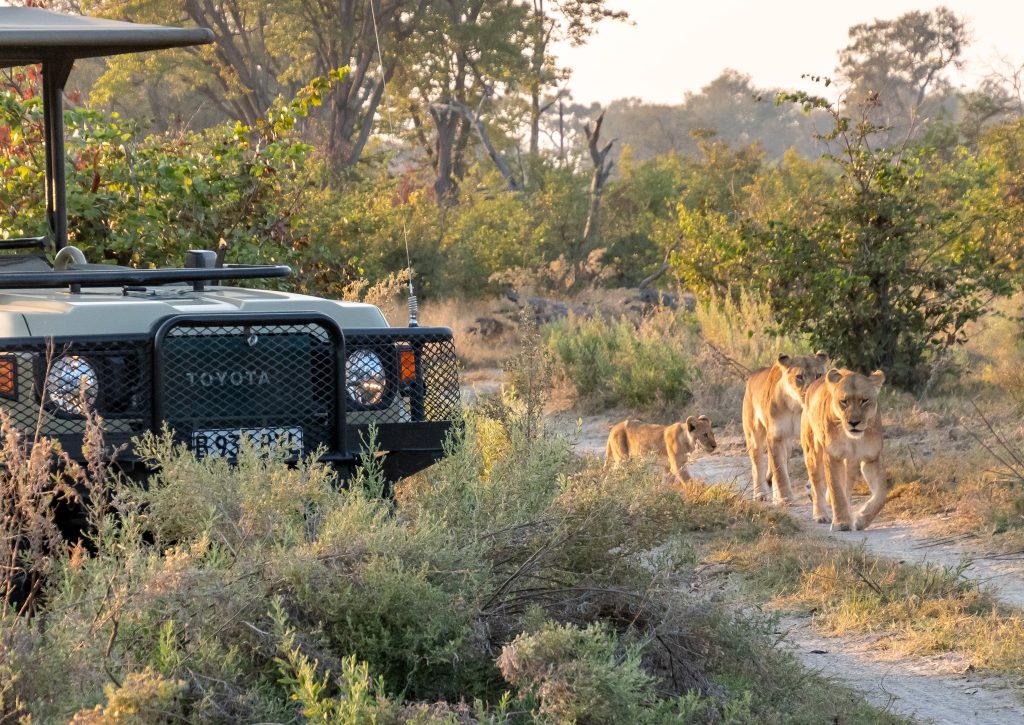
After the emotional high of watching the lions interact, I didn’t think the day could get much better. And then, an hour later, we got the call about the leopard sighting.
A battle to the death
It was a 20-minute race from one side of the reserve back to the other side where the leopard had been spotted. Over the course of 3 days, I had quickly learned that in 20 minutes, an animal can be miles from where it was last seen.
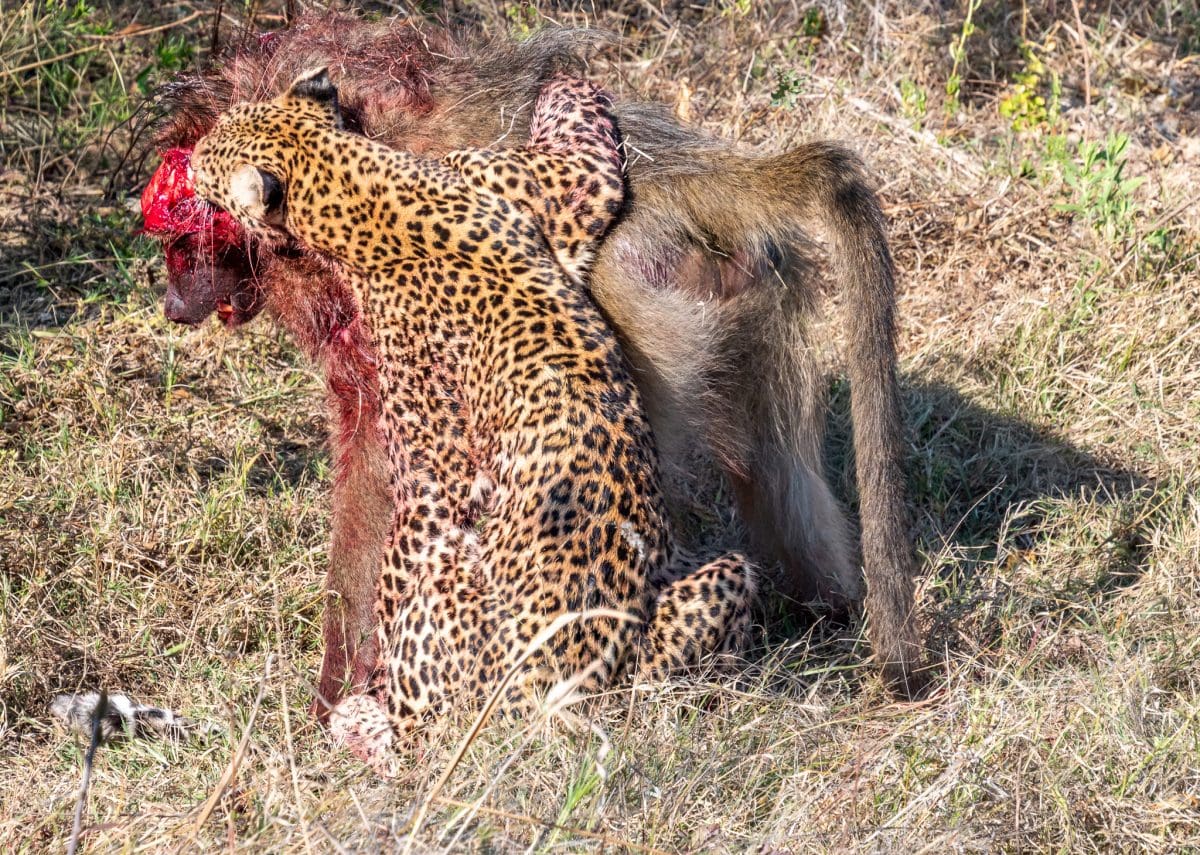
But once we arrived, we immediately discovered that this was not a typical leopard sighting. This cat was not high up in a tree, straddling a large branch with its tail hanging down while taking a nap. This young female was in the middle of a life-or-death struggle with a large, mature male baboon that outweighed her by about 20 pounds.
We had seen this male baboon just an hour earlier. My guide had even commented that it was strange to see a lone baboon wandering through the bush since they normally traveled in troops. The leopard obviously thought the same thing and took advantage of an opportunity for a hearty meal, but it was a hard-won fight.
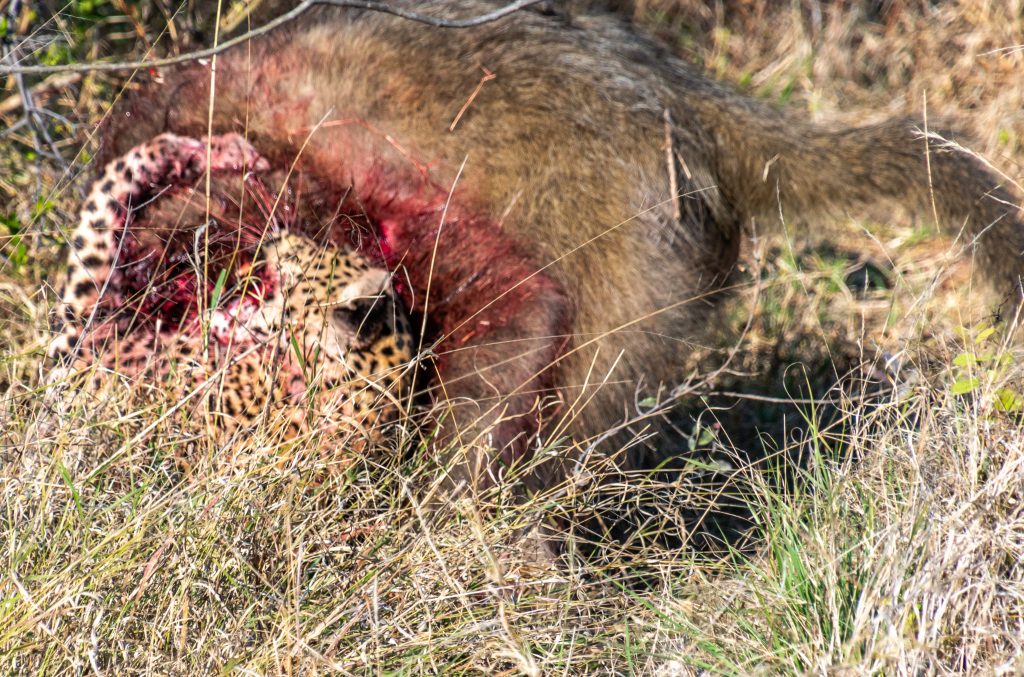
By the time we reached the scene, it was clear she had been doing battle for some time. The male baboon had her pinned under his heavier body as she was trying to use her fangs and claws to get a grip on his neck. She was fully grown but only 4 years old, and a first-time mother with a one-year-old juvenile whom she was also trying to feed.
Resistance is futile
At first glance, the fight appeared evenly matched; the male baboon’s incisors were almost as fierce-looking as hers, and his greater bulk seemed an advantage. But eventually she maneuvered out from under him, got a tight grip on his head, and then managed to pin him down.
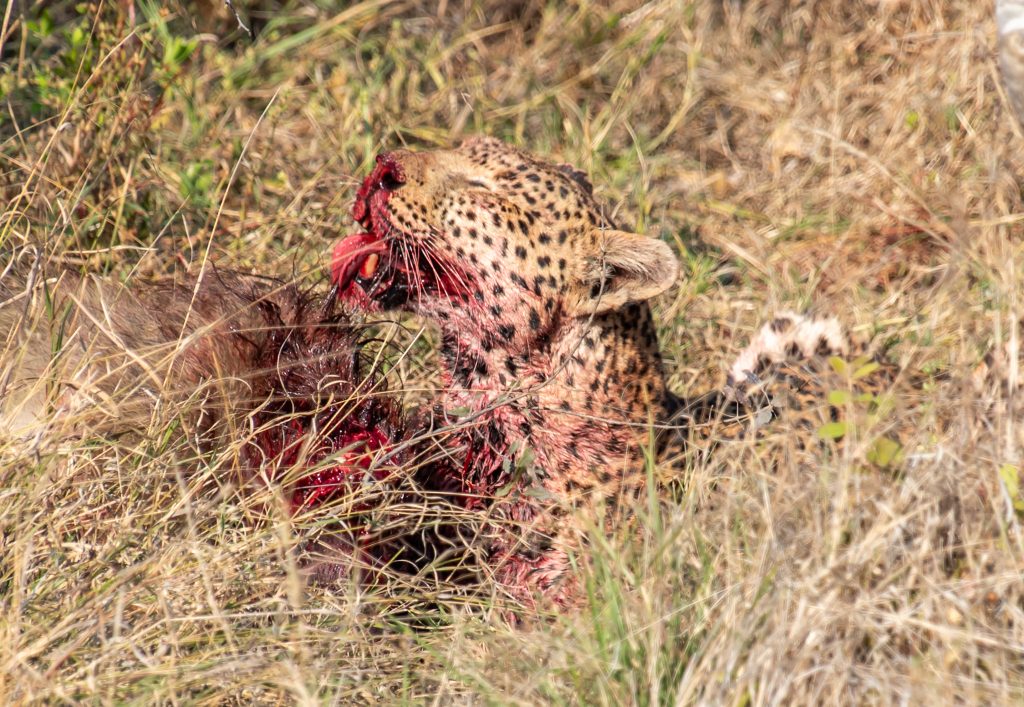
For a time, the baboon didn’t move, and I thought she had prevailed. Then, the baboon got his second wind and fought back, trying to pin her down again. This time she grabbed him by the head and was able to keep the upper hand.

Once again, the leopard pinned him down, and we thought this time the fight was finally over. She licked her bloody mouth and started gnawing on the leopard’s exposed skull.
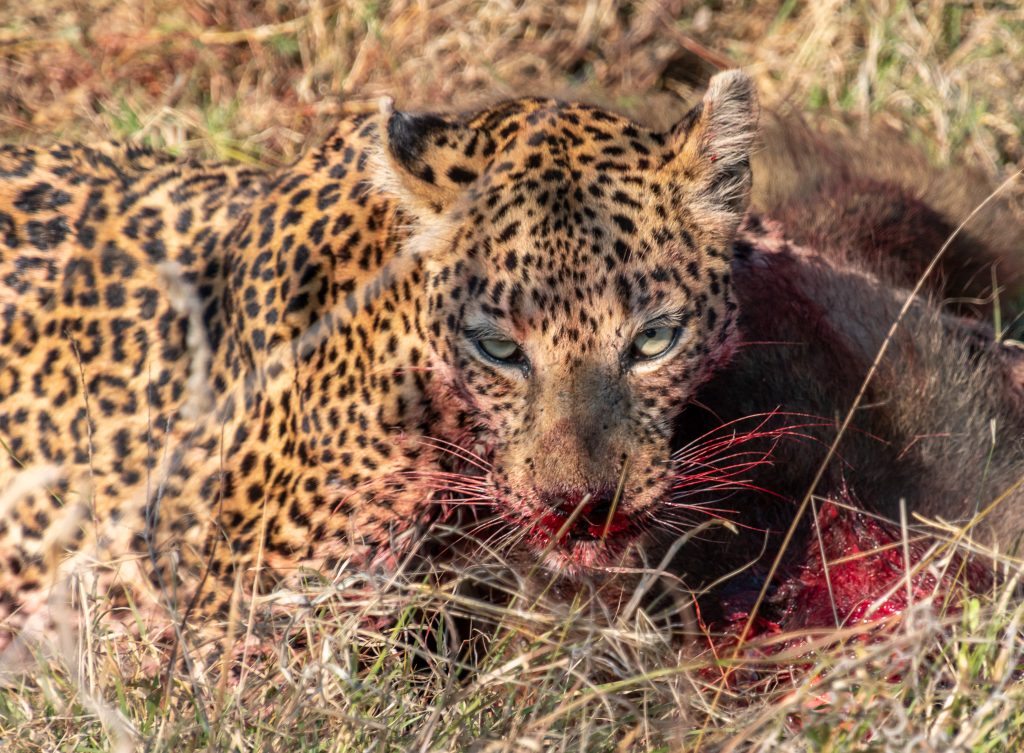
Then the baboon surprised us all, including his assailant. Somehow, he tapped into some remaining energy reserves, pushed her off him, and with an unbelievable burst of strength, tried to make a run for it. Now we could clearly see the exposed part of the baboon’s skull, the bloody white bone shining in the sunlight.
He managed to dislodge her grip briefly as he tried to run away. She quickly caught up and dug her jaws into his back again. This exertion wore them both out, her chest heaving deeply as she lay on the grass with her claws wrapped around the baboon and her teeth clenched into his back. Surely, this was the end for the baboon.

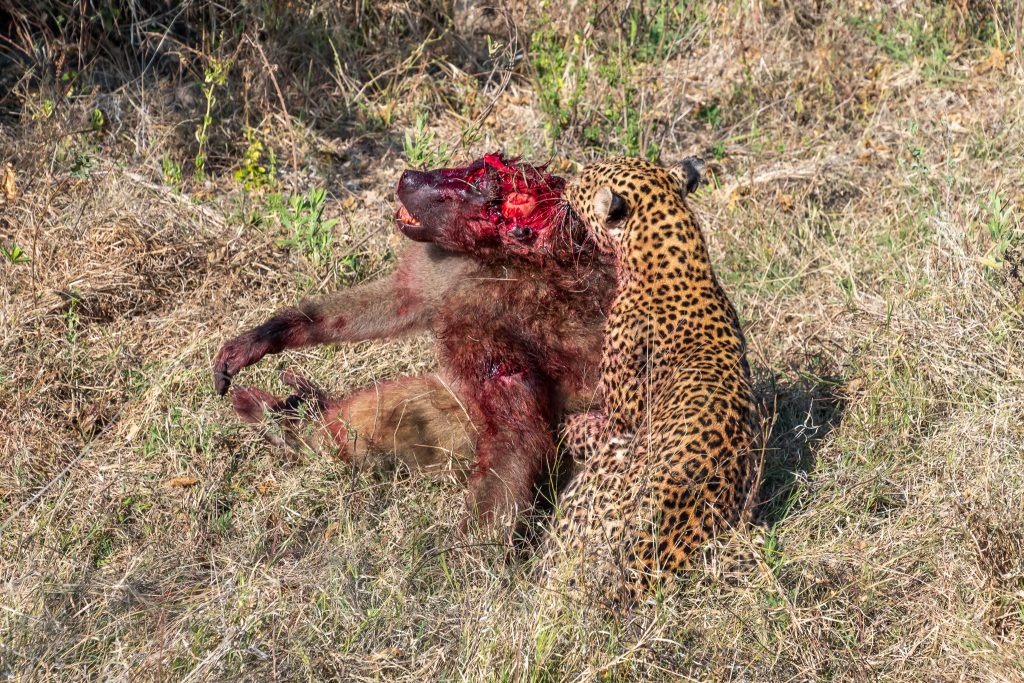
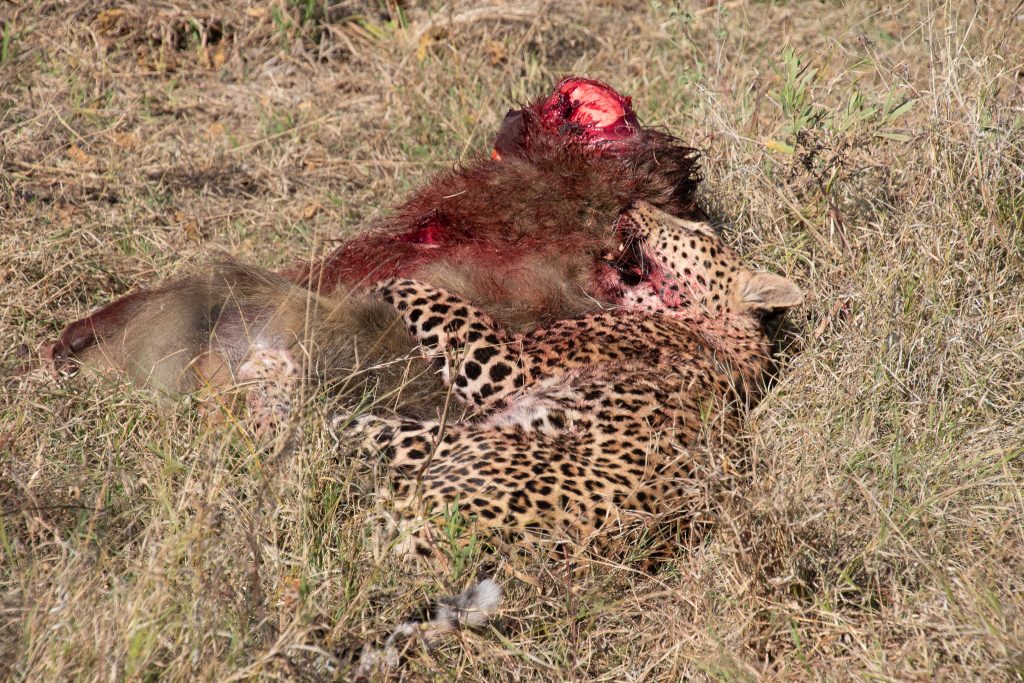
Still, the baboon refused to give up, fighting back and trying to shake her off twice more. His raw, pink head contrasted sharply with the dark fur as each attempt grew weaker. Slowly, her teeth dug deeper, tightening her hold on his body. At the same time, the baboon kept flailing, kept trying to get away, until she eventually had him fully pinned under her, and he resisted less and less.
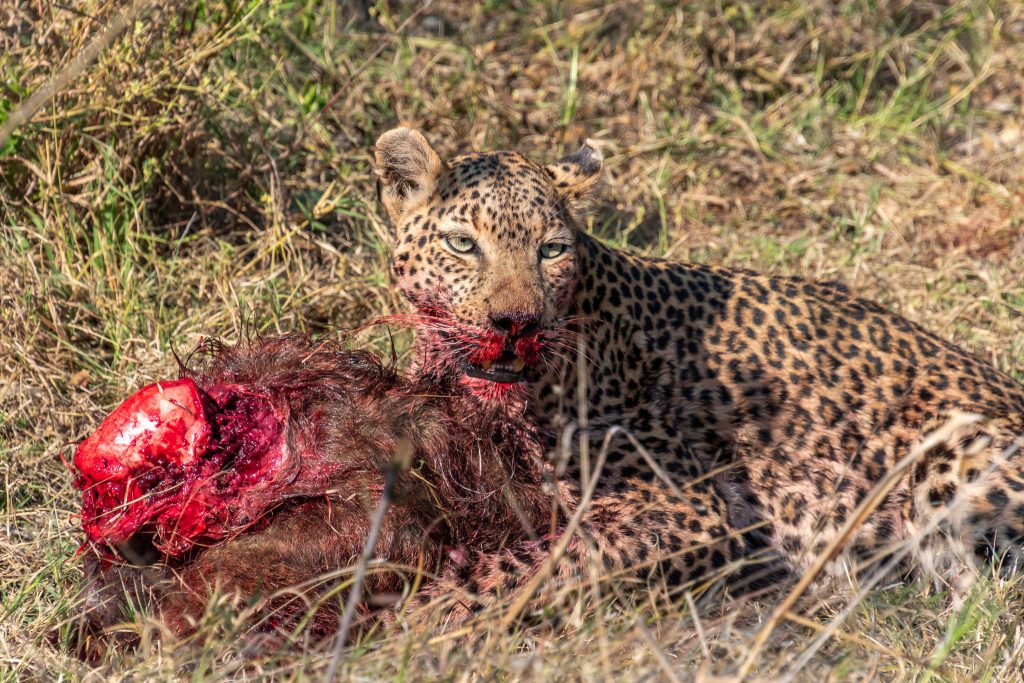
I could see her gasping for breath, and to my surprise, as I looked through the telephoto lens, the baboon was still breathing. An hour had passed since we arrived on the scene, and even though she won her meal, it had been a difficult victory.
It took many more minutes for the baboon to finally die. This had not been a quick, clean kill. This was a prolonged, painful war with the winner licking her many wounds. She rested there in the grass for quite a while, her prey’s body beneath her, regaining her energy as she cleaned the blood off her paws and face.
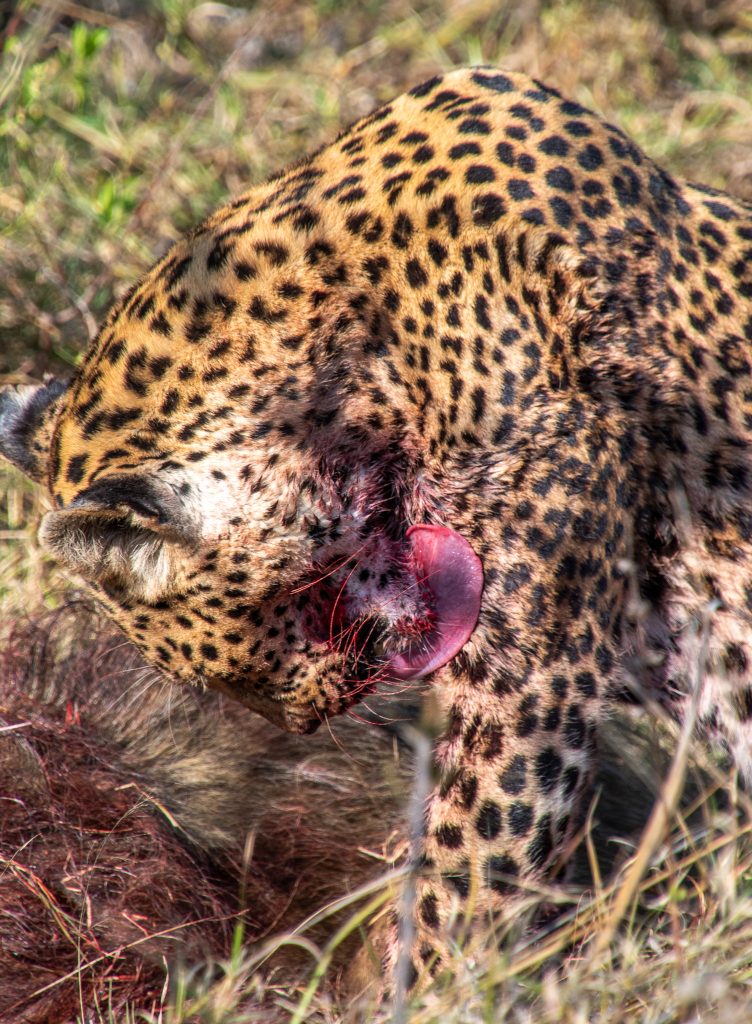
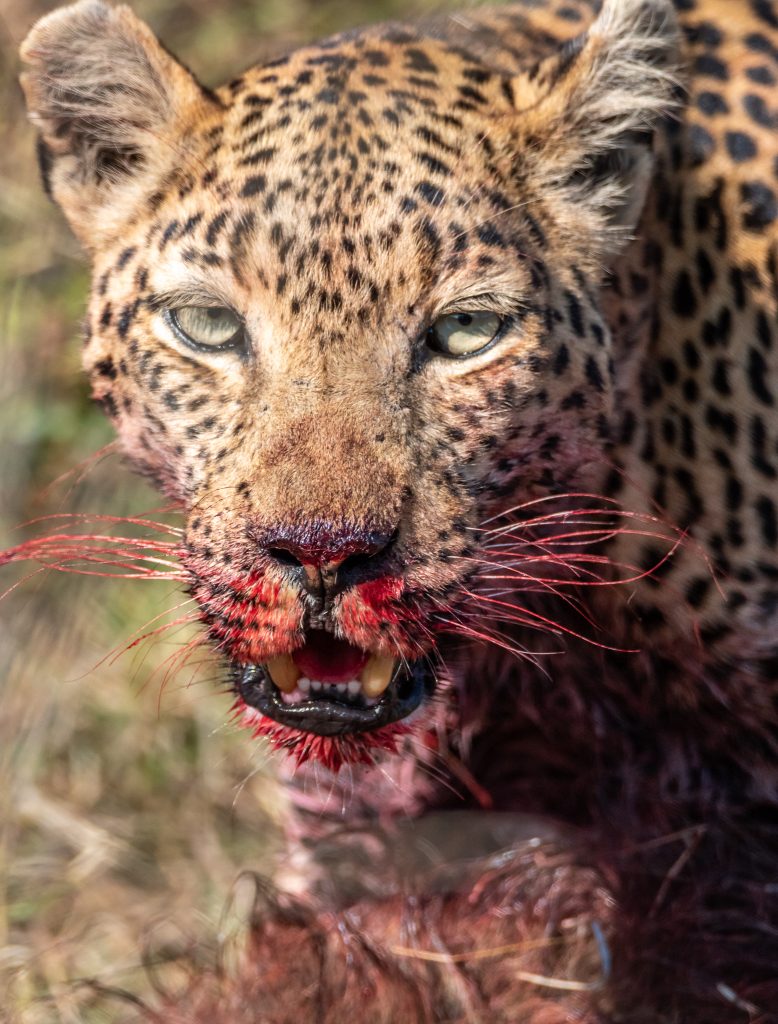
The struggle was not over yet, though. She had to move her prize to safety before the smell of fresh blood attracted unwanted competition. The dead weight of a baboon who was bigger than her was not an easy haul to secure.
At first, she struggled to figure out the right grip. Eventually, she got the hang of it and started pulling the body toward a copse of dense bushes. She dragged it a few yards and then stopped to rest, and then did it over and over again.
For almost 15 minutes she pulled and heaved until she had the carcass stowed deep inside the shrubbery. Now she could finally rest, knowing this large kill would sustain her and her daughter for the next few days.
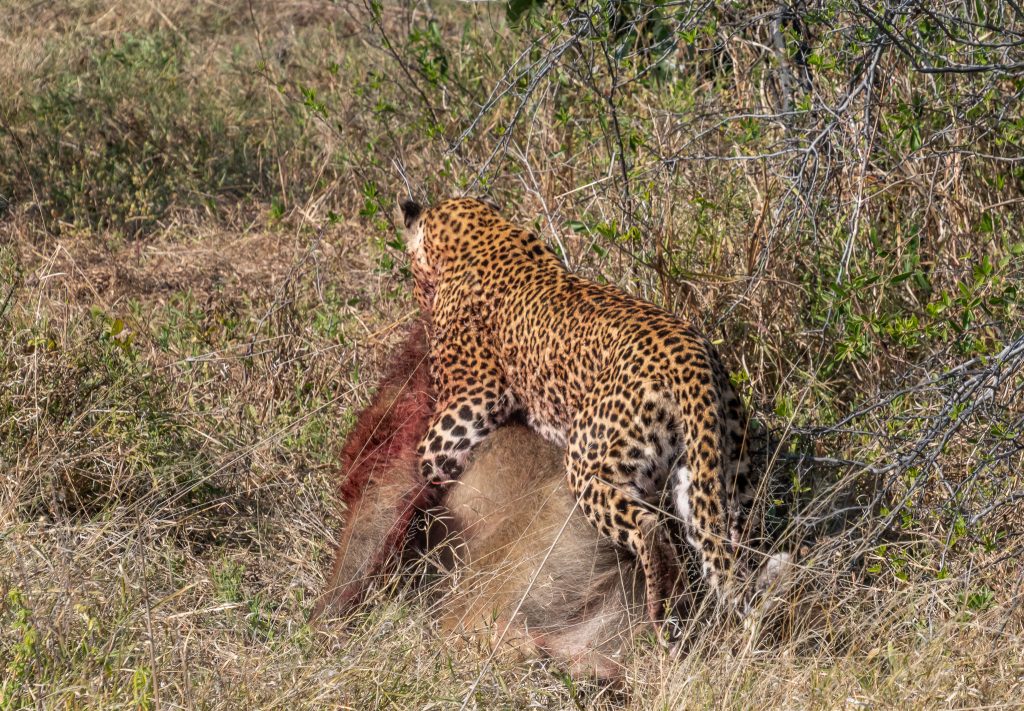
By now it was midday, and it was time for both the leopards and me to have a meal and a nap. But this day’s leopard drama was far from over.
Securing the kill was no easy feat
Later in the afternoon, our safari guide took us back into the bush where we easily found the young leopard family. Both mom and daughter were still resting in the shade, bellies extended after clearly indulging in a huge lunch. The baboon carcass was only slightly visible through the tall grass at the edge of the shrub where the two cats were lying low.
Despite satisfying their hunger, what was left of the baboon was still large. Somehow, the leopards had to secure their big kill in a tree by nightfall to protect the rest of this bounty.
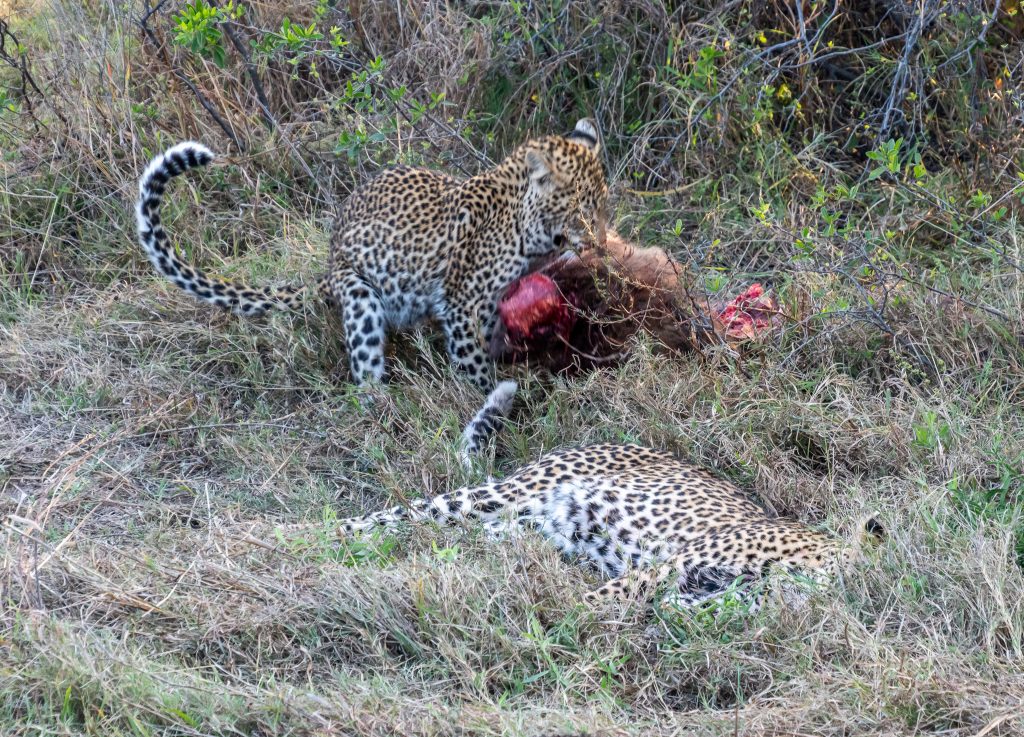
As the sun began to dip lower, the two leopardesses got up and came out from the protection of the bush. I thought the mom would start dragging the baboon carcass toward one of the nearby trees. Instead, she walked away and left the task to her young daughter, using this as a teaching moment.
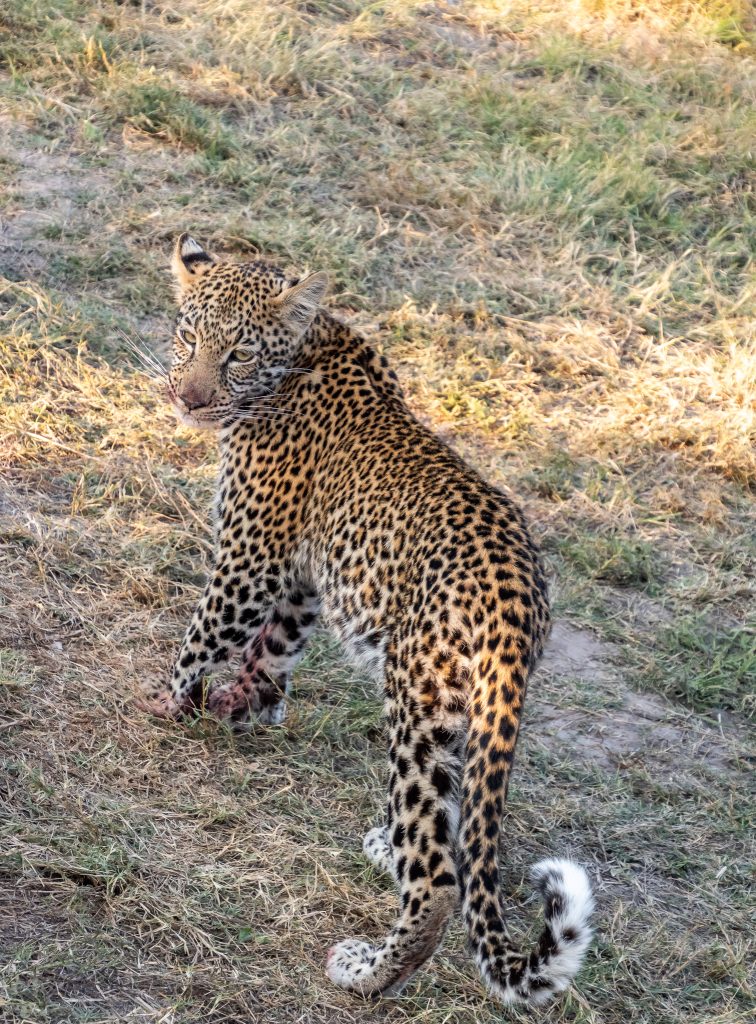
If the baboon was a big weight for the mom to move, it was even harder for the younger daughter. A few feet at a time, she pulled, stopped, rested, and pulled again. This process continued for at least half an hour as she ignored the many safari vehicles and maneuvered the dead body across the dusty road toward a large tree. Meanwhile, the sun kept dropping lower in the sky, casting a golden glow on the leopard’s spotted fur.

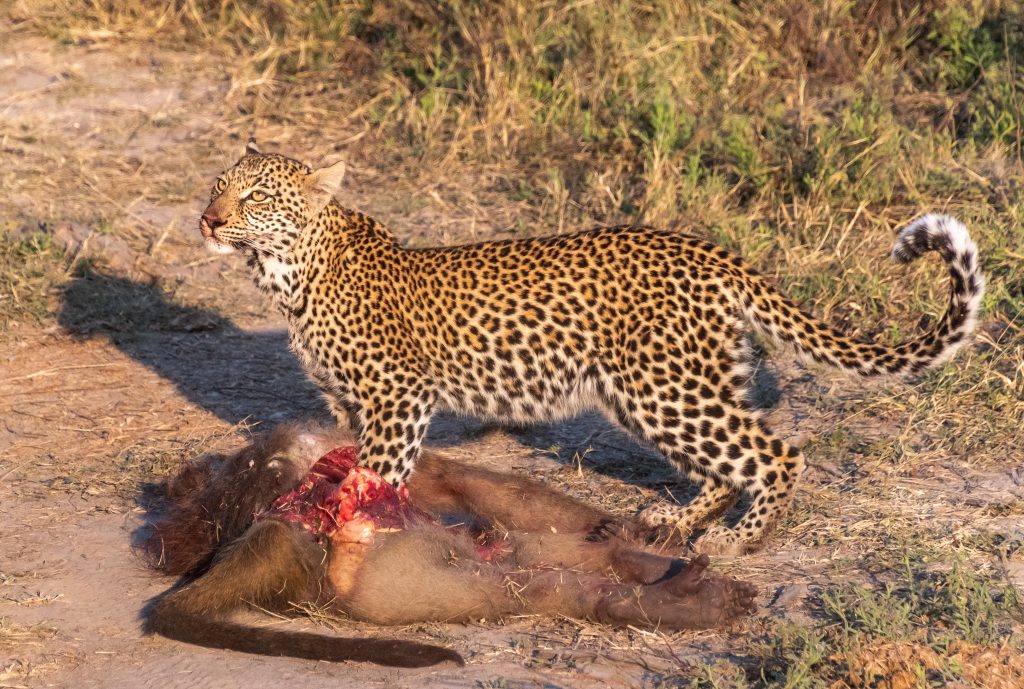
Once again, our guide moved our car into a spot where we could watch the continuing drama unfold. The young leopardess managed to pull the carcass to the base of a large tree, but how would she carry it up the long, straight trunk? The next thing we saw was the young daughter climbing the tree alone and lying down on a branch. Had they given up?

The daughter may have given up, but Mom did not. She had battled too hard to give up so easily. Now she started pulling on the dead baboon, slowly moving it toward a different tree. This one looked like a more promising candidate: it had a dead trunk angled up toward the main trunk of the live tree, which she could use as a ramp to pull the carcass into the branches for safekeeping.
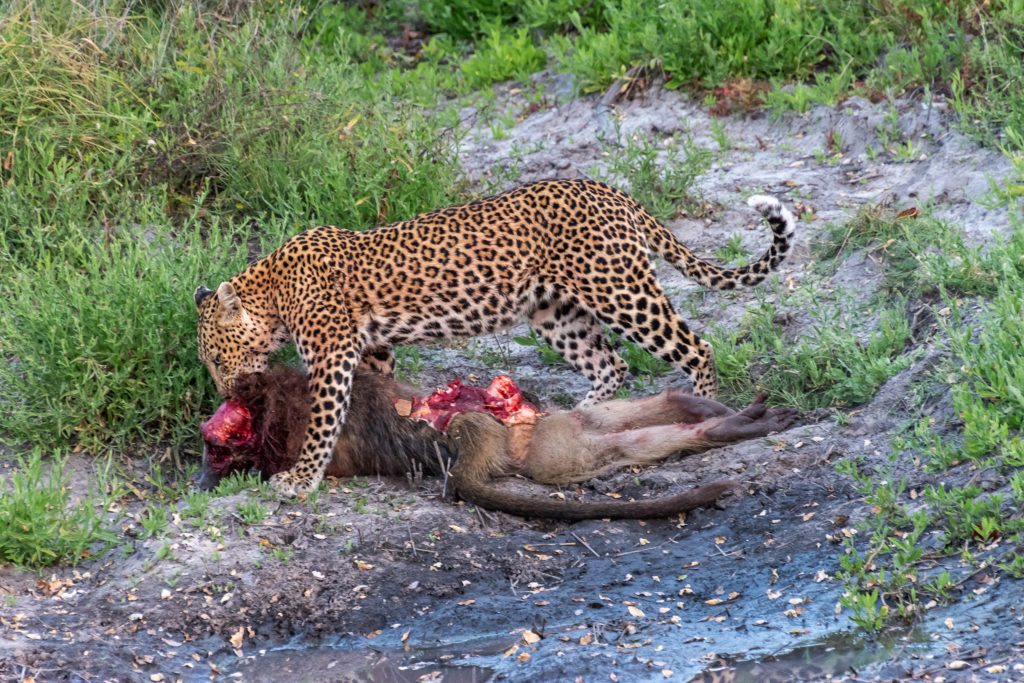
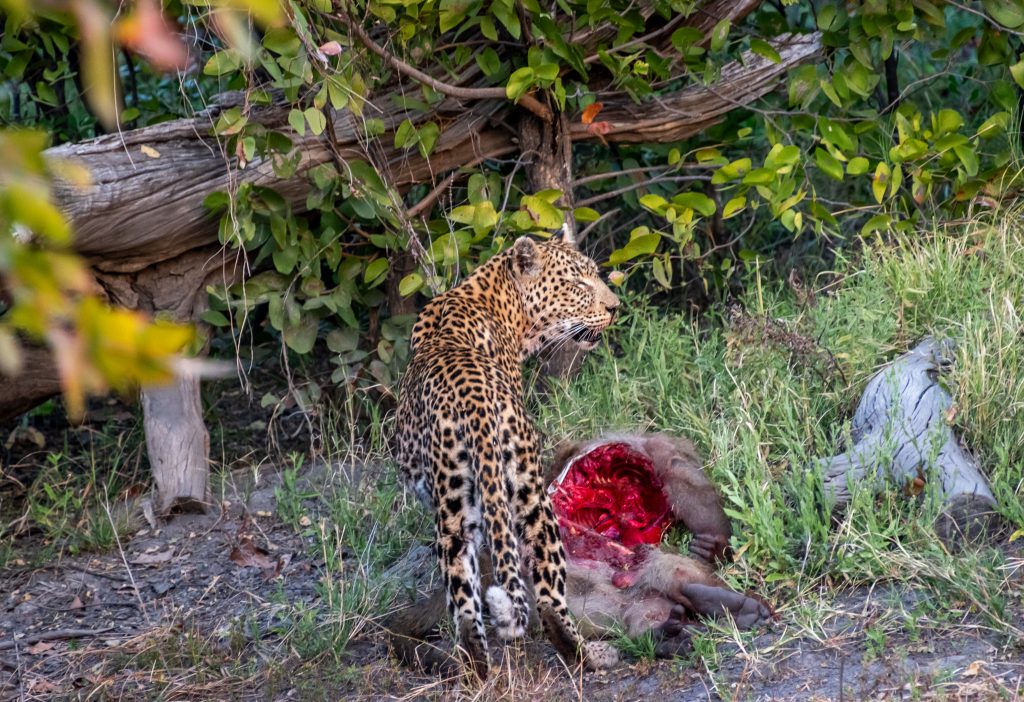
Eventually, the mother leopard reached the angled tree with her prize. She dropped it onto the ground and climbed the angled tree trunk, evaluating her options. Even though her leap onto the trunk was easy, I think she realized she couldn’t lift the baboon’s body even that short distance.
One more, she started dragging the carcass through the shrubs again, heading towards a different tree, but by now, it was almost dark. Her daughter also climbed down from her perch, joining her mom on the ground.

Once again, our driver moved the Landrover and drove us around to the opposite side for better views. In the waning light, we could just make out the leopard mom as she dragged the baboon’s body toward the base of the third tree.
I didn’t know how she would get her haul to the safety of the branches above. Waiting and wondering what would happen next, we eventually saw the silhouettes of the two cats in the branches above. It looked like they had given up and left the carcass on the ground beneath them.
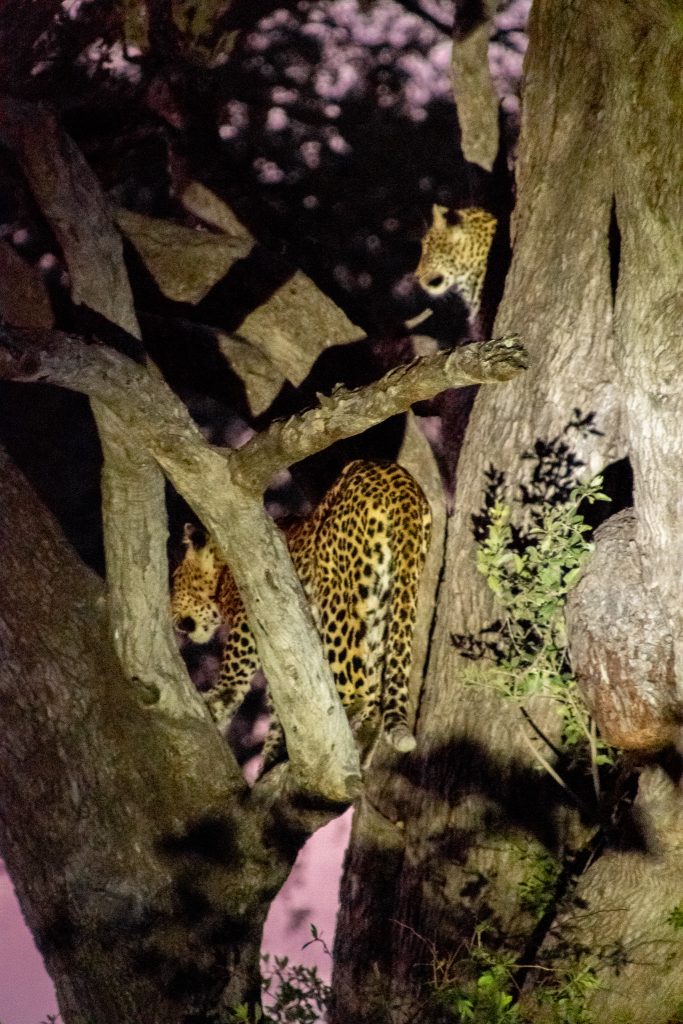
It was completely dark now, and our guide accurately predicted the final outcome of this drama. He waved a large spotlight into the bushes around the tree where the leopards were resting. Sure enough, within a few minutes he spotted a large male hyena approaching, heading unerringly for the leopard’s tree.
In less than a minute, the hyena reached the base of the tree, effortlessly picked up the baboon carcass in his powerful jaws, and trotted out of sight. The two leopards could do nothing except watch helplessly as their hard-earned meal strolled away into the night.
In the jungle, the strong survive.
It’s not often that a wildlife drama worthy of a David Attenborough documentary plays out during a tourist’s safari. I felt both privileged and awed watching such a spectacle, but I will admit there were times when I had to turn away from the vicious scene.
At first, I felt sympathy for the baboon’s pain. A few hours later, my sympathies shifted to the leopard mom as her livelihood was stolen from her so easily.
But life is not always fair, and sometimes it really is a jungle out there.
Thanks for visiting
Rose