PhotoPOSTcard: When Art Imitates Life

Good street art stops you in your tracks and forces you to take a closer look. Whether it is big or small, it draws you in. The art walk in Frederick, MD has just those kinds of murals. In this photo, can you tell what is real and what is an imitation? The two large windows are both faux, and everything else is real. You can pick up a map of Frederick’s Art Walk at the Frederick Visitor’s Center.

Please note that I was hosted by Visit Frederick. All content is my own.

Thanks for visiting.

Rose

PhotoPOSTcard: The Covered Bridges of Frederick County

Covered bridges were actually designed for function – to protect the wooden bridge structure from the elements and thereby extending the bridge’s lifespan up to 100 years. As iron began to replace wood, the many covered bridges across the US began to disappear. Today, the remaining bridges are a romantic reminder of a time in US history that was slower and more pastoral. If you are visiting Frederick, MD, stop by the visitor’s center to pick up a map of the local covered bridge trail that takes you to three beautiful examples of this unique architecture.

Please note that I was hosted by Visit Frederick. All content is my own.

Thanks for visiting.

Rose


PhotoPOSTcard: The Monocacy Aquaduct

When you really think about it, and aqueduct could be considered an oxymoron – it’s a bridge  built over water to carry water. In this case, the Monocacy aqueduct was the largest of the eleven aqueducts built as part of the C&O canal system in the mid 1800’s. The Monacacy Aqueduct has survived the Civil War and hurricanes and is now part of the Chesapeake and Ohio Canal National Historic Park. You can easily visit this site and others along the C&O canal system from a base in Frederick,MD.

Please note that I was hosted by Visit Frederick. All content is my own.

Thanks for visiting.

Rose


PhotoPOSTcard: In Jordanelle State Park

About 20 minutes west of Park City, Utah is the Jordanelle State Park. The park sits on the shores of a reservoir formed from the damming of the Provo River. While there were no open facilities in winter, the roads in the park were plowed and made for a pleasant drive to take in the surrounding scenery.

Thanks for visiting.

Rose

PhotoPOSTcard: In Majorelle Garden

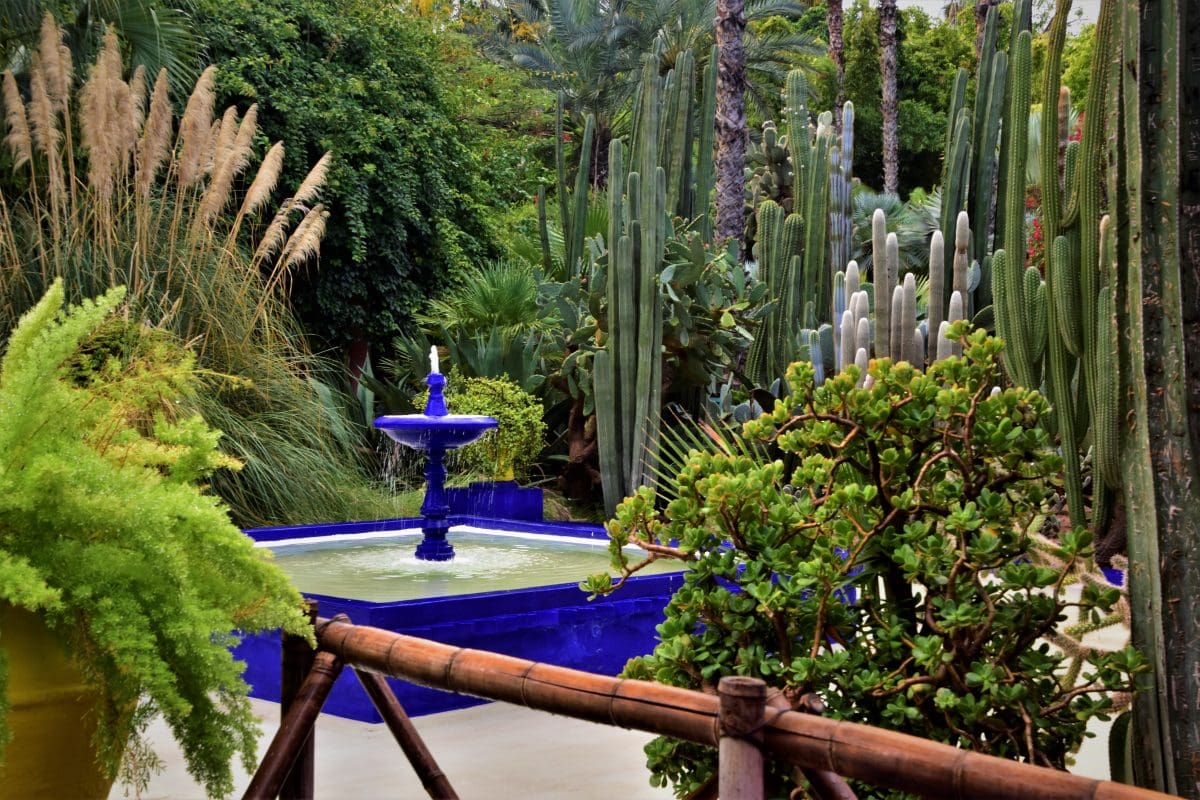
The Majorelle Garden in Marrakesh was created by French artist Jacques Majorelle in the 1920’s. The garden’s is famous today though because it was purchased and restored by Yves Saint-Laurent in the 1980’s. Regardless of of its high profile owner, the garden is a visual treat. Cobalt blue accents are a punctuation of color amid the green and silver foliage. That particular shade of blue was developed and patented by Jacques Maorelle and is named after him – Majorelle blue.

Thanks for visiting.

Rose

PhotoPOSTcard: El Badi Palace Refelction

The El Badi Palace in Marrakesh, Morocco was built in the late 16th century by Sultan Ahmad Al-Mansur and was supposedly built and decorated with the most expensive materials of its time. The complex is believed to have had as many as 360 rooms built around a large central courtyard that contained a large pool. Subsequent rulers from other dynasties later stripped the palace of all its grandeur, so that today it sits as a romantic looking ruin that is home to storks and tourists.

Thanks for visiting.

Rose

PhotoPOSTcard: Morocco’s Zellij Tiles

Throughout my wanderings in Marrakesh, I saw the characteristic Zellij tile decoration. Whether it was a museum, an old restored historic building or in the narrow lanes of the Medina, this typical Moroccan mosaic tile work in shades of blue, tan and green was prevalent. The combination of small hand chiseled tiles laid in intricate geometric patterns seemed infinite. I definitely got a few ideas for a quilt or two.

Thanks for visiting.

Rose

PhotoPOSTcard: Menara Gardens, Marrakesh

I found the Menara Gardens in Marrakesh to be a lovely place to get away from the tourist crowd and stroll through the gardens with the locals. The garden is centered around a large reflecting pool that is especially scenic at sunset when the distant Atlas Mountains are reflected in the still waters.

Thanks for visiting.

Rose

PhotoPOSTcard: The Jewish Cemetery in Marrakesh

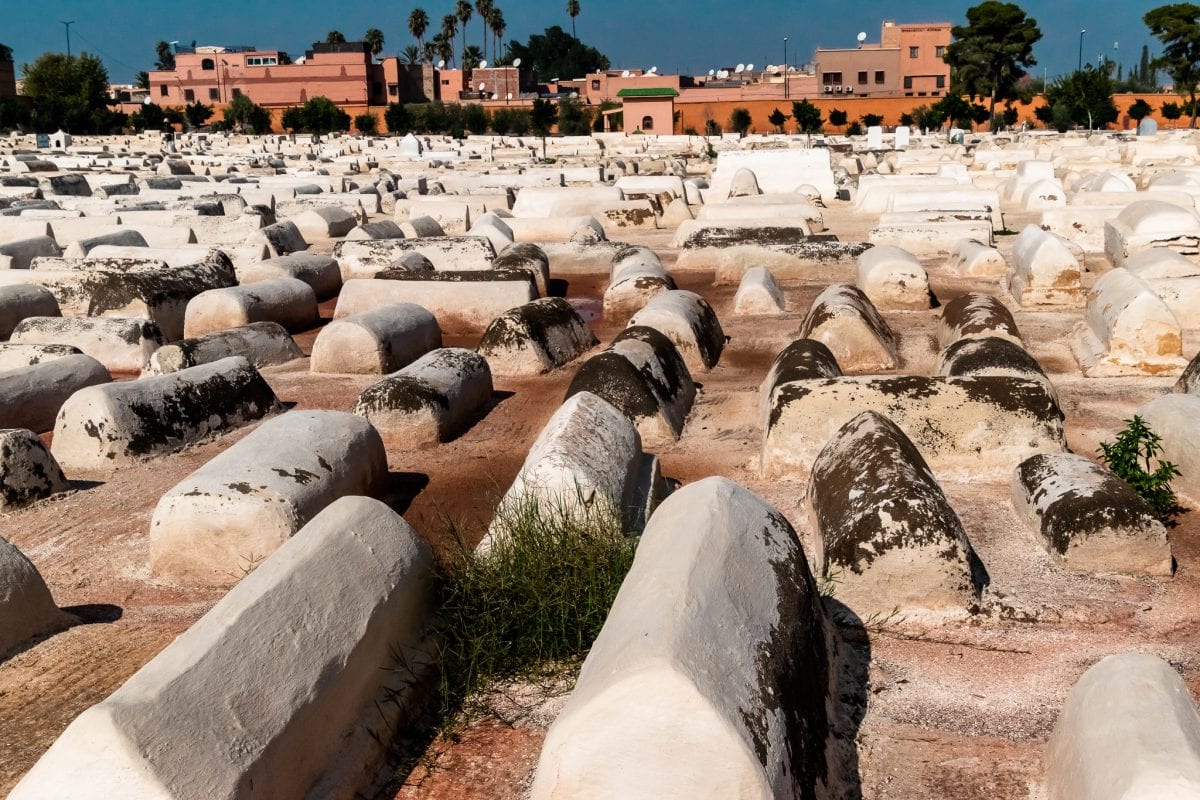
In 1492 Spanish explorer Christopher Columbus sailed off in search of a better route to India and in the process discovered the new continent of America instead. That same year, Spain expelled all of its Jewish population, many of who sailed across the narrow strait of Gibraltar to nearby Marrakesh, Morocco where they were welcomed by the Sultan. The Sultan set aside an area in the city for the Jewish community of about 35,000 Jews and also established a cemetery in 1537. Though no longer actively used, the cemetery is being maintained and refreshed with contributions from visitors. One of the saddest aspects are the many small white tombs that mark the burial of over 7000 children that died of Typhus.

Thanks for visiting.

Rose